 Save to Pinterest
 I was rummaging through my pantry one Wednesday evening, staring at a half-empty bottle of balsamic vinegar and a pound of chicken breasts that needed using. I had about forty minutes before my sister arrived for dinner, no plan, and a craving for something that tasted fancier than the effort required. That's when I remembered a trick a line cook once told me at a bistro in Portland: reduce balsamic with honey and it becomes liquid gold. I tossed pasta water on to boil, sliced the chicken thin, and let instinct take over.
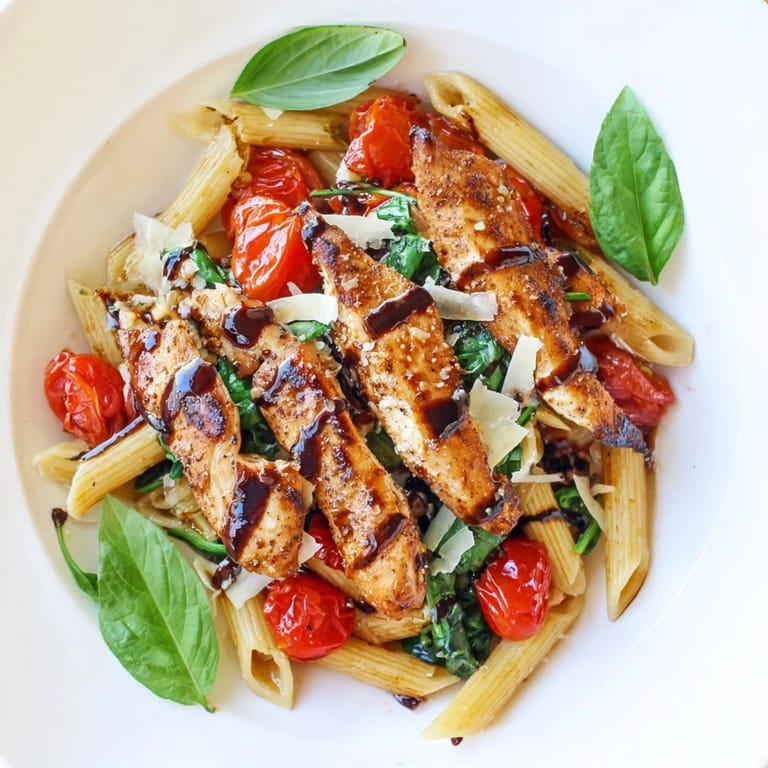
The first time I made this for friends, I plated it with a little too much confidence and a generous handful of basil torn at the last second. Someone asked if I'd taken a cooking class, and I laughed because the truth was I'd just learned to trust my nose and stop overthinking the sauce. Now it's the dish I make when I want to impress without the stress, and it never lets me down.
Ingredients
- Boneless, skinless chicken breasts: Slicing them thin ensures they cook fast and soak up the glaze instead of staying bland in the center.
- Penne or spaghetti: Penne catches the sauce in its ridges, but spaghetti twirls beautifully with the glaze, so pick your mood.
- Garlic, minced: Fresh garlic blooms in hot oil and fills your kitchen with the kind of smell that makes people wander in asking what's for dinner.
- Cherry tomatoes, halved: They burst and blister in the pan, adding little pockets of sweetness that balance the tang of the vinegar.
- Fresh baby spinach: It wilts in seconds and turns the dish vibrant green without any effort or extra pots.
- Olive oil, divided: Use it in stages to build flavor, not drown it, and save a tablespoon for the glaze so it emulsifies smoothly.
- Balsamic vinegar: The backbone of the dish, it reduces into a sticky, glossy coating that tastes more complex than its single-ingredient simplicity.
- Honey: Tames the acidity and gives the glaze a subtle shine that clings to the chicken like a secret.
- Dijon mustard: Just a teaspoon adds a quiet sharpness and helps the glaze thicken without flour or cornstarch.
- Dried Italian herbs: Oregano, basil, thyme in one jar, they do the heavy lifting when you don't have fresh herbs on hand.
- Salt and freshly ground black pepper: Season in layers, tasting as you go, because under-seasoned pasta is a tragedy no glaze can fix.
- Grated Parmesan cheese: The salty, nutty finish that makes every forkful feel complete, melting slightly into the warm pasta.
- Fresh basil leaves, torn: Optional but transformative, they add a pop of color and a sweet herbal note that makes the dish feel alive.
Tired of Takeout? 🥡
Get 10 meals you can make faster than delivery arrives. Seriously.
One email. No spam. Unsubscribe anytime.
Instructions
- Boil the pasta:
- Cook your pasta in well-salted water until it still has a slight bite, then save a mugful of that starchy water before draining. That cloudy liquid is your secret weapon for a silky sauce later.
- Sear the chicken:
- Heat olive oil in a large skillet until it shimmers, then add the chicken strips in a single layer, seasoning them right in the pan. Let them sit undisturbed for a couple minutes so they get golden and caramelized, then flip and cook through before setting aside.
- Sauté the aromatics:
- In the same skillet, add a bit more oil and toss in the garlic, stirring constantly so it doesn't burn. Add the halved cherry tomatoes and let them soften and start to break down, releasing their juices into the pan.
- Whisk the glaze:
- In a small bowl, combine balsamic vinegar, honey, Dijon mustard, and the remaining olive oil, whisking until smooth. This only takes a minute but turns ordinary ingredients into something glossy and restaurant-worthy.
- Glaze the chicken:
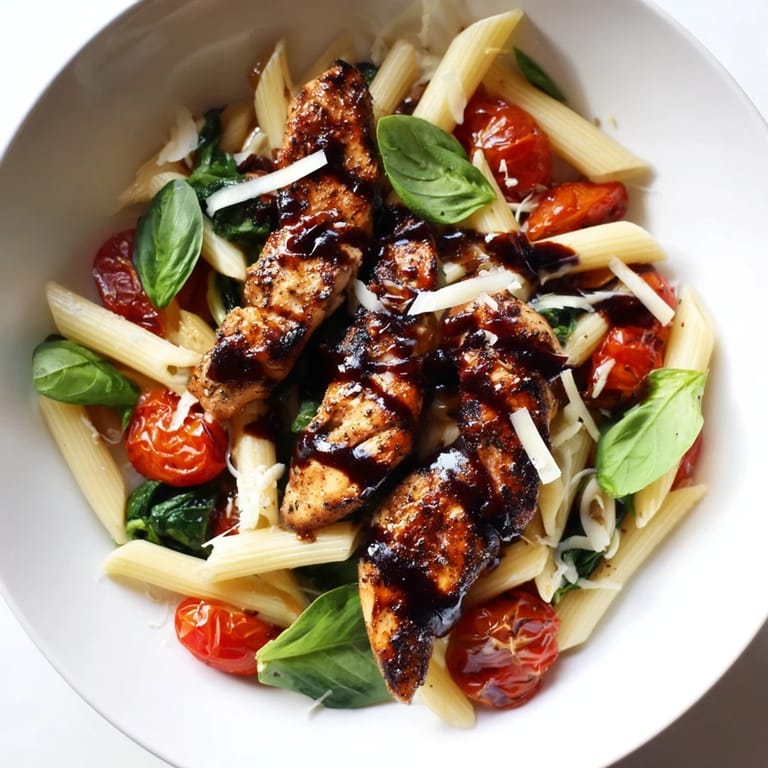
- Return the chicken to the skillet and pour the balsamic mixture over everything, stirring gently. Let it simmer and reduce for a few minutes until the sauce thickens and clings to the chicken like a shiny coat.
- Toss it all together:
- Add the cooked pasta and fresh spinach to the skillet, tossing everything with tongs until the spinach wilts and the pasta is fully coated. Splash in reserved pasta water a little at a time until the sauce becomes creamy and silky, binding everything together.
- Serve immediately:
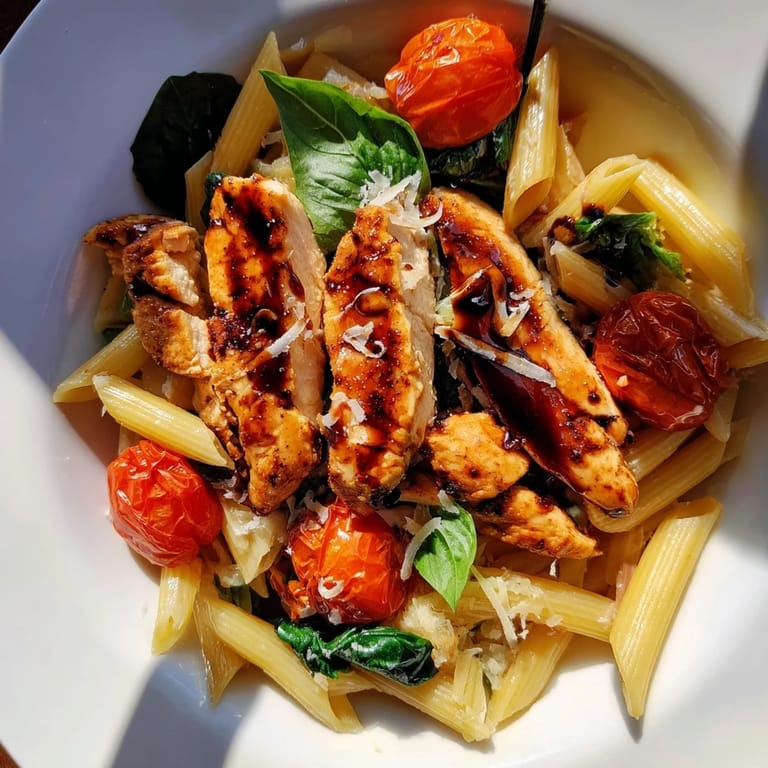
- Plate it up while it's hot, finishing each serving with a generous sprinkle of Parmesan and a few torn basil leaves. The cheese melts slightly from the heat, and the basil releases its fragrance as you dig in.
 Save to Pinterest
 One night I made this for a friend going through a rough breakup, and she sat at my kitchen counter twirling her fork in silence for the first few bites. Then she looked up and said it tasted like hope, which made me laugh and tear up at the same time. Food has that power sometimes, to say things we can't.
Choosing Your Pasta Shape
Penne is my go-to because its ridges and hollow center trap the glaze, giving you flavor in every bite without it sliding off. Spaghetti works beautifully too, especially if you like twirling your fork and getting that glossy balsamic ribbon wrapped around each strand. I've also used rigatoni when I wanted something heartier, and bowties when I was cooking for kids who thought the shape made it taste better. Whatever you choose, just make sure it's cooked al dente so it holds up when you toss it in the skillet.
Customizing the Vegetables
Cherry tomatoes and spinach are my baseline, but this dish is forgiving and loves whatever you have on hand. I've stirred in sautéed zucchini, roasted red peppers from a jar, and even leftover roasted broccoli with great results. Arugula adds a peppery bite if you're feeling bold, and kale works if you massage it first so it's not too tough. The key is adding heartier vegetables early with the tomatoes and delicate greens at the very end so they wilt but don't turn to mush.
Storing and Reheating Leftovers
This pasta keeps well in the fridge for up to three days, though the sauce will thicken as it sits and the pasta will soak up more of that balsamic glaze. When reheating, add a splash of water or chicken broth to the pan and warm it gently over medium heat, tossing frequently so it doesn't dry out. I've found that reheated leftovers sometimes taste even better the next day because the flavors have had time to marry, and the chicken stays tender if you don't overcook it the first time. Don't microwave it if you can help it, the texture suffers and the glaze can get gummy.
- Store in an airtight container and keep the Parmesan separate so it doesn't get soggy.
- Reheat in a skillet with a little liquid to bring back that silky sauce consistency.
- Add a handful of fresh spinach or basil when reheating to brighten up the flavors.
 Save to Pinterest
 This dish reminds me that weeknight cooking doesn't have to feel like a chore or a compromise. With a good glaze, a hot skillet, and a little trust in your instincts, you can turn simple ingredients into something that feels like a celebration.
Recipe FAQs
- → Can I prepare the balsamic glaze ahead of time?
Yes, you can whisk together the balsamic vinegar, honey, Dijon mustard, and olive oil up to 24 hours in advance. Store in an airtight container in the refrigerator. Give it a quick stir before using, as the ingredients may separate slightly.
- → What pasta shape works best for this dish?
Penne and spaghetti both work excellently, as their shapes trap the balsamic glaze. Rigatoni or fusilli are equally suitable alternatives. Avoid very delicate pasta like angel hair, which may become overcoated and heavy.
- → How do I keep the chicken tender and moist?
Slice chicken breasts horizontally into thin, even strips before cooking to ensure uniform thickness and faster cooking. Avoid overcooking by removing the chicken once it reaches an internal temperature of 165°F. The residual heat will finish cooking as it rests briefly on the plate.
- → Can I use frozen chicken for this dish?
Thaw frozen chicken completely before slicing and cooking. Frozen chicken that hasn't been thawed will cook unevenly and may dry out on the outside before the center is cooked through. Proper thawing ensures consistent results.
- → Why is reserved pasta water important?
Pasta water contains starch that helps create a silky, cohesive sauce. Adding it gradually as you toss allows the glaze to coat the pasta evenly without becoming watery. Start with a few tablespoons and add more only as needed for desired consistency.
- → What wine pairs well with this dish?
Light Pinot Noir complements the balsamic's earthiness and acidity, while crisp Sauvignon Blanc enhances the dish's bright herbal notes. Both offer enough body to balance the richness of the glaze without overpowering the delicate chicken.