 Save to Pinterest
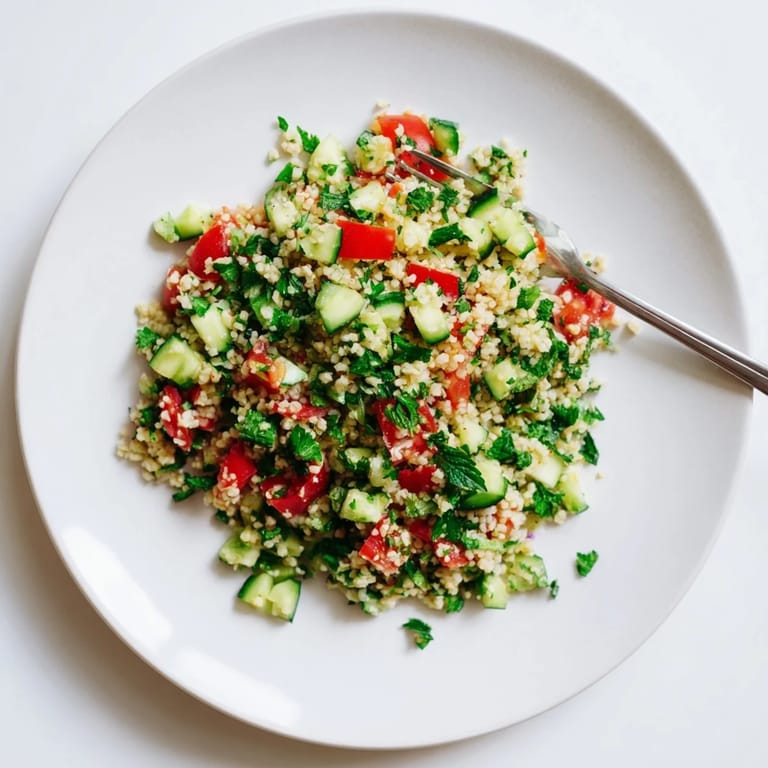
 The first time I tasted proper tabbouleh was at a tiny Lebanese restaurant in Detroit, where the owner's grandmother sat in the corner rolling grape leaves and watching everyone eat. She laughed when I asked for more bread, pointing at the herbs instead and saying the salad itself was the meal. That afternoon changed everything I thought about grain salads, they're not just filler but the main event when treated right.
Last summer I made this for a potluck and watched three generations argue over whether it needed more lemon. The grandmother won, naturally, squeezing another half lemon directly into the bowl before anyone could protest. That's the thing about this salad, it demands you taste and adjust until it sings.
Ingredients
- 1 cup fine bulgur wheat: Fine grained bulgur absorbs the dressing beautifully without becoming mushy, coarse bulgur stays too chewy
- 1 cup boiling water: Start with boiling, not cold, water to jumpstart the absorption and cut down on soaking time
- 2 medium tomatoes, diced: Roma tomatoes work best here since they're less watery, but summer beefsteaks are worth the extra juice
- 1 medium cucumber, peeled, seeded, and diced: English cucumbers skip the peeling step entirely and have fewer seeds to remove
- 4 scallions, finely sliced: Use both the white and green parts, sliced thin so they don't overwhelm with onion bite
- 1 large bunch fresh flat-leaf parsley, finely chopped: Flat-leaf has more flavor than curly, and you really do need the entire bunch
- 1/2 bunch fresh mint leaves, finely chopped: Mint is non-negotiable here, it's what makes tabbouleh taste like itself
- 1/4 cup extra virgin olive oil: Good olive oil matters since it's one of the only cooked flavors in the dish
- 1/4 cup freshly squeezed lemon juice: Bottle lemon juice will ruin this completely, fresh lemons make the whole thing pop
- 1 garlic clove, finely minced: One clove is plenty, you want a whisper of garlic not a shout
- 1/2 teaspoon fine sea salt: Fine salt dissolves into the dressing better than coarse kosher salt would
- 1/4 teaspoon freshly ground black pepper: Freshly ground makes a difference you can actually taste
Tired of Takeout? 🥡
Get 10 meals you can make faster than delivery arrives. Seriously.
One email. No spam. Unsubscribe anytime.
Instructions
- Prepare the bulgur:
- Place bulgur in a large heatproof bowl, pour boiling water over it, cover tightly with plastic wrap or a plate, and let it steam for 10 to 15 minutes until all water is absorbed. Fluff with a fork and spread it out to cool while you prep everything else.
- Chop your vegetables and herbs:
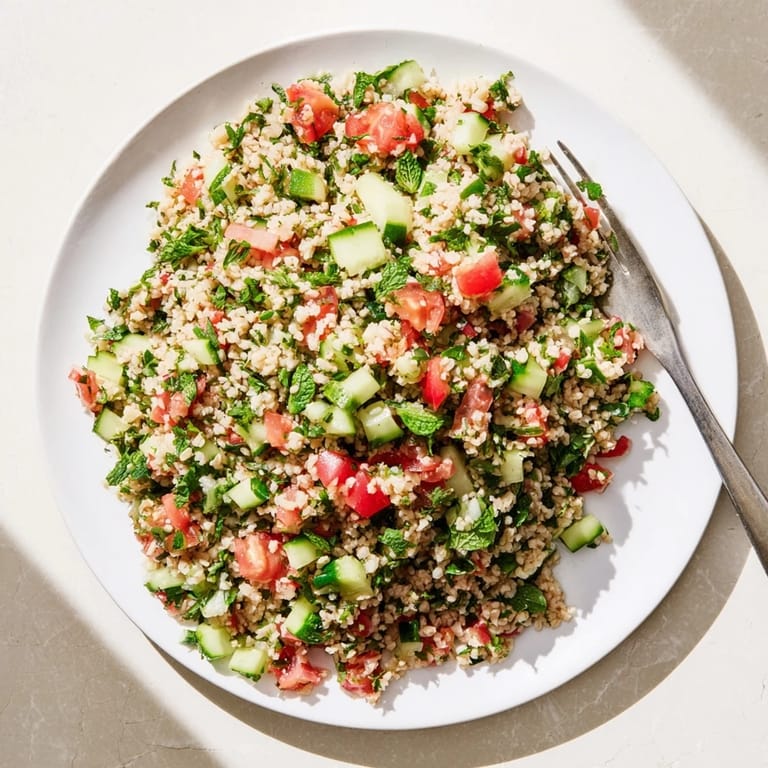
- Dice the tomatoes and cucumber into small, even pieces, finely slice the scallions, and chop the parsley and mint until they're tiny but still recognizable as leaves, not a paste.
- Whisk together the dressing:
- In a small bowl, combine olive oil, lemon juice, minced garlic, salt, and pepper, whisking until the mixture emulsifies slightly and thickens.
- Combine everything:
- Add cooled bulgur to a large serving bowl along with all the chopped vegetables and herbs, pour the dressing over everything, and toss gently until well combined.
- Let it rest and serve:
- Taste and add more salt or lemon if needed, refrigerate for at least 20 minutes to let flavors meld, and serve cold or at room temperature with an extra lemon wedge on the side.
 Save to Pinterest
 My neighbor texted me at midnight once begging for the recipe after she tasted it at a dinner party. She swore she'd made tabbouleh a dozen times but never understood why mine tasted different until I told her about the herb ratio. Now she sends me photos every time she makes it, parsley bits still stuck to her cutting board.
Making Ahead
This salad keeps beautifully for three to four days in the refrigerator, though the herbs will darken slightly as they sit. I actually prefer making it the night before since the flavors deepen and the bulgur has time to soften further. If you're making it ahead, wait to add the final lemon adjustment until right before serving.
Serving Suggestions
Tabbouleh pairs perfectly with grilled chicken, lamb kebabs, or falafel for a complete Middle Eastern spread. I've also served it tucked into pita bread with hummus or as a fresh bed for pan-seared fish. It's substantial enough to be a light lunch on its own, especially with some warm flatbread on the side.
Variations and Substitutions
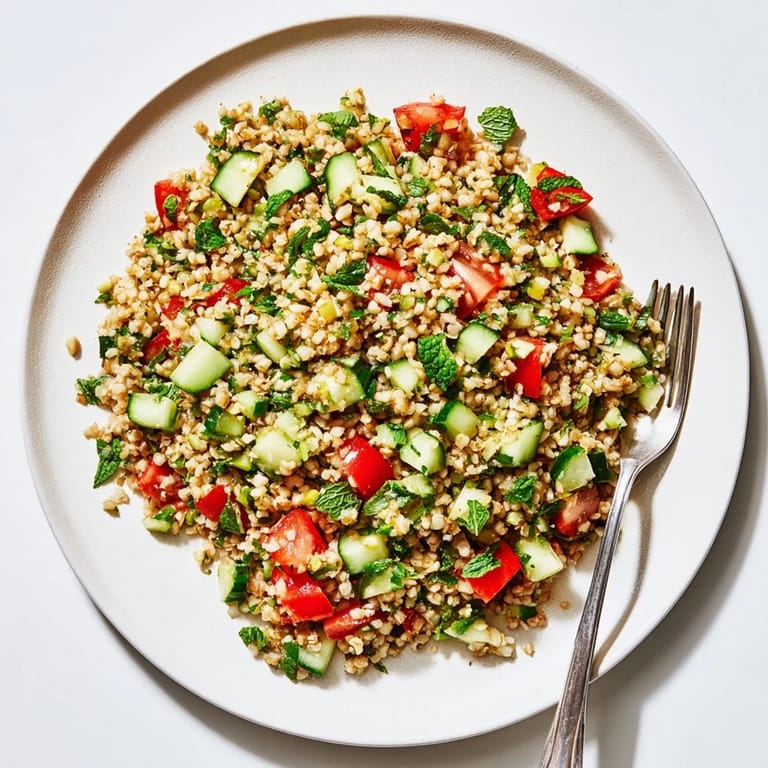
For a gluten-free version, quinoa works beautifully and adds extra protein, though it changes the texture slightly. I've added diced red peppers for color and sweetness, or pomegranate seeds in autumn for a burst of tart crunch. Some mornings I'll crumble feta on top when I want something more decadent.
- Try adding sumac for an authentic Lebanese tang
- Substitute half the parsley with cilantro for a different flavor profile
- Mix in diced radishes for extra crunch and pepper bite
 Save to Pinterest
 There's something deeply satisfying about a bowl full of nothing but fresh ingredients and time. That's what tabbouleh really is, after all.
Recipe FAQs
- → What makes tabbouleh authentic?
Traditional tabbouleh features a high ratio of fresh herbs to bulgur wheat. Parsley should be the dominant ingredient, complemented by mint, tomatoes, and a bright lemon-olive oil dressing. The bulgur is typically fine or medium grind and should be fluffy, not mushy.
- → Can I make this ahead of time?
Absolutely. This dish actually improves after resting in the refrigerator for a few hours or overnight. The flavors meld together beautifully, and the bulgur absorbs the dressing. Bring to room temperature before serving for the best texture and taste.
- → How do I store leftovers?
Keep in an airtight container in the refrigerator for up to 4 days. The fresh herbs may darken slightly but will still taste delicious. If the bulgur absorbs all the dressing, add a splash more lemon juice and olive oil before serving to refresh the flavors.
- → What can I serve with tabbouleh?
Pair alongside grilled chicken, lamb kebabs, or falafel for a complete meal. It also works beautifully as part of a mezze platter with hummus, baba ganoush, and warm pita bread. Serve as a light lunch on its own or as a refreshing side at summer barbecues.
- → Is there a gluten-free alternative?
Yes, quinoa makes an excellent gluten-free substitute for bulgur wheat. Cook the quinoa according to package directions and let it cool completely before combining with the herbs and vegetables. The texture and flavor profile work wonderfully with the traditional ingredients.
- → Why is my bulgur mushy?
Mushy bulgur usually results from using too much water or over-soaking. Stick to the 1:1 ratio of bulgur to boiling water, and check after 10 minutes. The grains should be tender but still have a slight bite. Drain any excess water if necessary and fluff immediately with a fork to prevent clumping.