 Save to Pinterest
 I discovered this combination on a warm afternoon when my neighbor stopped by with fresh herbs from her garden—a handful of dill still damp from the morning mist. She mentioned how her family had been eating salmon this way all summer, nothing fancy, just good fish with bright flavors. That simple gesture led me to build this salad around those herbs, and now it's become my go-to when I want something that feels both effortless and impressive.
The first time I made this for friends, I was nervous about the salmon—would it be dry, would the herbs overpower it? But watching them taste it, seeing that little pause before they smiled, taught me that cooking with intention and fresh ingredients speaks louder than complexity ever could. That meal became the reason we now have dinner together every other month.
Ingredients
- Salmon fillets: Look for pieces that are roughly the same thickness so they cook evenly; I learned this the hard way after serving half-cooked and overcooked fillets at the same table.
- Fresh herbs (parsley, dill, chives): These three together create a brightness that bottled herbs can't replicate—the dill especially makes the salmon taste like it came from a cold river.
- Dijon mustard: This anchors the herb paste and adds a subtle sharpness that keeps the dish from tasting one-dimensional.
- Olive oil: Use a decent quality for both the paste and the vinaigrette; it's where flavor lives in this dish.
- Mixed salad greens: A combination gives better texture than a single green—arugula adds peppery notes that play beautifully against the rich salmon.
- Cherry tomatoes and cucumber: These provide crispness and water content that balances the richness of the fish and oil.
- Walnuts and feta (optional): Toast the nuts yourself if possible; they add an earthy depth and the feta brings a creamy tang that ties everything together.
- Vinaigrette base: The honey mellows the vinegar's sharpness and helps the dressing coat the leaves without overwhelming them.
Tired of Takeout? 🥡
Get 10 meals you can make faster than delivery arrives. Seriously.
One email. No spam. Unsubscribe anytime.
Instructions
- Heat your oven and prepare your workspace:
- Set the oven to 200°C (400°F) and line a baking sheet with parchment paper—this prevents sticking and cleanup is practically nonexistent. Having everything ready before you touch the salmon makes the next steps feel smooth.
- Build the herb paste:
- In a small bowl, combine the olive oil, Dijon mustard, lemon juice, and all three fresh herbs with the garlic powder, salt, and pepper. The paste should look vibrant green and smell like a garden; if it looks dull, you likely need more fresh herbs.
- Coat the salmon:
- Place the salmon fillets on the parchment paper and spread the herb mixture generously over the top of each fillet, working it in gently with the back of a spoon. The salmon doesn't need it on the bottom—gravity and heat will cook that side perfectly.
- Bake until just cooked through:
- Slide the baking sheet into the oven for 12 to 15 minutes, depending on the thickness of your fillets. You'll know it's ready when the flesh flakes easily with a fork and the thickest part is no longer translucent; overcooked salmon becomes dry and rubbery.
- Build the salad base:
- While the salmon bakes, combine your mixed greens, halved cherry tomatoes, sliced cucumber, thin red onion slices, toasted nuts, and crumbled feta in a large bowl. Don't dress it yet—the greens will wilt if you do.
- Whisk the vinaigrette:
- In a small bowl, whisk together the extra-virgin olive oil, white wine vinegar (or lemon juice), honey, and Dijon mustard until it emulsifies slightly and becomes cohesive. Taste it and adjust the salt and pepper—a good vinaigrette should make you want to drink it from a spoon.
- Dress and plate:
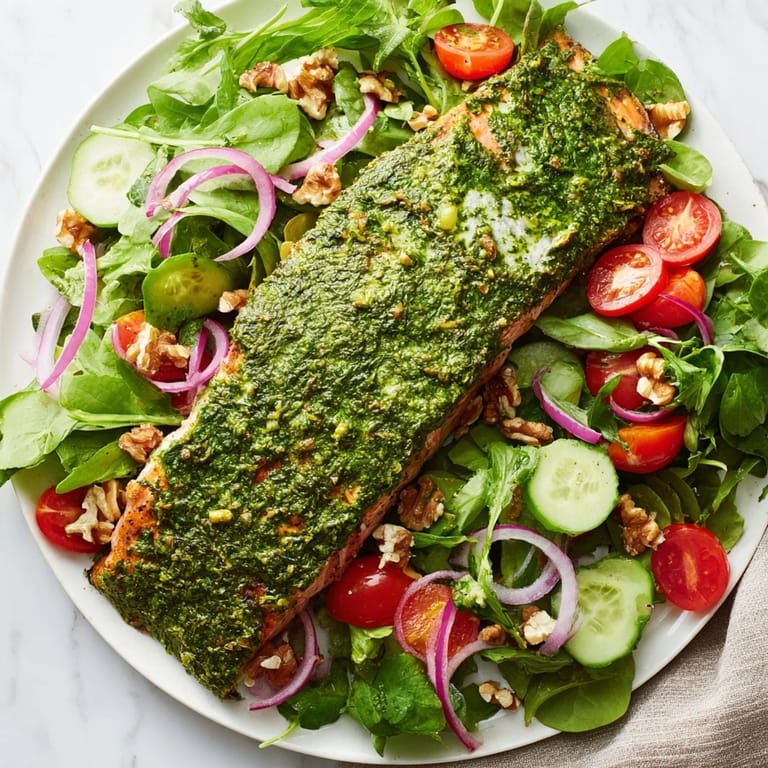
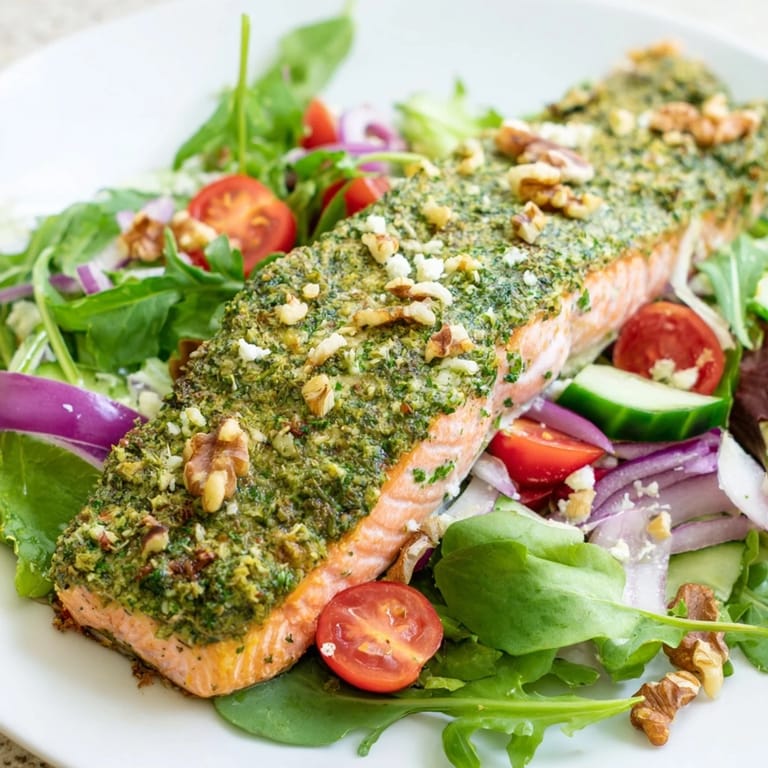
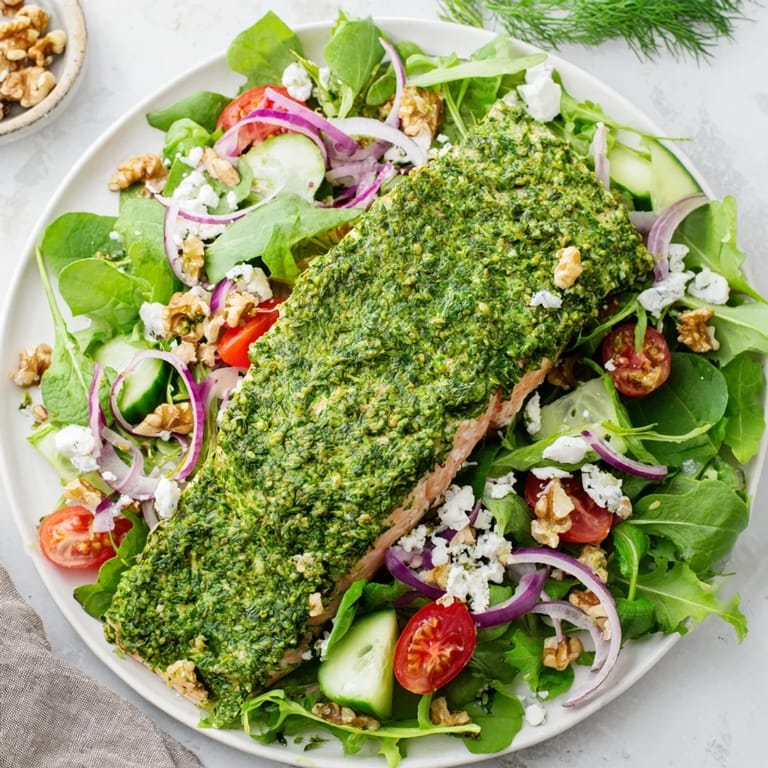
- Drizzle the vinaigrette over the salad and toss gently so every leaf is coated but not drowning. Divide the dressed salad among four plates and top each portion with a warm herb-crusted salmon fillet, letting the heat of the fish slightly warm the greens.
 Save to Pinterest
 There's something about serving warm fish on cool greens that feels like the kitchen gods are smiling down on you—the contrast in temperatures and textures makes every bite interesting. That moment when someone says they didn't expect homemade food to taste this fresh is the reason I keep making this.
Salmon: The Star Ingredient
Salmon has become my favorite fish to cook because it's forgiving and flavorful, and it doesn't require fancy technique to taste wonderful. The oils in salmon keep it moist even if you're a few seconds off on timing, which is something I've learned to appreciate after years of cooking leaner fish that punish imprecision. The herb crust takes advantage of this richness—the herbs don't mask the salmon, they enhance it and make it feel like something special.
Building Layers of Flavor
I've learned that the best dishes work because different elements are doing different jobs: the salmon provides richness and substance, the herbs add brightness and aroma, the greens bring freshness and texture, and the vinaigrette ties it all together with acidity and smoothness. Nothing is competing; everything is supporting. This is the kind of balance that makes people ask for the recipe, not because it's complicated, but because every bite feels thoughtful.
Variations and Celebrations
Over time, I've realized this dish is a canvas for whatever you have on hand—I've made it with trout when salmon was too expensive, added avocado when I wanted more substance, and swapped the greens for warm roasted vegetables when the weather turned cold. Each version feels like the right choice in the moment, which is how I know the structure of the recipe is solid. It's flexible enough to adapt to your kitchen and your mood, which is the hallmark of a recipe worth keeping.
- If you want to add substance, cooked quinoa or farro scattered under the salmon feels natural and complete.
- A squeeze of fresh lemon juice right before eating brightens everything and brings the entire plate into focus.
- This pairs beautifully with a crisp white wine or even just sparkling water with a lemon wedge if you prefer non-alcoholic.
 Save to Pinterest
 This recipe has taught me that elegant food doesn't require hours or a long list of obscure ingredients—it requires attention and fresh things treated with respect. Make this when you want to feel like you've done something good for yourself and the people around you.
Recipe FAQs
- → How do I ensure the salmon stays moist during baking?
Applying the herb paste evenly and baking at 200°C (400°F) for 12–15 minutes helps keep the salmon juicy and tender.
- → Can I substitute other fish for the salmon?
Yes, firm fish like trout work well with the herb crust and baking method described here.
- → What salad greens pair best with this dish?
Mixed greens such as arugula, spinach, and romaine complement the salmon’s flavors and provide a fresh base.
- → How can I make the vinaigrette if I don't have white wine vinegar?
Replacing white wine vinegar with lemon juice offers a similarly bright and tangy flavor profile.
- → Are there optional ingredients to add texture to the salad?
Toasted walnuts or almonds and crumbled feta cheese are great for added crunch and creaminess.