 Save to Pinterest
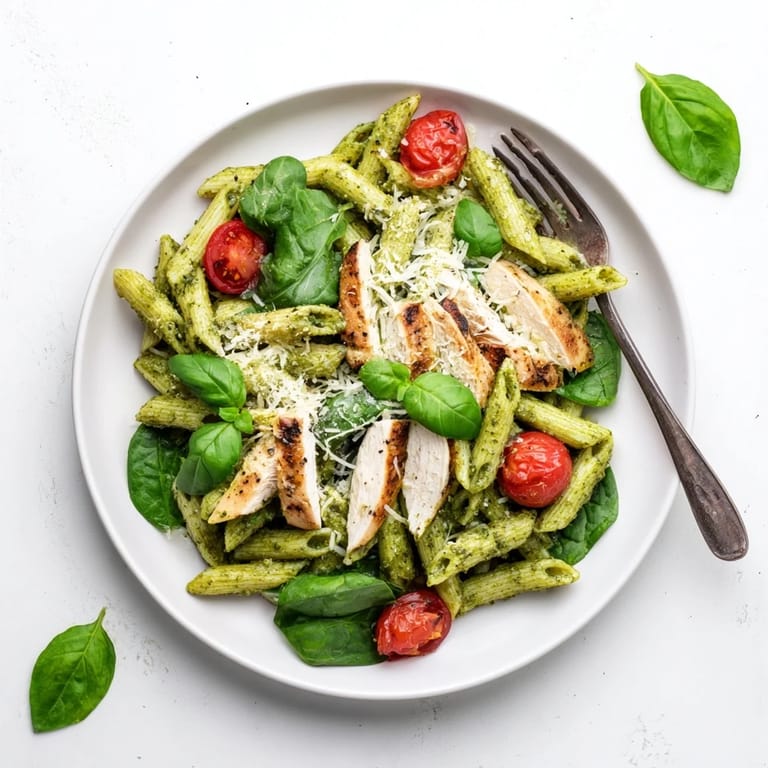
 The smell of garlic hitting hot olive oil always pulls me straight into the moment, no matter how scattered the day has been. This pesto chicken pasta became my go-to after a particularly chaotic Tuesday when I needed dinner on the table fast but still wanted something that felt like I'd actually cooked. I tossed together what I had, and the way the pesto clung to every twist of pasta while the chicken stayed tender and juicy made me wonder why I'd ever overthought weeknight meals. Now it's the dish I turn to when I want comfort without the fuss. It just works.
I made this for a small dinner with friends who showed up hungry and tired from work. We ate straight from the pot with forks in hand, standing around the kitchen island, and nobody cared about plates or formality. The spinach wilted into the warm pasta, the tomatoes burst with sweetness, and the chicken was still warm enough to release steam when we cut into it. That night it became clear that some of the best meals happen when you stop trying to impress and just feed people something real.
Ingredients
- Boneless, skinless chicken breasts: Halving them horizontally makes them cook faster and more evenly, plus they soak up seasoning better with more surface area exposed.
- Penne or fusilli pasta: The ridges and twists grab onto the pesto in a way smooth pasta just can't, making every bite more flavorful.
- Store-bought basil pesto: Not everything needs to be homemade, and a good jarred pesto saves time without sacrificing the bright, herby punch this dish needs.
- Extra-virgin olive oil: Used twice here, once for the chicken and once for the garlic, it adds richness and helps everything come together smoothly.
- Garlic, minced: Just 30 seconds in the pan is enough to release its aroma without turning bitter or burnt.
- Grated Parmesan cheese: It melts into the pasta and adds a salty, nutty depth that makes the pesto creamier.
- Cherry tomatoes, halved: A quick cook softens them just enough to release their juices, adding little bursts of sweetness throughout.
- Baby spinach leaves: They wilt in seconds from the residual heat, adding color and a subtle earthiness without any extra effort.
- Salt and freshly ground black pepper: Season at every stage, tasting as you go, because underseasoned pasta is a missed opportunity.
- Fresh basil leaves: A handful torn over the top right before serving makes the whole dish feel bright and alive.
Tired of Takeout? 🥡
Get 10 meals you can make faster than delivery arrives. Seriously.
One email. No spam. Unsubscribe anytime.
Instructions
- Season and prep the chicken:
- Sprinkle salt and pepper generously over both sides of the halved chicken breasts. Let them sit for a minute while you heat the pan so the seasoning can settle in.
- Grill the chicken:
- Heat 1 tablespoon of olive oil in a grill pan or skillet over medium-high heat until it shimmers. Lay the chicken down and let it sizzle undisturbed for 4 to 5 minutes per side until you see those golden char marks and the meat is cooked through.
- Rest and slice:
- Transfer the chicken to a plate and let it rest for 5 minutes so the juices redistribute. Slice it thinly against the grain for the most tender bite.
- Cook the pasta:
- Bring a large pot of salted water to a rolling boil and cook the pasta according to the package directions until al dente. Before draining, scoop out about 60 ml of the starchy pasta water and set it aside.
- Sauté the garlic:
- In the same pot you used for pasta, heat the remaining tablespoon of olive oil over medium heat. Add the minced garlic and stir for about 30 seconds until it smells fragrant and just starts to turn golden.
- Cook the tomatoes:
- Toss in the halved cherry tomatoes and let them cook for 2 minutes, stirring occasionally, until they soften and start to release their juices.
- Toss with pesto:
- Return the drained pasta to the pot along with the pesto, reserved pasta water, and grated Parmesan. Stir everything together until the pasta is glossy and evenly coated.
- Add chicken and spinach:
- Fold in the sliced chicken and baby spinach, tossing gently until the spinach wilts into the warm pasta. Taste and adjust the seasoning with more salt and pepper if needed.
- Serve:
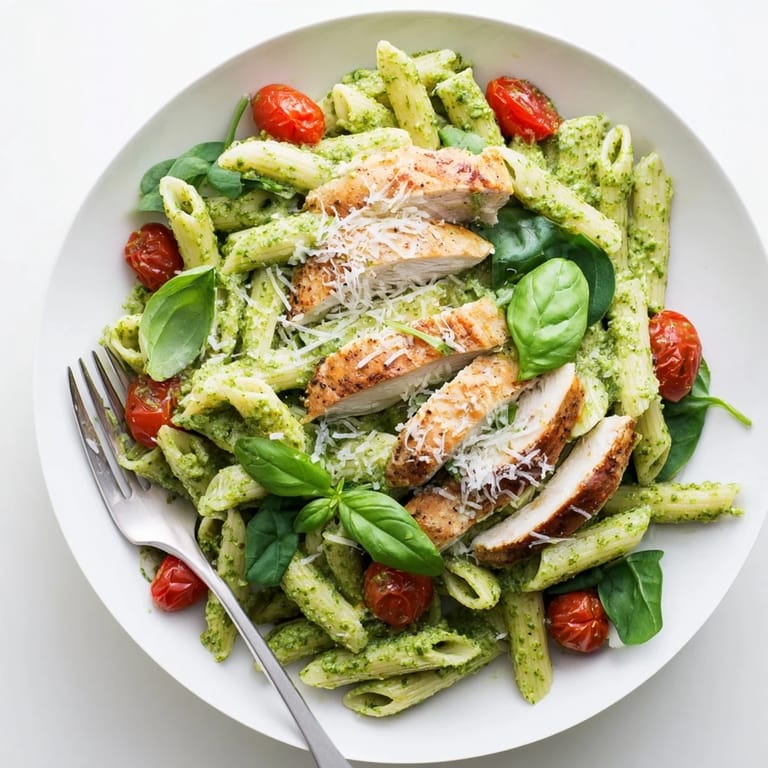
- Divide the pasta among bowls and top with fresh basil leaves and extra Parmesan. Serve it hot while the cheese is still melting.
 Save to Pinterest
 One evening my neighbor knocked on the door just as I was plating this, and I ended up handing her a bowl through the doorway. She texted me an hour later asking for the recipe, and I realized that sometimes the best compliment is when someone wants to make your dinner their own. This dish has a way of turning a regular night into something people remember, not because it's fancy, but because it tastes like care without trying too hard.
Choosing Your Pasta Shape
Penne and fusilli are my top picks because their shapes trap the pesto in all the right places, but I've also used rigatoni and even orecchiette when that's what I had in the pantry. The key is picking something with texture, ridges, or curves that give the sauce something to hold onto. Smooth pasta like spaghetti will work in a pinch, but you'll lose some of that satisfying coating with every twirl. If you're feeling adventurous, a short whole wheat pasta adds a nutty flavor that plays well with the basil.
Making It Your Own
I've swapped the chicken for grilled shrimp on nights when I wanted something a little lighter, and the sweetness of the shrimp with the pesto is honestly magical. For a vegetarian version, cubed and roasted tofu works surprisingly well, especially if you toss it in a little olive oil and garlic before it hits the pan. You can also switch up the pesto entirely, sun-dried tomato pesto gives it a richer, deeper flavor, while arugula pesto adds a peppery bite that wakes up your palate. Sometimes I throw in a handful of toasted pine nuts at the end for extra crunch and richness.
Storage and Reheating
Leftovers keep well in an airtight container in the fridge for up to three days, and I've found they taste even better the next day once the flavors have had time to meld. When reheating, add a splash of water or olive oil to the pan to loosen up the pasta, which tends to soak up the sauce as it sits. I usually reheat it gently on the stovetop over low heat, stirring frequently, because the microwave can make the chicken rubbery. If you're meal prepping, store the chicken separately and toss it in just before serving to keep the texture intact.
- Pair this with a crisp Pinot Grigio or a light Chianti for a simple but elevated dinner.
- A side of garlic bread or a bitter green salad with lemon vinaigrette balances the richness perfectly.
- If you're serving this for guests, set out extra Parmesan, red pepper flakes, and fresh basil so people can customize their bowls.
 Save to Pinterest
 This is the kind of recipe that grows with you, adapting to whatever you have on hand or whoever you're feeding. Keep it in your rotation, and it'll never let you down.
Recipe FAQs
- → Can I use homemade pesto instead of store-bought?
Yes, homemade pesto works beautifully and can be even more flavorful. Use the same amount (120g or ½ cup) and adjust seasoning to taste.
- → What pasta shapes work best for this dish?
Penne and fusilli are ideal as their ridges and shapes catch the pesto sauce. Farfalle, rigatoni, or rotini also work well for coating.
- → How do I prevent the chicken from drying out?
Avoid overcooking by using a meat thermometer (internal temperature should reach 75°C/165°F). Let the chicken rest for 5 minutes after cooking to retain juices.
- → Can I make this dish ahead of time?
This dish is best served fresh, but you can prep ingredients in advance. Cook chicken and store separately, then assemble when ready to serve for optimal texture.
- → What can I substitute for spinach?
Arugula, kale (chopped finely), or fresh basil leaves work well. Add heartier greens earlier in cooking to ensure they wilt properly.
- → Is this dish suitable for meal prep?
Yes, store in airtight containers for up to 3 days. Reheat gently with a splash of water or olive oil to refresh the sauce and prevent drying.