 Save to Pinterest
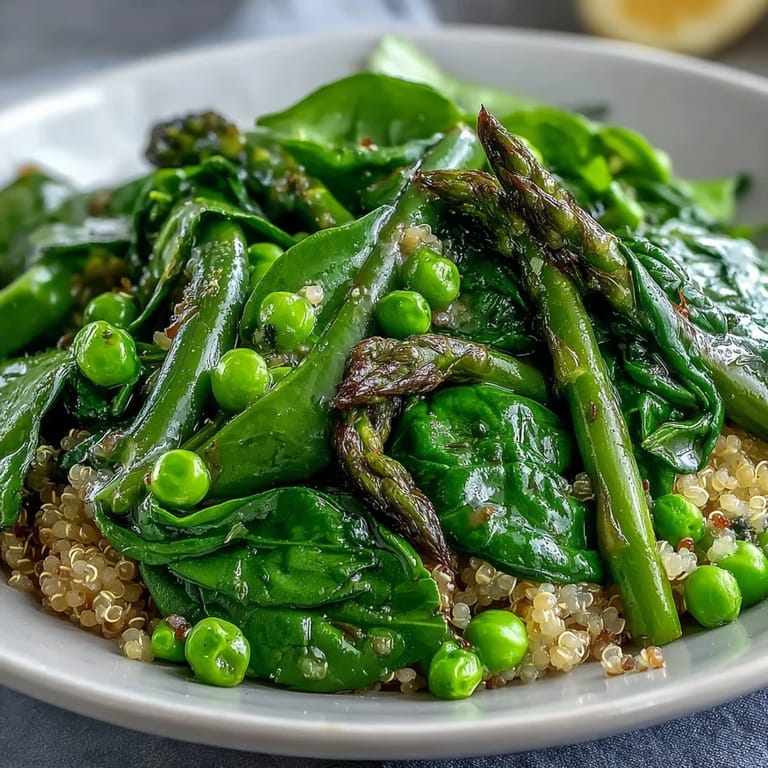
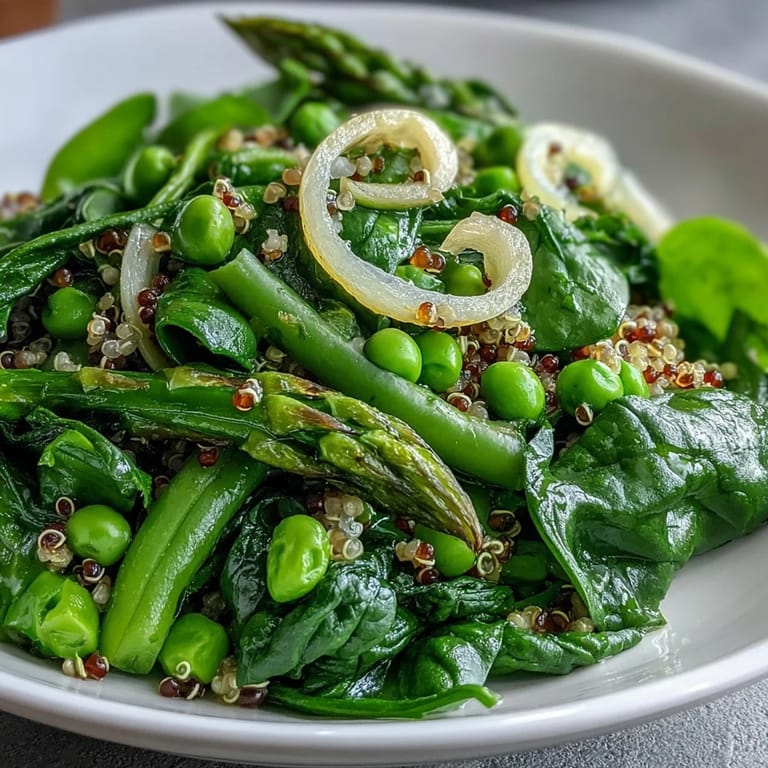
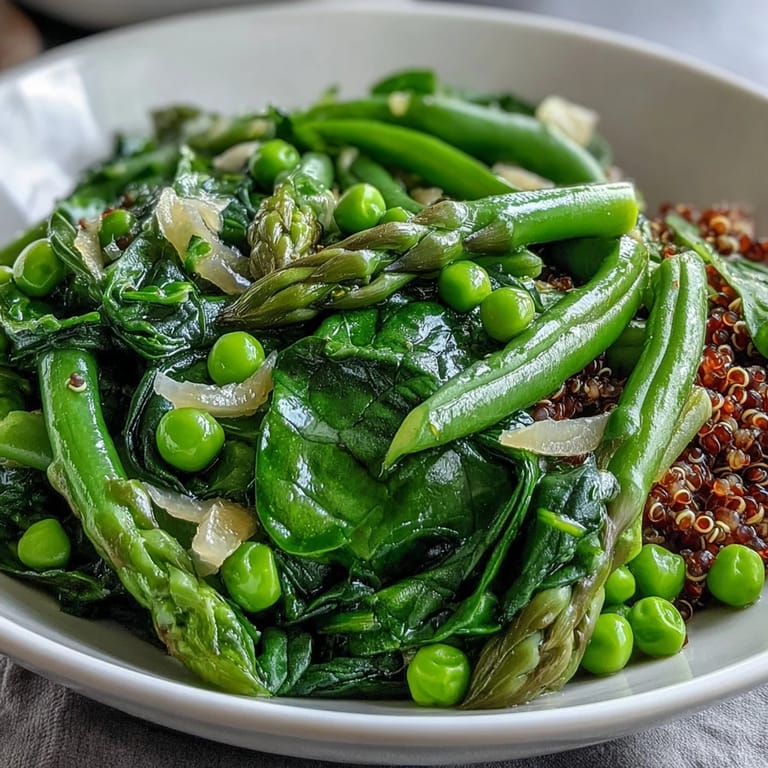
 The skillet was still warm from breakfast when I decided to use up that bundle of asparagus wilting in the crisper. I tossed in some frozen peas, a handful of green beans I'd bought on impulse, and suddenly the kitchen smelled like a garden in April. What started as fridge cleanup turned into a bowl so bright and satisfying I made it three times that week. Now it's my go-to when I want something that feels both virtuous and indulgent.
I brought this to a potluck once, worried it might look too plain next to the casseroles and dips. Instead, people kept coming back for seconds, asking if I'd added something secret to the dressing. One friend admitted she normally hated quinoa but couldn't stop eating this. I think it's because the vegetables stay crisp and the lemon cuts through everything just right. It proved to me that simple food, done with care, often wins.
Ingredients
- Quinoa, brown rice, or farro: These grains give the bowl structure and staying power, and I love how farro adds a chewy, nutty bite that quinoa doesn't have.
- Fresh or frozen green peas: Frozen peas are a lifesaver here because they're already shelled and cook in minutes, plus they stay sweet and tender.
- Asparagus: Trim the woody ends by bending each spear until it snaps naturally, and cut the rest into even pieces so they blanch uniformly.
- Green beans: Look for firm, bright beans and trim both ends before cutting them into manageable lengths.
- Baby spinach leaves: These wilt down quickly and add a soft, earthy layer without any bitterness.
- Extra-virgin olive oil: Use a fruity, good-quality oil because it's the backbone of the dressing and you'll taste every drop.
- Freshly squeezed lemon juice and zest: The zest adds aromatic oils that bottled juice can't replicate, so don't skip it.
- Dijon mustard: This emulsifies the dressing and adds a subtle sharpness that balances the sweetness.
- Maple syrup or honey: Just a teaspoon rounds out the acidity and keeps the dressing from being too tart.
- Garlic clove: Mince it finely so it distributes evenly and doesn't overpower the delicate greens.
- Toasted pumpkin or sunflower seeds: These add crunch and a little richness, and toasting them in a dry pan for a few minutes makes all the difference.
- Crumbled feta cheese: Optional but wonderful for a creamy, salty contrast, though the bowl is just as good without it.
- Fresh herbs: Mint, parsley, or dill bring brightness and make the bowl feel restaurant-worthy.
Tired of Takeout? 🥡
Get 10 meals you can make faster than delivery arrives. Seriously.
One email. No spam. Unsubscribe anytime.
Instructions
- Cook the grains:
- Rinse your grains under cold water to remove any dust or bitterness, then simmer them gently in salted water until tender and fluffy. Fluff with a fork and let them steam off the heat for a few minutes so they don't get gummy.
- Prepare the vegetables:
- Blanch each vegetable separately in boiling salted water for 2 to 3 minutes until they're just tender and still vibrant green, then plunge them into ice water to lock in that color. Drain them well so they don't water down your bowl.
- Sauté the spinach:
- Toss the spinach in a hot skillet for just a minute or two until it wilts but still holds its shape. You want it soft but not mushy.
- Make the lemon dressing:
- Whisk together the olive oil, lemon juice, zest, mustard, maple syrup, garlic, salt, and pepper until it looks smooth and creamy. Taste it and adjust the salt or sweetness to your liking.
- Assemble the bowls:
- Divide the grains among four bowls and arrange the blanched vegetables and spinach on top in neat sections or toss them together. Drizzle the dressing generously over everything.
- Garnish:
- Sprinkle with toasted seeds, crumbled feta if you're using it, and a handful of fresh herbs. Serve right away while everything is still fresh and bright.
 Save to Pinterest
 One Sunday afternoon, I made this for my sister who was recovering from a cold and craving something fresh. She sat at the kitchen table in her bathrobe, eating slowly, and told me it tasted like spring was finally here. That moment reminded me how food can be more than fuel, it can be comfort, hope, and a little burst of color when you need it most. I've kept this recipe close ever since.
Choosing Your Grains
Quinoa cooks the fastest and has a light, fluffy texture that doesn't compete with the vegetables. Brown rice takes longer but adds a heartier, chewier base that's more filling. Farro is my personal favorite because it has a nutty flavor and holds up beautifully under the dressing without turning mushy. You can also swap in bulgur or couscous if that's what you have on hand. Whatever you choose, just make sure it's cooked until tender but still has a little bite.
Getting the Vegetables Right
The key to this bowl is keeping the vegetables bright and crisp, which means not overcooking them. Blanching each vegetable separately lets you control the timing perfectly, and the ice bath stops the cooking instantly so they stay vibrant. If you're short on time, you can roast them instead, but blanching gives you that fresh, snappy texture that makes the bowl feel light. Don't crowd the pot when blanching or the water temperature will drop and your vegetables will steam instead of cook evenly.
Making It Your Own
This recipe is endlessly adaptable depending on what's in season or what you're craving. In summer, swap in zucchini or snap peas, and in fall, try roasted Brussels sprouts or kale. For extra protein, add grilled chicken, crispy tofu, or a scoop of chickpeas tossed in olive oil and paprika. You can also change up the dressing by adding tahini for creaminess or a pinch of red pepper flakes for heat.
- Try swapping the lemon dressing for a tahini-based one if you want something richer and more savory.
- Add a soft-boiled egg on top for extra richness and a beautiful golden yolk that breaks into the grains.
- If you're serving this to kids, leave the garlic out of the dressing and let them add feta or seeds themselves.
 Save to Pinterest
 This bowl has become my answer to those days when I want something healthy but not boring, quick but not careless. It's proof that a handful of good ingredients and a little attention can turn into something you'll actually crave.
Recipe FAQs
- → Can I make this bowl ahead of time?
Yes! Cook the grains and blanch the vegetables up to 2 days in advance. Store them separately in airtight containers in the refrigerator. Keep the dressing in a jar and assemble just before serving to maintain freshness and texture.
- → What grains work best for this bowl?
Quinoa, brown rice, and farro all work beautifully. Quinoa cooks fastest at 15 minutes, while brown rice takes about 35 minutes. Bulgur or couscous are also great alternatives if you're short on time.
- → How do I blanch vegetables properly?
Bring salted water to a boil, add vegetables, and cook for 2–3 minutes until just tender. Immediately transfer to ice water to stop cooking and preserve vibrant color. Drain well before assembling.
- → Can I add protein to this bowl?
Absolutely! Grilled chicken, baked tofu, roasted chickpeas, or even a soft-boiled egg make excellent protein additions. Simply cook your protein separately and arrange on top when assembling.
- → Is this bowl freezer-friendly?
The cooked grains freeze well for up to 3 months. However, fresh vegetables are best enjoyed freshly blanched for optimal texture. Store dressing separately and add fresh toppings just before serving.
- → What other vegetables can I use?
Feel free to swap in seasonal favorites like sugar snap peas, broccoli florets, shaved Brussels sprouts, or shredded kale. The versatile grain base and bright dressing complement almost any fresh vegetables.