 Save to Pinterest
 The first time I made wild rice pilaf was during a rainy November weekend when I wanted something that felt comforting but still special. My tiny apartment smelled incredible as the earthy mushrooms mingled with that distinctive nutty aroma of wild rice simmering away. I ended up eating half of it straight from the pan while standing at the stove, which is always the sign of a good recipe. Now it is my go-to when I need a dish that looks impressive but basically cooks itself.
I served this at a dinner party last winter alongside roasted chicken and my friend who claims to hate mushrooms went back for thirds. She confessed she barely noticed they were there because everything had melded into this incredible savory harmony. There is something about the combination of thyme and slowly sautéed vegetables that makes a house feel like home.
Ingredients
- 1 cup wild rice rinsed: Wild rice is technically a grass not rice which gives it that signature chew and nutty flavor. Rinsing removes any debris and helps it cook more evenly.
- 2 cups low-sodium vegetable broth: I prefer low-sodium broth because I can control the salt level better. Homemade broth works beautifully here if you have it.
- 1/2 cup water: The extra water prevents the rice from drying out before it is fully tender.
- 2 tablespoons olive oil: A neutral oil with a higher smoke point works best for sautéing the vegetables.
- 1 medium yellow onion finely chopped: Yellow onions become sweet and mellow when cooked down forming the flavor foundation.
- 2 cloves garlic minced: Fresh garlic adds that aromatic kick that ties everything together.
- 8 oz (225 g) cremini or button mushrooms sliced: Cremini mushrooms have a deeper earthier flavor than white buttons. Slice them evenly so they cook at the same rate.
- 1 celery stalk finely chopped: Celery adds a subtle herbal freshness that brightens the rich elements.
- 1 medium carrot diced: The carrot contributes natural sweetness and beautiful color contrast.
- 1 teaspoon fresh thyme leaves: Fresh thyme has a softer more floral flavor than dried. Strip the leaves backwards against the stem.
- 1 bay leaf: This herb releases its subtle woodsy flavor slowly during cooking.
- Salt and freshly ground black pepper: Taste as you go since the salt level depends on your broth.
- 2 tablespoons fresh parsley chopped: Fresh parsley adds a bright herbal finish and makes the dish look gorgeous.
- Optional 1/4 cup toasted slivered almonds: Toasted almonds add a wonderful crunch and nutty element that complements the wild rice perfectly.
Tired of Takeout? 🥡
Get 10 meals you can make faster than delivery arrives. Seriously.
One email. No spam. Unsubscribe anytime.
Instructions
- Start the wild rice:
- Combine the wild rice vegetable broth and water in a medium saucepan. Bring everything to a boil then reduce heat to low cover tightly and simmer for 40 to 45 minutes. You will know it is done when the grains are tender and some have started to split open revealing their white interior.
- Sauté the base vegetables:
- While the rice simmers heat olive oil in a large skillet over medium heat. Add the onion celery and carrot. Cook for 5 to 6 minutes stirring occasionally until the vegetables soften and the onion turns translucent.
- Add the aromatic elements:
- Toss in the garlic and sliced mushrooms. Cook for 6 to 8 minutes until the mushrooms are golden brown and most of their moisture has evaporated. This step concentrates their flavor and prevents the final dish from being watery.
- Season the mushroom mixture:
- Stir in the thyme bay leaf salt and pepper. Let everything cook together for just one minute so the herbs bloom and release their oils. Remove the bay leaf before combining with the rice.
- Combine everything:
- Gently fold the cooked wild rice into the mushroom mixture. Be careful not to overmix since wild rice is delicate. Taste and add more salt or pepper if needed.
- Finish and serve:
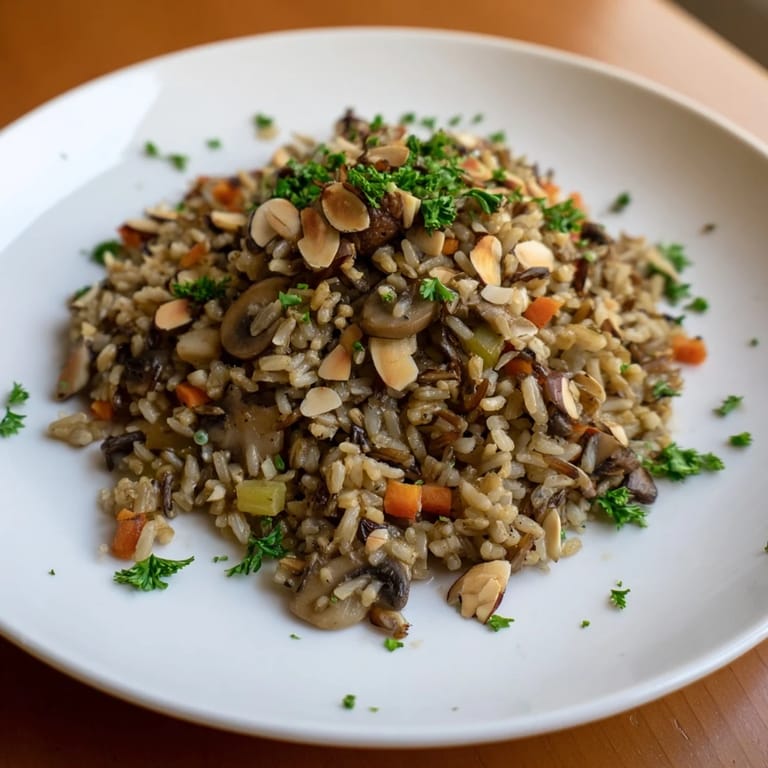
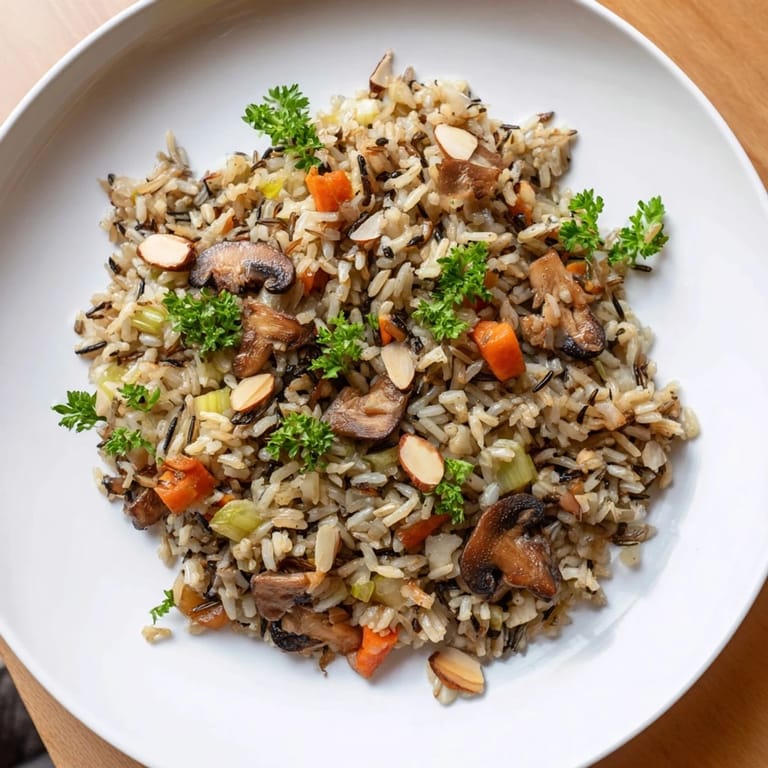
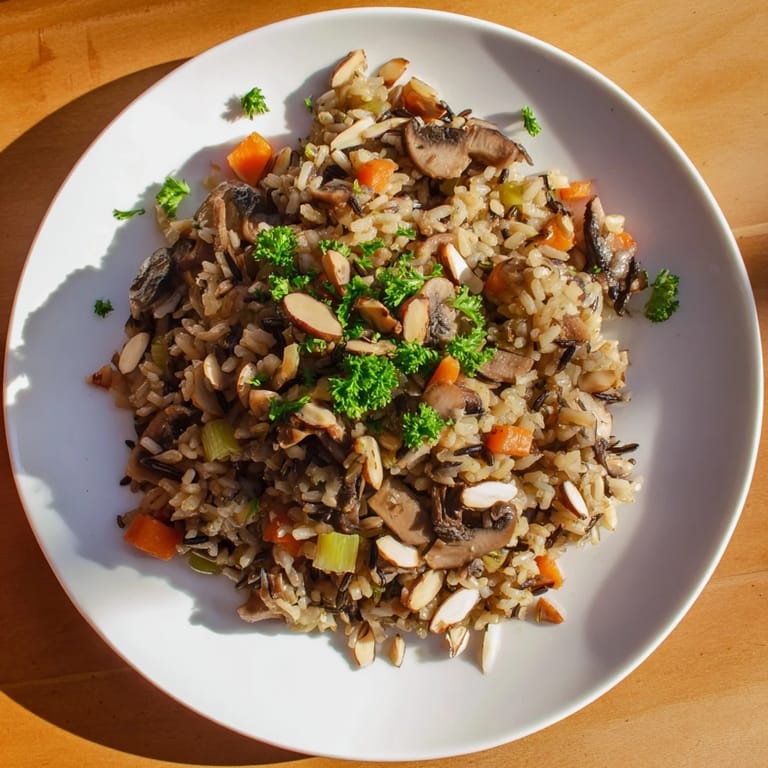
- Transfer the pilaf to a serving dish. Sprinkle with fresh parsley and toasted almonds if using. Serve warm while the rice still has that perfect fluffy texture.
 Save to Pinterest
 This pilaf has become my contribution to every family gathering and holiday potluck. Last Thanksgiving my grandmother asked for the recipe which is basically the highest culinary compliment I have ever received.
Make Ahead Magic
You can cook the wild rice and sauté the vegetables up to two days in advance. Store them separately in airtight containers in the refrigerator. Combine and gently reheat with a splash of broth or water to refresh the texture.
Flavor Variations
Add a splash of dry white wine when cooking the mushrooms for an elegant touch or stir in a handful of dried cranberries during the last few minutes for unexpected sweetness. Sometimes I toast some pecans instead of almonds and the result is just as delicious.
Serving Suggestions
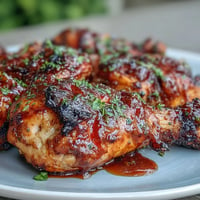
This pilaf is substantial enough to stand alone as a vegetarian main especially when topped with a fried egg or some crumbled goat cheese. It also pairs beautifully with roasted salmon or grilled chicken.
- Serve it in a shallow bowl to show off the beautiful mixture of colors
- Let guests add their own finishing salt at the table
- Keep any leftovers to toss into salads the next day
 Save to Pinterest
 There is something deeply satisfying about a dish that comes together simply but tastes like it took hours to perfect. I hope this becomes one of those recipes you turn to again and again.
Recipe FAQs
- → Can I prepare this wild rice pilaf ahead of time?
Absolutely. This pilaf keeps well in the refrigerator for 3-4 days and actually develops deeper flavors after sitting. Reheat gently with a splash of broth or water to restore moisture. You can also freeze it for up to 3 months in an airtight container.
- → What type of mushrooms work best in this dish?
Cremini mushrooms are ideal for their earthy flavor and meaty texture, but button mushrooms work perfectly fine. For more variety, try mixing in shiitake or portobello mushrooms. Dried porcini mushrooms, rehydrated and added with the fresh ones, would add intense umami flavor.
- → Why does wild rice take longer to cook than regular rice?
Wild rice is actually a semi-aquatic grass, not true rice, with a tough outer hull that requires more time to soften. The 40-45 minute simmering time helps the grains burst open slightly while maintaining their chewy texture. Don't rush this step—undercooked wild rice is unpleasantly tough.
- → Can I substitute other grains for wild rice?
You can replace half the wild rice with brown rice for a different texture, though you may need to adjust cooking times since brown rice typically cooks faster. For a completely different dish, try farro or wheat berries as alternatives—just follow package cooking instructions and adjust liquid accordingly.
- → How do I know when the wild rice is done cooking?
Properly cooked wild rice should be tender but still slightly chewy, with some grains splitting open to reveal their white interior. Taste a few grains—they shouldn't be hard or crunchy in the center. If excess liquid remains, simply drain it off before combining with the vegetables.
- → What proteins pair well with this pilaf?
Roasted chicken, turkey, or pork loin are classic pairings. For a vegetarian protein boost, serve alongside roasted chickpeas or add cubed tofu during the final minutes of cooking. The pilaf also works beautifully with grilled salmon or baked white fish.