 Save to Pinterest
 There's something about a weeknight when you're staring at the pantry and realize you have everything for a meal that feels way more impressive than it should be. I discovered this beef taco pasta skillet when I was juggling too many things at once and couldn't face the idea of multiple pans. One skillet, twenty-five minutes, and suddenly dinner tasted like I'd planned it all along. The first time I made it, my kid asked for seconds before I'd even sat down, which meant I was onto something real.
I remember making this on a Tuesday night when my neighbor stopped by unexpectedly, and within ten minutes, the aroma of browning beef and garlic had her asking what was for dinner. By the time the cheese melted into those little pockets of pasta, she was already reaching for a bowl. That's when I realized this dish has a way of turning an ordinary evening into something worth sharing.
Ingredients
- Ground beef (1 lb, 85% lean): The lean ratio keeps things from getting greasy, but it still delivers that savory depth that makes this feel substantial.
- Yellow onion and garlic: These two are your flavor foundation; don't rush the softening step or you'll miss the sweetness that balances the spice.
- Taco seasoning (1 packet or homemade): This is what transforms ground beef and pasta into something that tastes intentional rather than improvised.
- Short pasta (8 oz): Rotini, penne, or shells work best because they trap the broth and sauce in all their little crevices.
- Beef broth and diced tomatoes (2 cups broth, one 14.5 oz can): Together they become the liquid that cooks the pasta right in the skillet, infusing every strand with flavor.
- Shredded cheddar cheese (1½ cups): The final blanket that melts into everything; sharp cheddar gives it more character than mild.
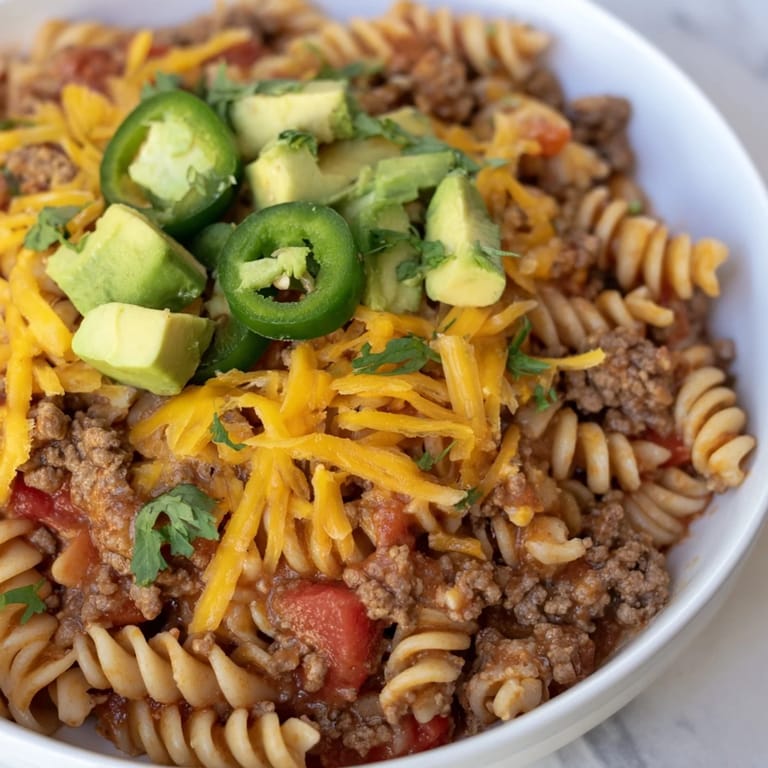
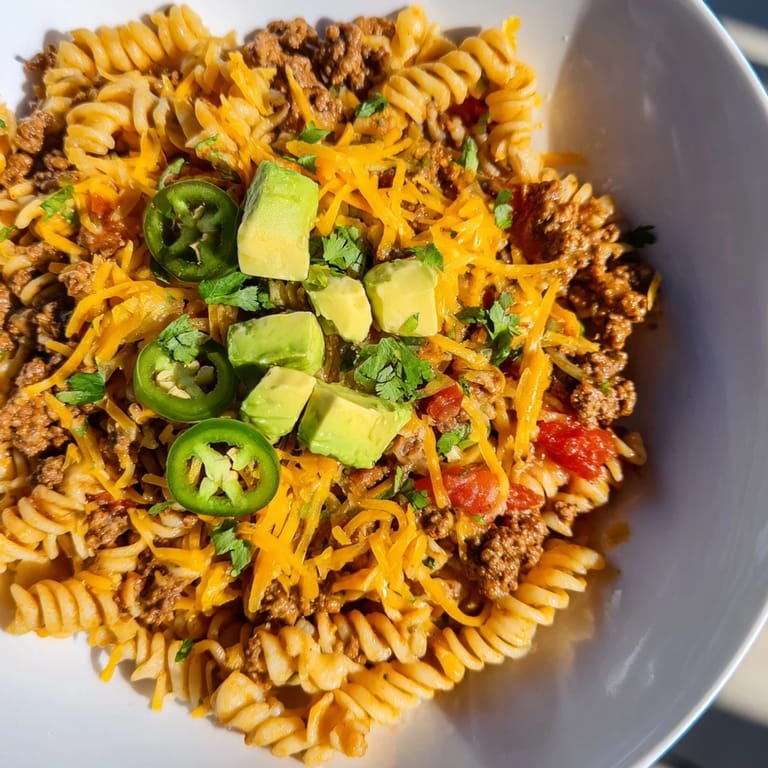
- Sour cream, cilantro, jalapeño, avocado: These are your personal touches that turn a simple skillet into something you'll want to eat again next week.
Tired of Takeout? 🥡
Get 10 meals you can make faster than delivery arrives. Seriously.
One email. No spam. Unsubscribe anytime.
Instructions
- Brown the beef:
- Heat your skillet over medium-high heat and add the ground beef, breaking it apart as it cooks. You're looking for that deep brown color with crispy edges, which takes about five to six minutes. Drain excess fat if there's more than a thin sheen left in the pan.
- Build the flavor base:
- Toss in the chopped onion and let it soften for a few minutes until it starts to turn translucent, then add the garlic for just one minute so it doesn't burn. This short window is where the aromatic magic happens.
- Season and coat:
- Sprinkle the taco seasoning, salt, and pepper over everything and stir until every piece of beef gets that spice coating. You want it to smell like tacos right now.
- Add pasta and liquids:
- Pour in the uncooked pasta, beef broth, and canned tomatoes with all their juice. Give it a good stir so nothing sticks to the bottom, then turn up the heat and let it come to a boil.
- Simmer until tender:
- Reduce the heat to medium-low, cover your skillet, and let it bubble away for twelve to fifteen minutes, stirring occasionally so the pasta cooks evenly. You'll know it's ready when the pasta is tender and most of the liquid has been absorbed.
- Melt the cheese:
- Remove from heat, scatter the shredded cheddar over the top, cover again, and let it sit for two to three minutes while the residual heat does the melting work. Don't stir yet; let that cheese layer stay on top.
- Serve and garnish:
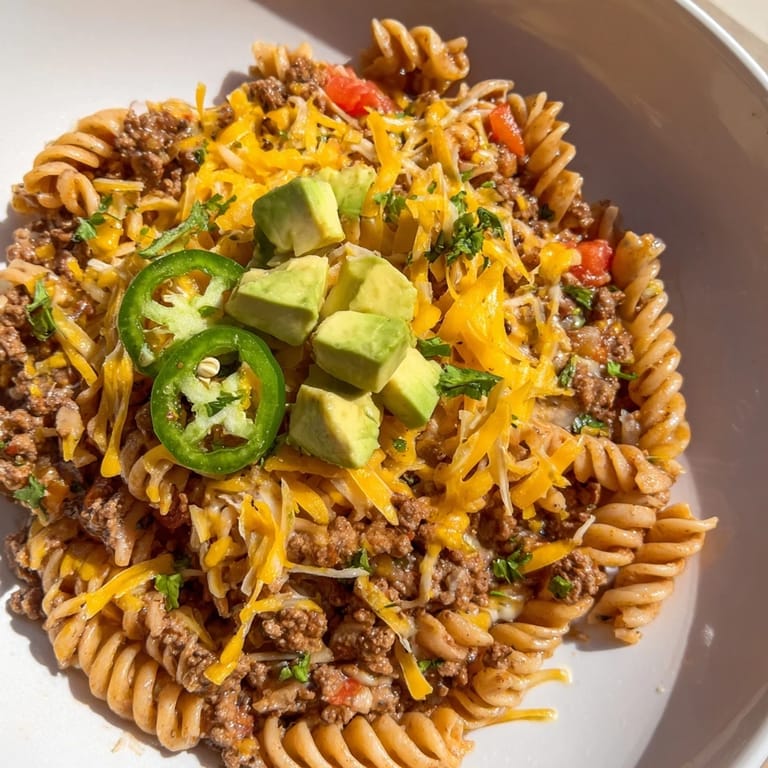
- Top with cilantro, jalapeño slices, avocado, and a dollop of sour cream if you want that cooling contrast. The fresh toppings make each bite feel less heavy and more complete.
 Save to Pinterest
 There was a night when I served this to my sister's family, and her youngest, who claims to hate "weird" foods, went back for thirds and asked if we could make it again tomorrow. That moment reminded me that sometimes the best meals aren't about complexity; they're about the comfort of flavors that actually belong together.
Why One Skillet Changes Everything
Cooking pasta in broth instead of water is the quiet genius of this dish. Instead of cooking pasta in plain water and then building flavor separately, everything happens together, so the pasta absorbs all that beefy, taco-seasoned richness as it softens. It means fewer steps, fewer dirty dishes, and a finished meal that tastes more cohesive than if you'd made the components apart.
Simple Swaps That Work
This recipe is flexible enough to follow you through whatever's in your fridge. Ground turkey or chicken will give you something lighter but still satisfying, and honestly, Monterey Jack or a Mexican cheese blend add a different kind of flavor that's worth exploring. Even the pasta shape matters less than you'd think; as long as it's something short enough to twirl on a fork, you're good.
Making It Your Own
The joy of this dish is how it invites you to make it personal. Some nights I add a pinch of cayenne when I'm feeling bold, or a handful of fresh chili if I want heat that lingers. Other times I'll throw in black beans, corn, or even bell peppers just because they're there and I want them to be.
- Leftovers keep in the fridge for three days and actually taste better the next day as flavors settle together.
- If you're feeding more people, the recipe doubles easily; just use a larger skillet or work in batches.
- Serve with extra cilantro, lime wedges, and that sour cream on the side so everyone builds their own perfect bite.
 Save to Pinterest
 This is the kind of meal that sneaks into your regular rotation because it's easy enough for a Tuesday but tastes good enough to serve to people you actually want to impress. Once you make it, you'll keep making it.
Recipe FAQs
- → Can I substitute ground beef with other meats?
Yes, ground turkey or chicken can be used as lighter alternatives to beef without sacrificing flavor.
- → What types of pasta work best in this skillet meal?
Short pasta shapes like rotini, penne, or shells hold sauce well and cook evenly in the skillet.
- → How can I adjust the spice level?
Add cayenne pepper or fresh chopped chili when cooking the onions for an extra spicy kick.
- → Is it necessary to use taco seasoning packet?
Homemade taco seasoning works equally well and allows you to control sodium and spices.
- → What are good cheese alternatives to cheddar?
Monterey Jack or a Mexican cheese blend melt nicely and complement the Tex-Mex flavors.