 Save to Pinterest
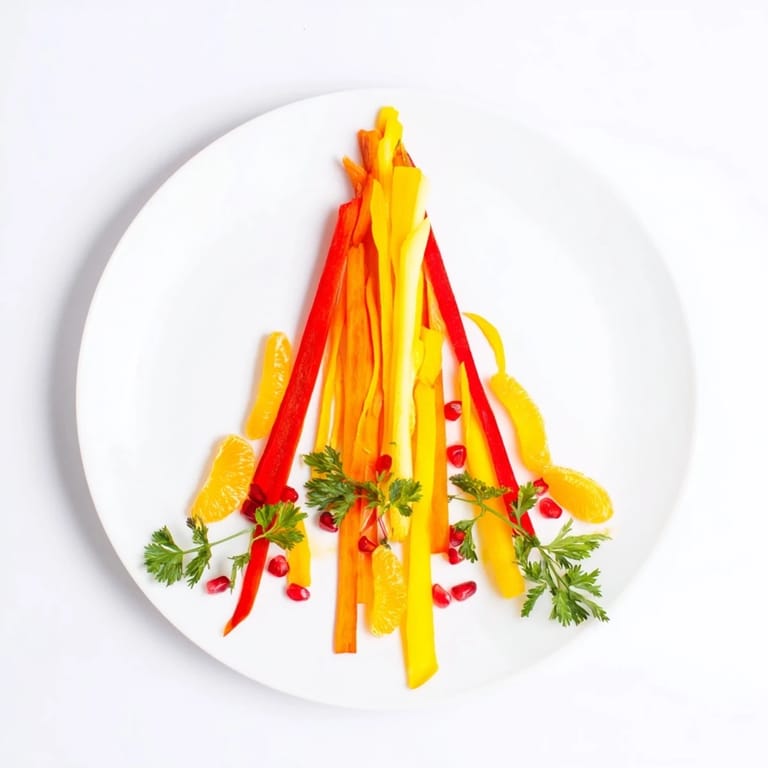
 I'll never forget the first time I created this centerpiece for a winter gathering—I was inspired by watching the flames flicker at a bonfire the night before, and I thought, why not bring that warmth to the table? Standing in my kitchen at dawn, arranging those vibrant orange carrots and red peppers, I felt like I was recreating something magical but entirely edible. My guests were mesmerized when they walked in; they almost didn't want to eat it, but of course they did.
I remember my daughter's birthday party last spring when I made this for the first time. She and her friends circled around it like it was a campfire itself, reaching in carefully to grab pieces of pepper and carrot. Someone said, 'This tastes like it should be on a magazine cover,' and honestly, that's when I knew I'd created something special.
Ingredients
- 2 large carrots, peeled and cut into long thin sticks: These are your flames—the backbone of the whole arrangement. Look for carrots with a deeper orange color; they photograph beautifully and taste sweeter. I learned to cut them lengthwise rather than cross-wise; it creates those dramatic flame-like shapes that make people stop and stare.
- 1 yellow bell pepper, seeded and sliced into strips: This is where the magic happens with color layering. Yellow represents the hottest part of the flame. Choose peppers that feel firm and heavy for their size; they'll have more juice and crunch.
- 1 red bell pepper, seeded and sliced into strips: The dramatic finale of your color story. Red peppers are slightly sweeter than yellow ones, which I think makes them worth every penny. They add both visual impact and a subtle sweetness that keeps people coming back.
- 3 mandarins, peeled and segmented: These are your glowing embers. Mandarins specifically—not regular oranges—because they're easier to peel and their segments are more delicate. The natural sweetness and juiciness add another dimension to the whole arrangement.
- Fresh parsley or mint sprigs: The finishing touch that makes it look like ashes settling around a dying fire. I prefer mint for its freshness, but parsley adds an earthy sophistication. These aren't just for show; they're genuinely delicious little bites.
- 1 small handful pomegranate seeds (optional): If you want to add extra sparkle and a burst of tart sweetness, these jewel-like seeds are worth it. They catch the light and make the whole arrangement shimmer like embers catching wind.
- 1/2 cup hummus or yogurt-based dip: The anchor that turns this from decoration into a proper appetizer. I prefer hummus for its earthiness, but yogurt-based dips add a cooling contrast if your guests want something lighter.
Tired of Takeout? 🥡
Get 10 meals you can make faster than delivery arrives. Seriously.
One email. No spam. Unsubscribe anytime.
Instructions
- Prep Everything First:
- This is your foundation. Cut all your vegetables into long, thin sticks or strips—think of them as individual flames you're about to choreograph together. As you cut, arrange them in piles by color on your cutting board. This isn't just tidiness; it's actually helping you visualize the final arrangement before you even touch the serving plate.
- Build Your Flame Base:
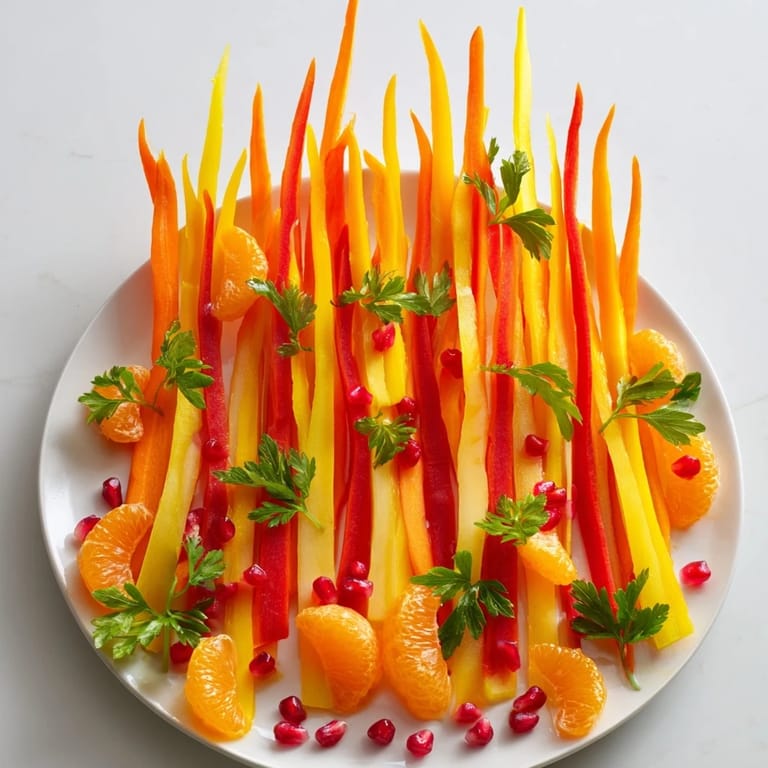
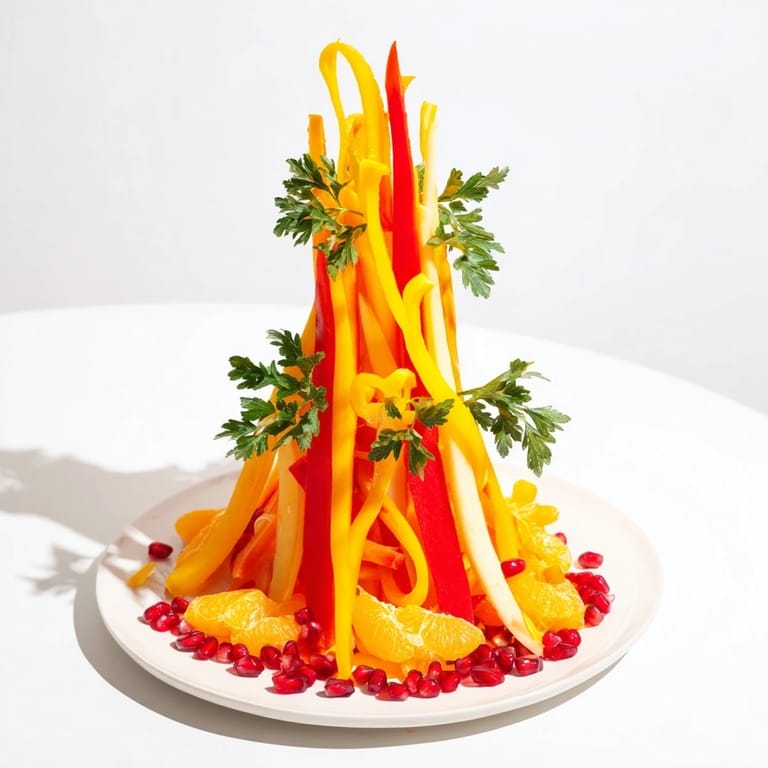
- Take those carrot sticks and arrange them vertically in the center of your round plate, leaning them together like a teepee. They should be touching but loose enough that they look like they're naturally radiating outward. This is the moment where it starts looking intentional rather than accidental.
- Create the Flicker Effect:
- Now comes the artistic part—weave those yellow and red pepper strips among the carrots, alternating colors as you go. Lean them at slightly different angles so they look organic and alive, like flames dancing. Don't be too precious about it; slight imperfection actually makes it look more like real fire.
- Add Dimension with Mandarins:
- Tuck mandarin segments at various heights throughout the arrangement. Some should nestle into gaps at the base, others tucked higher up. These bright orange moments break up the linearity and add pops of juiciness that catch your eye as it travels up the arrangement.
- Scatter the Ashes:
- Arrange fresh parsley or mint sprigs around the base of your bonfire. This creates the impression of embers and ash settling, and it grounds the whole composition visually. The green is essential; it's the cooling contrast to all that warmth above.
- Optional Sparkle:
- If you're using pomegranate seeds, scatter them over the arrangement now. They'll nestle into little gaps and catch whatever light is in the room, creating a magical shimmer effect. This is the step that makes people lean in closer.
- The Final Touch:
- Place your bowl of hummus or dip off to the side, close enough to be part of the scene but not so close that it competes with your centerpiece. Step back and look at it from different angles. You've just created something that's both a feast for the eyes and the mouth.
 Save to Pinterest
 There was one moment during my Thanksgiving dinner when my mother-in-law, who rarely compliments my cooking, looked at this centerpiece and simply said, 'You made that?' That's when I realized this wasn't just food; it was art that people could actually eat, and somehow that made it matter more.
The Secret to Stunning Color
The magic of this centerpiece lies in understanding how warm colors work together. Orange, yellow, and red in proximity to each other create this optical warmth that genuinely feels like heat. But here's what I discovered: freshness amplifies everything. A slightly tired pepper or a carrot that's been in the fridge too long will dull your whole palette. Shop the day before or the day of if you can, and choose produce that feels heavy and looks glossy. When you cut into that pepper and it still has moisture beading on the inside, you know you've got the right starting point.
Timing and Temperature Matters
I used to make this hours ahead and let it sit at room temperature, only to watch it slowly wilt as serving time approached. Now I keep everything in the refrigerator until the last possible moment, pulling it out maybe 15 minutes before guests arrive. Cold vegetables hold their structure better and stay crisper longer. The contrast between the cool, snappy produce and the warm hospitality of the table is actually part of what makes this work. Room-temperature vegetables feel limp by comparison.
Making It Your Own
The framework of this arrangement is forgiving enough to adapt to what you have on hand or what's in season. I've added golden beets for their earthy sweetness, thin slices of blood orange for deeper color, and even small heirloom tomatoes tucked into the base for pops of unexpected color. The principle remains the same: think in terms of color temperature and height, and build from the center outward. Every time you make it, it'll be slightly different, and that's precisely what makes it feel homemade and genuine.
- Try adding thin strips of yellow or golden carrot for extra color variation without changing the overall warmth
- Fresh mint leaves scattered throughout add brightness, while parsley provides earthiness—choose based on your other menu items
- If you're serving this at room temperature, assemble it no more than an hour before your guests arrive for maximum crispness
 Save to Pinterest
 Every time I make this, I'm reminded that the best dishes are the ones that feed both the eyes and the stomach. This centerpiece does exactly that.
Recipe FAQs
- → How can I make the centerpiece look more vibrant?
Use fresh, firm carrots and brightly colored bell peppers, and add pomegranate seeds for sparkle and contrast.
- → What other fruits or vegetables can enhance the arrangement?
Try adding thin strips of golden beet or yellow carrots to increase color variety and depth.
- → How do I keep the produce fresh before serving?
Prepare just before the event or cover and refrigerate for up to an hour to maintain freshness without wilting.
- → What dips pair well with this centerpiece?
Hummus or yogurt-based dips complement the fresh vegetables and mandarins nicely without overpowering flavors.
- → Is this arrangement suitable for special diets?
Yes, it is naturally vegan and gluten-free. Just check dip ingredients for potential allergens.