 Save to Pinterest
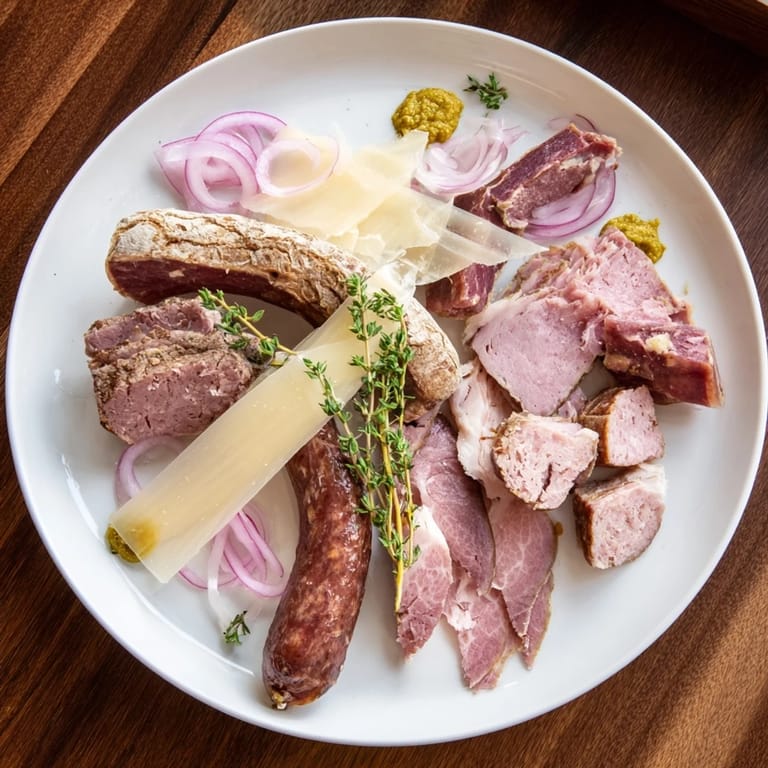
 There's a moment when you set down a board and watch people's faces light up—that's when I knew this platter had something special. It started as a challenge to myself: could I make something that felt both effortlessly elegant and boldly honest, with no cooking required? The answer arrived on a wooden board, a clash of thick-cut meats and gossamer-thin cheese ribbons that somehow felt like a conversation between two different kitchen philosophies. I've served it dozens of times now, and it never fails to become the centerpiece everyone gravitates toward.
I remember assembling this for the first time at a dinner party when my friend mentioned she was tired of seeing the same cheese board everywhere. We spent the whole evening laughing about how she kept reaching for the smoked beef, and I realized then that the heartiness of the meats was what made the delicate cheeses shine even brighter. That night cemented it for me: this isn't just a platter, it's a quiet rebellion against boring entertaining.
Ingredients
- Smoked beef, 120 g: Look for a quality cut that's been properly smoked—the depth of flavor here is your foundation, so don't skimp on a pale, thin-sliced version.
- Rustic country ham, 120 g: The roughness of chopping it by hand instead of slicing it neat gives the platter a tactile, honest feel that reads as both elegant and approachable.
- Smoked sausage, 120 g: Thick-cut rounds or wedges matter here; thin slices disappear visually and texturally.
- Parmigiano Reggiano, 60 g: The crystalline structure means your shaver will create perfect ribbons, and the salty umami grounds the whole board.
- Aged Manchego, 60 g: Slightly buttery and nutty, it softens the intensity of the other cheeses and adds visual warmth.
- Gruyère, 60 g: The earthiest of the three, it bridges the gap between the bold meats and delicate accompaniments.
- Cornichons, 1 small handful: These pickle-y pops of acidity cut through the richness when you need them most.
- Red onion, 1 small: Thinly sliced and scattered, it's both a flavor note and visual contrast without overwhelming.
- Grainy mustard, 2 tbsp: A dollop beside the meats invites people to experiment with flavor combinations.
- Fresh thyme or rosemary sprigs: These aren't just garnish—they release aroma when guests brush past them, adding an invisible sensory layer.
- Rustic country loaf or baguette: Optional but recommended; it gives guests something to anchor their bites to and extends the eating experience.
Tired of Takeout? 🥡
Get 10 meals you can make faster than delivery arrives. Seriously.
One email. No spam. Unsubscribe anytime.
Instructions
- Build your meat foundation:
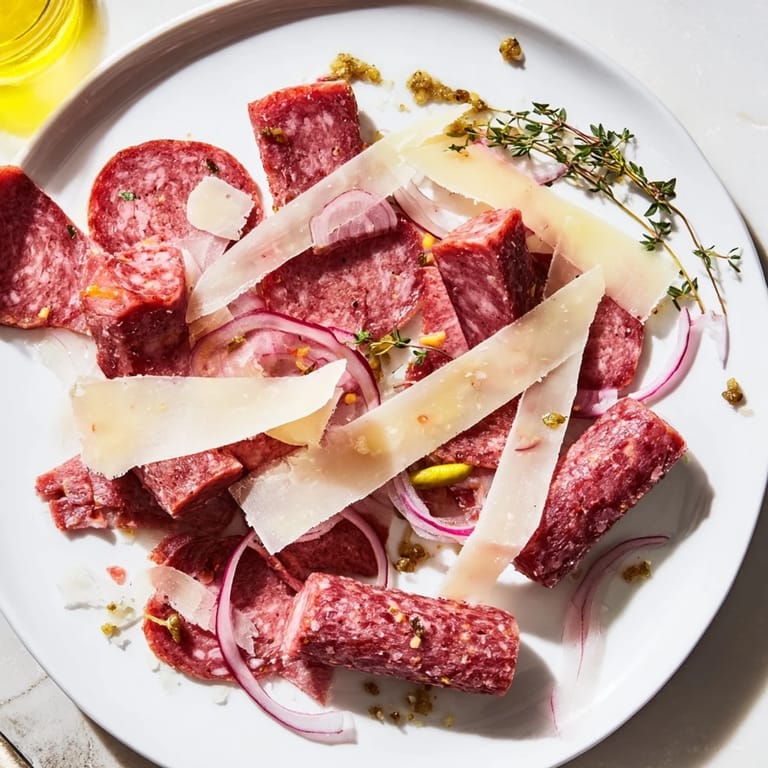
- Start with the smoked beef, layering it in soft, overlapping waves across your board or platter—think of it more as arranging than carefully placing. The hand-torn country ham and thick-cut sausage follow, creating natural mounds that invite people to dig in.
- Shave and drape the cheeses:
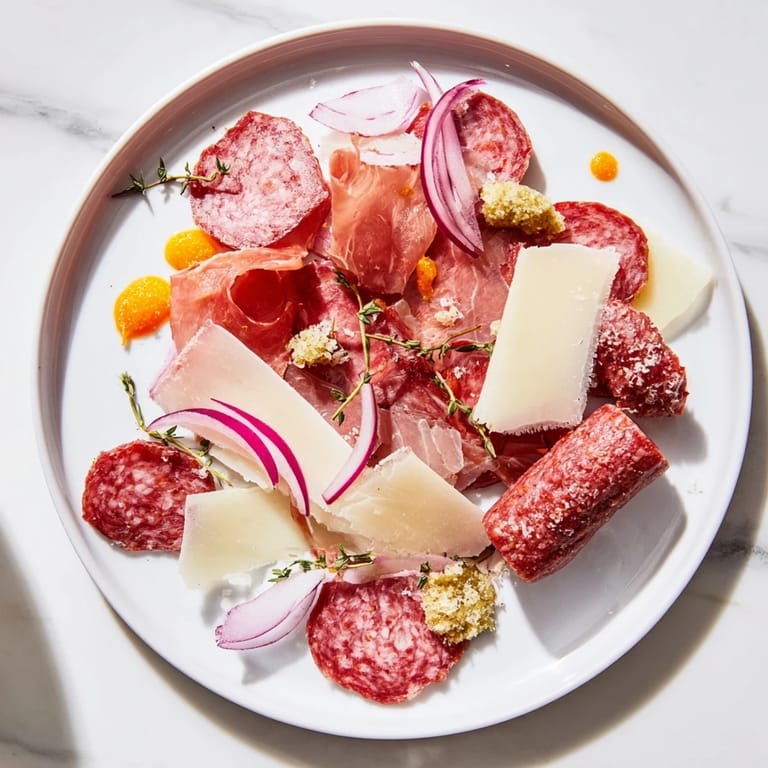
- Using a vegetable peeler or cheese plane, create thin, translucent ribbons of each cheese and let them fall casually over and beside the meats. You want some pieces to look almost accidental, catching light at different angles.
- Scatter the moments of brightness:
- Distribute cornichons and thin red onion slices around the board, then add small dollops of grainy mustard in spots where guests will naturally discover them. This isn't about symmetry; it's about creating pockets of flavor surprise.
- Add aroma and final polish:
- Tuck fresh thyme or rosemary sprigs into the gaps, releasing their oils slightly by brushing your fingers across them. This adds fragrance that draws people in before they've even tasted anything.
- Serve with intention:
- Set the board down where people can gather around it, ideally with fresh bread nearby but not required. Step back and let the arrangement speak for itself.
 Save to Pinterest
 The moment that changed everything was when my father-in-law, who barely spoke during dinners, kept going back to the board and building these tiny, deliberate bites—meat, cheese, mustard, onion—like he was solving a puzzle. He never said the board was good, but he didn't have to. Food has a way of speaking louder than words when it's given space to breathe.
Why Contrast Is Everything
The magic of this platter lives in its tension. The meats are bold, almost aggressive in their smokiness and salt, while the cheeses are refined and subtle, delicate enough to melt on your tongue without demanding anything of you. When you put them together, neither one dominates—instead, they elevate each other. I learned this the hard way when I once tried to use only soft cheeses on a similar board, and the whole thing felt timid and muddled. The roughness of the meats actually gives the delicate textures permission to shine.
The Art of No Technique
There's a quiet confidence that comes with plating food that requires no cooking. You're not worried about sauce consistency or doneness; you're thinking about composition, light, and how a person's eye will travel across the board. I've found that the most successful boards aren't the ones with perfect geometry—they're the ones that look like someone genuinely enjoyed arranging them, where there's intention but not rigidity. Leave some breathing room. Let cheeses overlap without covering everything. Let the wood of the board show through in places. This restraint is what separates "nice cheese board" from "why is this so good I can't stop looking at it."
Pairing and Scaling with Confidence
This platter is forgiving in ways that cooked dishes rarely are. If you're serving four people, the proportions here work perfectly as a hearty appetizer or a light main alongside bread and wine. Scaling up is simple—just multiply the quantities and expand your board. I've made this for twenty people by using a large dining table as my canvas, which created this unexpectedly intimate effect where everyone gathered around like it was a ceremony. The beauty is that it never feels overdone, even when there's abundance. For wine pairings, a bold red wine (think Côtes du Rhône or Barbera) echoes the richness of the meats, while a crisp white (Albariño or Vermentino) cuts through the fat and keeps your palate fresh across multiple bites.
- Always taste your cheeses before you shave them—aged cheeses can vary wildly in salt and intensity depending on the maker.
- If you're serving this with bread, slice it just before guests arrive so it stays fresh and warm.
- Keep the board at room temperature for at least 30 minutes before serving; cold cheeses have almost no flavor.
 Save to Pinterest
 This platter teaches you something every time you make it: that elegant entertaining doesn't require hours at the stove, and that sometimes the simplest decisions—choosing quality ingredients and arranging them with intention—matter far more than technique. Serve it with people you want to linger with, and watch how a board of good food creates space for good conversation.
Recipe FAQs
- → What types of meats are featured on the platter?
The platter showcases smoked beef, rustic country ham, and smoked sausage, each prepared with a hearty, rough-cut style to enhance texture and flavor.
- → Which cheeses complement the meats best?
Thinly shaved Parmigiano Reggiano, aged Manchego, and Gruyère provide delicate, translucent layers that contrast beautifully with the bold meats.
- → How are the fresh herbs used in this dish?
Sprigs of fresh thyme or rosemary are added to introduce aromatic notes and a burst of color, enhancing both presentation and taste.
- → Can I add any accompaniments for extra flavor?
Yes, toasted walnuts or dried fruits like figs and apricots can be added for a pleasant texture and sweetness contrast.
- → What's the best way to serve this platter?
Arrange the ingredients on a wooden board or large platter and serve immediately. Bread such as a crusty baguette pairs well if desired.
- → Is this platter suitable for special diets?
It is gluten-free without bread and low-carb, making it suitable for those dietary preferences while offering a rich balance of protein and fats.