 Save to Pinterest
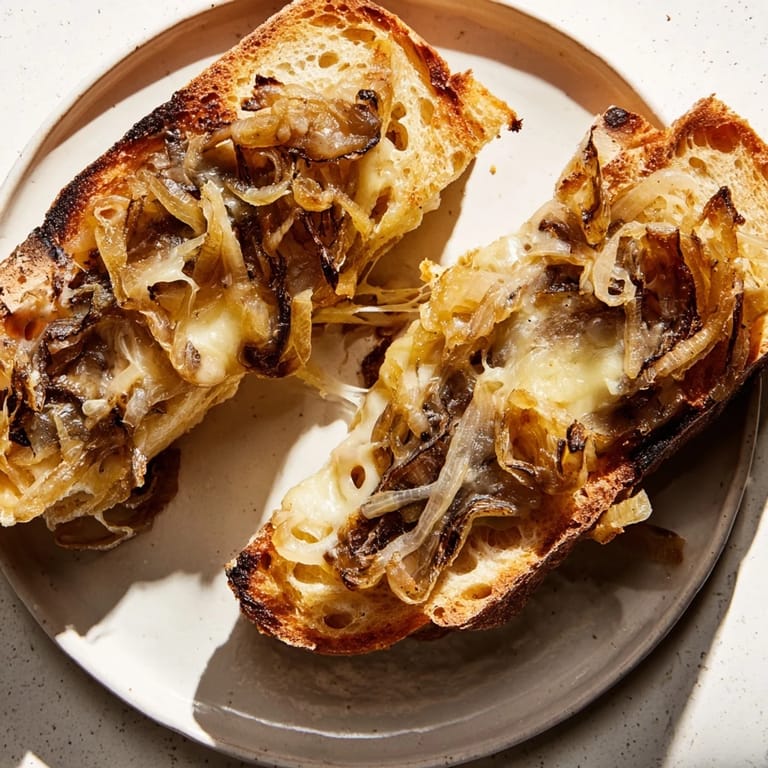
 There's a moment in every cook's life when you realize that the dishes you grew up with don't have to stay the way you remember them. I discovered that with grilled cheese one autumn afternoon, standing in my kitchen with caramelized onions that had been quietly turning golden for nearly half an hour. The smell alone stopped me mid-thought, and I realized I had to do something more interesting than the version from my childhood. That's when Gruyère entered the picture, and suddenly this humble sandwich became something I wanted to make again and again.
I made this for a friend who was recovering from a difficult week, and I watched their face light up when they took the first bite—not just because it tasted good, but because someone had taken the time to let onions transform over thirty minutes. That's when I understood this wasn't just a sandwich anymore; it was a small act of care wrapped in golden bread.
Ingredients
- Yellow onions, thinly sliced (2 medium): The thinner your slices, the more evenly they'll caramelize and the better they'll distribute in your sandwich.
- Unsalted butter (4 tbsp total): Use real butter here—it's the foundation of both the onions and the sandwich's golden crust, and it matters.
- Kosher salt and freshly ground black pepper: Season the onions as they cook, not all at once; it helps draw out their natural sweetness gradually.
- Sugar (1/2 tsp, optional): A tiny pinch at the end accelerates the caramelization if your onions are being stubborn.
- Balsamic vinegar (1 tsp, optional): This adds a subtle tang that rounds out the sweetness without being obvious.
- Rustic sourdough or country bread (4 slices): Choose bread thick enough to hold the filling without collapsing, but not so thick it won't cook through.
- Gruyère cheese, grated (150 g): Grating it yourself rather than buying pre-shredded makes all the difference in how smoothly it melts.
Tired of Takeout? 🥡
Get 10 meals you can make faster than delivery arrives. Seriously.
One email. No spam. Unsubscribe anytime.
Instructions
- Caramelize the onions low and slow:
- Melt butter over medium-low heat, add your sliced onions with salt and pepper, then walk away—mostly. Stir every few minutes so they don't stick to the bottom, but resist the urge to rush this. After 25 to 30 minutes, they'll be soft, deeply golden, and smell incredible. If you're using sugar and balsamic vinegar, stir them in at the very end and cook for just a couple more minutes to marry the flavors together.
- Build your sandwiches with intention:
- Lay out your bread slices and butter one side of each piece generously—this is what creates the golden crust later. Flip two slices butter-side down, then layer half your Gruyère on each, followed by a generous spoonful of caramelized onions, then the remaining Gruyère. The cheese acts as a barrier that keeps the onions from making the bread soggy. Top each with the remaining bread slices, butter-side up.
- Toast until the cheese melts and the bread turns golden:
- Heat your nonstick skillet over medium heat, then place both sandwiches in gently. Cook for 3 to 4 minutes on each side, pressing down very lightly with your spatula as they cook—you want contact with the pan but not so much pressure that you squeeze out the filling. If the bread is browning too fast before the cheese inside has melted, lower the heat and give it more time.
- Slice and serve while everything is still warm:
- A bread knife works best here—it glides through the sandwich without crushing it. Serve immediately, ideally with a green salad or a bowl of tomato soup alongside.
 Save to Pinterest
 I've made this sandwich dozens of times now, and it's become the thing I reach for when I want to feel like I'm doing something special without actually doing anything difficult. There's something honest about a dish that tastes like it took real effort but actually just required patience and good ingredients.
The Magic of Caramelization
Caramelization isn't a quick process, and that's the point—it's what transforms ordinary onions into something almost unrecognizable. As they cook slowly, the natural sugars break down and reform into hundreds of new compounds that taste sweet, savory, and somehow more complex than you'd expect from a vegetable. The low heat is crucial because it gives this transformation time to happen gently rather than burning everything in a rush.
Why Gruyère Specifically
Gruyère isn't mild or plastic-y the way some cheeses can be—it has character and nuttiness that actually complements caramelized onions instead of just sitting on top of them. The slight sharpness keeps the sandwich from becoming one-note sweet, and the way it melts is almost creamy, like butter but with flavor. If you can't find Gruyère, Emmental or a good Swiss will work in a pinch, but there's a reason this pairing is classic.
Variations and Serving Ideas
This sandwich is elegant enough to stand alone, but it also plays beautifully with other foods. A crisp green salad with a sharp vinaigrette cuts through the richness perfectly, and a warm bowl of tomato soup on the side turns this into something that feels restaurant-quality without the pretension. For a heartier version, a thin layer of prosciutto or good ham between the cheese and onions adds a salty contrast that your guests will notice and love.
- Fresh thyme leaves stirred into the onions in the last minute of cooking add herbal notes that feel surprisingly sophisticated.
- A tiny splash of white wine added to the onions near the end deepens the flavor and adds subtle complexity.
- Room-temperature leftovers the next day are better than you'd expect, though reheating in a skillet brings them back to life.
 Save to Pinterest
 This sandwich has become my answer to a lot of different questions—what to make when I want to impress someone, what to cook when I need to remind myself why I love being in the kitchen, and what to bring when someone needs comfort food that feels like care. It's proof that the best meals don't require complicated techniques, just good ingredients and respect for the process.
Recipe FAQs
- → How do you achieve perfectly caramelized onions?
Cook thinly sliced onions slowly over medium-low heat with butter, stirring often for 25-30 minutes until they turn deep golden brown and sweet.
- → Can other cheeses be used instead of Gruyère?
Yes, Emmental or Swiss cheese are excellent alternatives, offering similar meltability and a mild, nutty flavor.
- → What type of bread works best for this sandwich?
Rustic sourdough or country-style bread provides a sturdy base that crisps well and balances the rich filling.
- → How to prevent bread from browning before cheese melts?
Cook on medium heat and press gently; reduce heat if bread browns too quickly to allow cheese to melt evenly.
- → Are there any flavor-enhancing tips for the onions?
Adding a touch of balsamic vinegar or a sprinkle of sugar during cooking adds depth and balances sweetness. Fresh thyme leaves also enhance aroma.