 Save to Pinterest
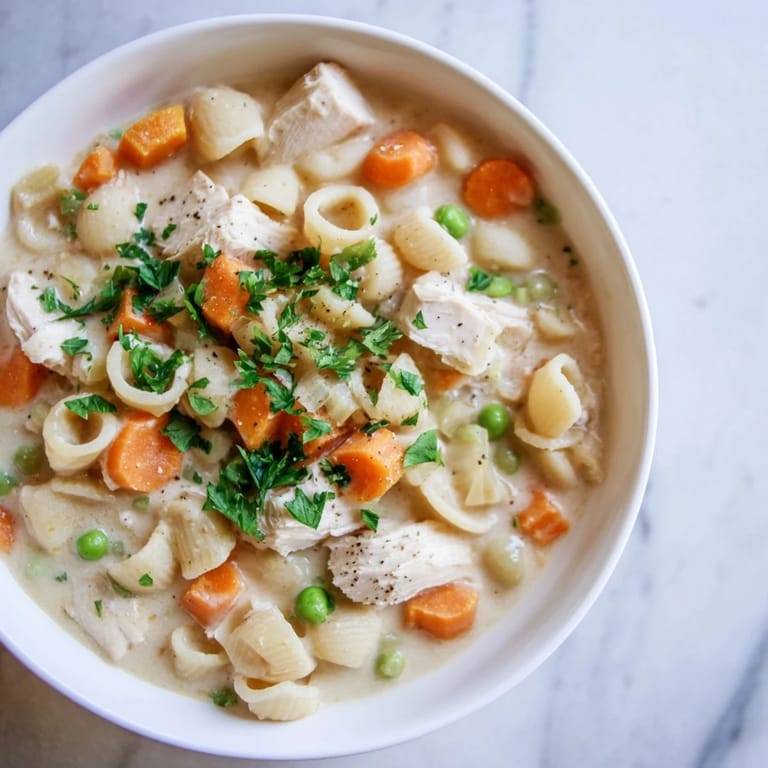
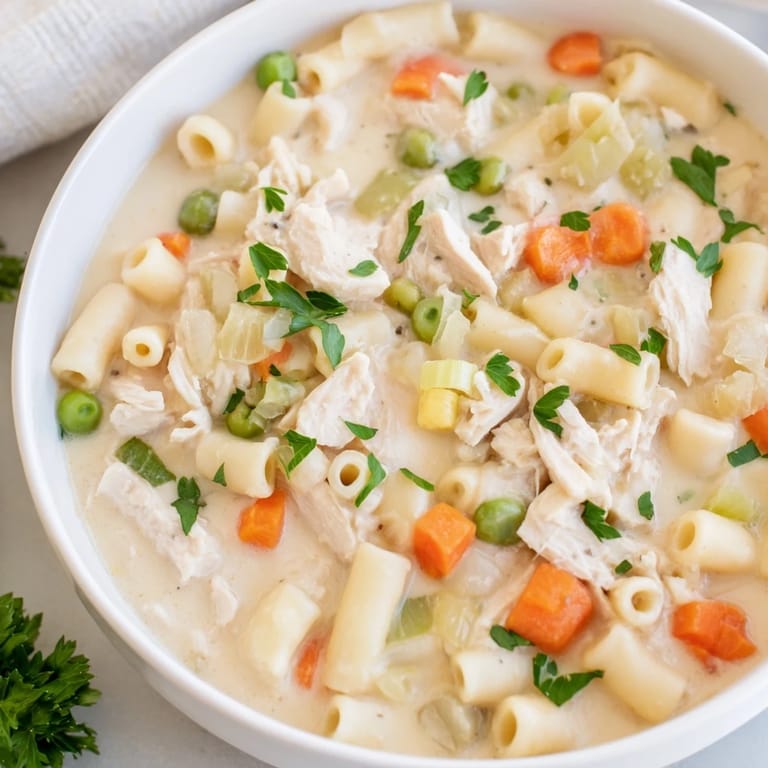
 There's something about a bowl of chicken pot pie soup that makes you feel like someone actually cares about you. I stumbled onto this version one rainy Tuesday when I was craving that nostalgic pot pie comfort but couldn't face the hassle of dealing with pastry dough. Instead, I threw together what I had—leftover rotisserie chicken, some vegetables, ditalini pasta—and let them all simmer together in a creamy broth. The first spoonful convinced me I'd discovered something better than the original, and now I make it whenever the weather turns or someone needs feeding.
My college roommate called on a random Friday night sounding completely defeated, and I knew exactly what to do. I had this soup simmering on the stove within twenty minutes, and watching her face change as she tasted it—like she remembered what it felt like to be taken care of—made me understand why comfort food matters. Now whenever someone in my life is going through a rough patch, this is the first thing I make.
Ingredients
- Cooked chicken breast, 2 cups shredded or diced: Use rotisserie chicken from the store if you're short on time; it adds more flavor and saves you a step.
- Carrots, 1 cup diced: Cut them into small, even pieces so they cook at the same pace as the pasta and don't overshadow the other textures.
- Celery, 1 cup diced: This is where the savory depth comes from, so don't skip it even if you think you don't like celery.
- Frozen peas, 1 cup: Keep them frozen until the very end so they stay bright and tender instead of turning mushy.
- Yellow onion, 1 small diced: The onion melts into the broth during cooking and becomes part of the flavor foundation.
- Garlic, 2 cloves minced: Fresh garlic makes all the difference in the final taste; don't substitute powder.
- Fresh parsley, 2 tablespoons chopped plus extra for garnish: The fresh herb at the end lifts everything and makes the soup taste alive instead of flat.
- Ditalini pasta, 1 cup uncooked: These small tubes catch the creamy broth and make every bite satisfying; if you can't find them, use any small pasta.
- Low-sodium chicken broth, 4 cups: Low-sodium lets you control the salt and taste the actual chicken and vegetables.
- Whole milk, 1 cup: This gives you creaminess without being too heavy; don't substitute skim.
- Heavy cream, 1/2 cup: Just enough to make the broth silky without making it feel like you're eating pure fat.
- Unsalted butter, 2 tablespoons: This is where you'll cook your vegetables and build the flavor base.
- All-purpose flour, 2 tablespoons: This thickens the broth so it coats the pasta instead of just running off.
- Salt, 1 teaspoon or to taste: You'll adjust this at the end, so start conservative.
- Ground black pepper, 1/2 teaspoon: Fresh cracked if you have it; it's worth the extra thirty seconds of work.
- Dried thyme, 1/2 teaspoon: Thyme is essential to the pot pie flavor; it reminds you why this soup exists.
- Dried sage, 1/2 teaspoon optional: If you add sage, you're leaning into the traditional pot pie direction; skip it if you want something lighter.
Tired of Takeout? 🥡
Get 10 meals you can make faster than delivery arrives. Seriously.
One email. No spam. Unsubscribe anytime.
Instructions
- Start with the base:
- Melt butter in a large pot over medium heat, then add diced onion, carrots, and celery. Let them soften for about five minutes, stirring occasionally so nothing sticks to the bottom. You want them tender enough to break apart with a wooden spoon, not yet cooked all the way through.
- Wake up the garlic:
- Add minced garlic and cook for just one minute until it releases its fragrance into the kitchen. This is the smell that tells you something good is happening.
- Make the roux:
- Sprinkle flour over the vegetables and stir constantly for two minutes to cook out the raw flour taste. This creates a paste that will thicken your broth and make it velvety instead of thin.
- Add the broth carefully:
- Pour in the chicken broth slowly while whisking to prevent lumps from forming. Once it's mostly combined, add the milk and cream and keep whisking until everything is smooth.
- Bring to a simmer:
- Increase the heat slightly and let the mixture come to a gentle simmer, then add the pasta, thyme, sage if using, salt, and pepper. Simmer uncovered for about ten minutes, stirring occasionally, until the pasta is tender but still has a slight bite.
- Finish with chicken and peas:
- Stir in your cooked chicken and frozen peas, then simmer for three to five minutes more until everything is heated through and the peas are tender. The soup should look thick and creamy at this point, not watery.
- Season and serve:
- Taste a spoonful and adjust salt and pepper until it tastes like comfort. Stir in fresh chopped parsley, then ladle into bowls and garnish with extra parsley on top.
 Save to Pinterest
 My daughter asked for seconds before finishing her first bowl, which is the highest compliment she knows how to give. That moment—when she looked up from her spoon with a smile—reminded me that the best meals are the ones that make people feel brave enough to ask for more.
Why This Tastes Like Home
The magic of this soup is that it tastes like you spent hours making it when you really spent thirty minutes. The dried herbs create depth, the cream makes everything silky, and the pasta gives you something to bite into instead of just broth. It's the deconstructed pot pie concept that matters most—all the flavors and textures you love from the original, but without the fuss of pastry dough or the effort of rolling anything out. This is what happens when you reverse-engineer comfort food to make it faster.
Making It Your Own
Once you make this once, you'll see all the ways to adapt it. Swap the ditalini for elbow pasta or even small shells if that's what you have. Add a splash of dry white wine with the broth if you want something slightly more sophisticated. If someone at your table is avoiding gluten, swap the regular pasta and flour for gluten-free versions and nobody will notice the difference. The framework is strong enough to hold your changes.
Serving and Storage Tips
Serve this soup hot in deep bowls with crusty bread on the side or a sharp green salad to cut through the richness. It keeps beautifully in the refrigerator for up to four days, though you may need to add a splash of milk when you reheat it since the pasta continues to absorb liquid. You can also freeze it, though the texture of the pasta softens slightly on thawing, so save that option for when you're less concerned with perfect al dente bites.
- Store leftovers in airtight containers and reheat gently on the stove rather than the microwave so nothing breaks or separates.
- Make a double batch on Sunday and you'll have lunches ready for the busy part of the week.
- If you're taking this to someone who's sick or overwhelmed, it arrives still warm in a thermos and feels like real help.
 Save to Pinterest
 This soup is proof that the best comfort food doesn't require you to fuss or stress. Make it for yourself on a tired night, or make it for someone who needs to remember that people care.
Recipe FAQs
- → Can I use rotisserie chicken instead of fresh chicken?
Yes, rotisserie chicken is a great shortcut and works well shredded or diced in this dish.
- → What pasta works best with this dish?
Ditalini pasta is ideal for holding the creamy broth, but small pasta shapes like elbow macaroni can be substituted.
- → How do you thicken the broth effectively?
Cooking flour with the sautéed vegetables before adding liquid helps create a smooth, creamy texture without lumps.
- → Can I make this gluten-free?
Yes, use gluten-free pasta and substitute the all-purpose flour with a gluten-free alternative for thickening.
- → Is it possible to add extra flavor to the broth?
A splash of dry white wine added with the broth elevates the flavor, but is optional based on preference.