 Save to Pinterest
 There's something about a steaming bowl of miso ginger soup that stops you mid-winter, makes you pause whatever rushed thing you were doing. My neighbor brought over a thermos of it once when I was genuinely under the weather, and the steam alone seemed to clear my sinuses before I even took a sip. That's when I realized this soup isn't complicated or fussy—it's just smart, the kind of meal that feels like someone's actually taking care of you.
I made this for my roommate during a particularly brutal cold snap, and watching her breathe easier after a few spoonfuls made the whole thing worth it. She asked for the recipe that same night, propped up in bed with the bowl still warming her hands, and I realized then that this soup has a quiet power to it.
Ingredients
- Low-sodium vegetable broth: This is your foundation, so don't skip quality here—a good broth means you're not fighting saltiness and the delicate flavors actually shine.
- Fresh ginger: Peeled and sliced thin, it infuses differently than grated ginger would, creating this mellow warmth rather than a sharp bite.
- Garlic: Just two cloves, sliced thin to release flavor gradually into the broth without overwhelming anything.
- White or yellow miso paste: This is where the soul lives, so choose miso thoughtfully—it should smell funky and alive, never stale.
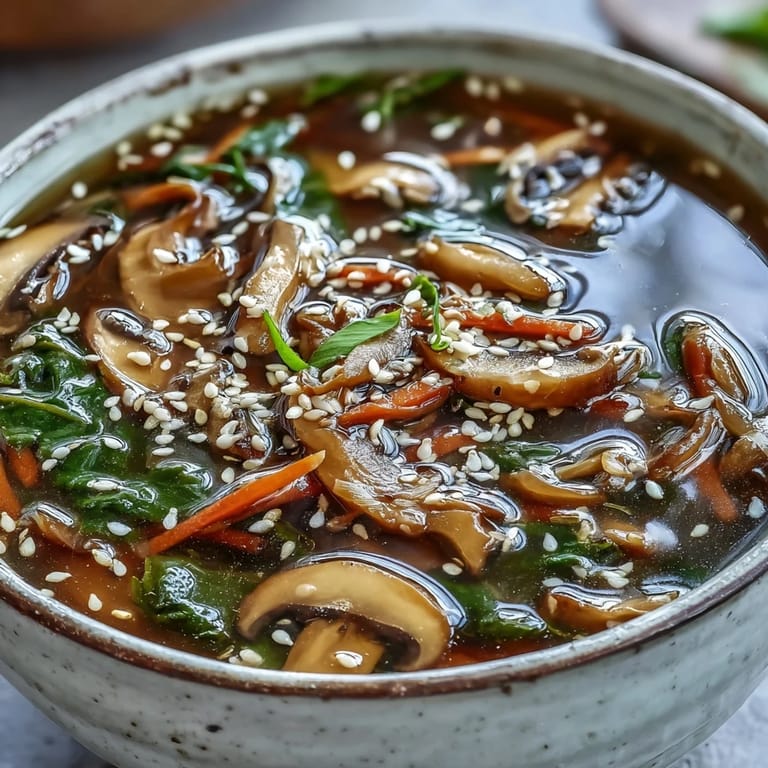
- Shiitake mushrooms: They absorb the ginger-infused broth beautifully and add an earthiness that makes the soup feel substantial.
- Baby spinach or bok choy: The greens brighten everything at the last moment, adding color and a gentle vegetal note.
- Carrot: Julienned thin so it cooks quickly and adds natural sweetness that balances the umami.
- Green onions: A bit at the end for freshness and a whisper of onion flavor.
- Toasted sesame seeds: These become your textural anchor, adding nuttiness that ties everything together.
- Fresh cilantro and chili oil: Optional, but they're your secret weapons for depth and a gentle heat if you're craving it.
Tired of Takeout? 🥡
Get 10 meals you can make faster than delivery arrives. Seriously.
One email. No spam. Unsubscribe anytime.
Instructions
- Start the broth:
- Bring your vegetable broth to a gentle simmer—you want it barely bubbling, not aggressively rolling, so the flavors stay delicate. This is the moment to smell everything, to really pay attention to what you're creating.
- Infuse with ginger and garlic:
- Add those sliced ginger and garlic, then let them work their magic for a full 10 minutes. Your kitchen will smell like comfort, like something healing is happening.
- Build with vegetables:
- Stir in the mushrooms and carrot slices, giving them about 5 minutes to soften but still hold their shape. You're building layers of flavor here, not mushing everything into submission.
- The miso moment:
- This is the step where patience matters—scoop out a ladleful of hot broth into a small bowl, then whisk the miso paste into it until it's completely smooth and silky. This prevents lumps and keeps all those good probiotics alive.
- Bring it together gently:
- Lower the heat to medium-low, then slowly pour that miso mixture back into the pot, stirring as you go. Never let it boil after this point—high heat kills the living cultures you're after.
- Finish with greens:
- Add the spinach or bok choy and green onions, stirring just until they wilt, which takes barely a minute. They'll continue softening even after you turn off the heat.
- Taste and adjust:
- This is your moment to be honest—does it need more miso depth, or a splash of soy sauce for saltiness? Trust your palate here, you know what you like.
- Serve with intention:
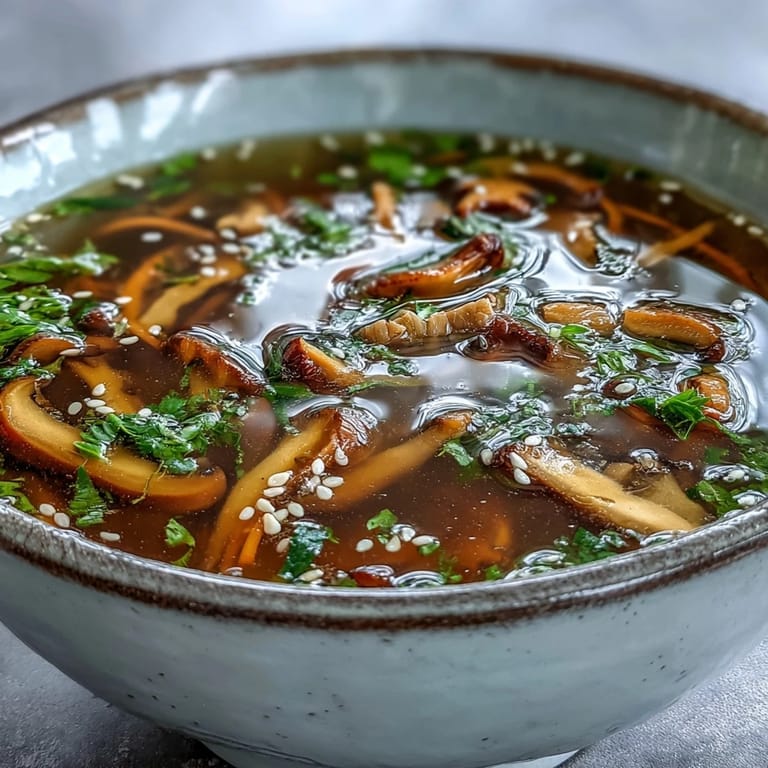
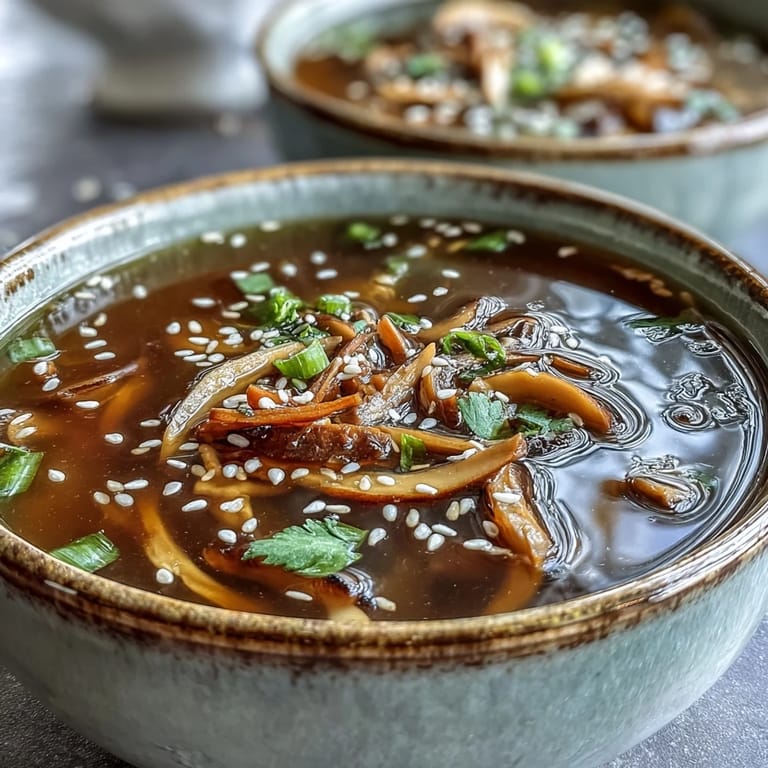
- Ladle into bowls and crown each one with sesame seeds, cilantro, and a drizzle of chili oil if you're in the mood. The presentation matters because you're nourishing yourself, not just feeding yourself.
 Save to Pinterest
 One afternoon, a friend called me in tears about a bad day at work, and instead of meeting for drinks, I made this soup and brought it over. We sat in her kitchen without talking much, just eating, and by the time we finished she was laughing again. That's when I understood that this soup is medicine in the way only food can be.
Making It Heartier
If this soup feels too delicate on its own, there are easy ways to anchor it. Cubed silken tofu is my usual move—it adds protein without changing the soup's essential lightness, absorbing all that ginger-miso flavor. You could also throw in some soba or udon noodles if you want something closer to a full meal, or even a soft-cooked egg if you're not keeping it vegan.
Playing With Miso Colors
White and yellow miso are mild and slightly sweet, which is why I usually reach for them. But red miso brings this deeper, more intense umami that completely transforms the soup into something richer and more complex. I made it with red miso once and ended up with something that felt almost like a different dish entirely, so experiment and see which version calls to you.
Keeping It Fresh Through Winter
The vegetables here are forgiving, so swap them around based on what's in your crisper drawer. Kale works beautifully if spinach is looking sad, and you can julienne whatever root vegetables are hanging around. The core of ginger, garlic, and miso stays constant, holding everything together like a good friend who doesn't mind if plans change.
- Don't chop your vegetables too far ahead or they'll start oxidizing and losing their brightness.
- Keep extra miso paste in the back of your fridge—it lasts forever and makes you feel equipped for any moment you need comfort.
- This soup actually tastes even better the next day after the flavors have had time to marry together, so it's perfect for meal prep.
 Save to Pinterest
 This soup has become my answer to everything—rough days, head colds, moments when I'm not sure what I need except to feel held by something warm. Make it, eat it, share it with someone who needs it.
Recipe FAQs
- → Can I make this soup ahead of time?
Yes, prepare the broth and vegetables in advance, but add the miso paste just before serving to preserve the beneficial probiotics. Store the soup base in the refrigerator for up to 3 days.
- → What type of miso works best?
White or yellow miso paste provides a milder, slightly sweet flavor that complements the ginger beautifully. Red miso offers a deeper, more intense taste if you prefer a stronger umami profile.
- → Can I add protein to make it more filling?
Absolutely. Cubed silken tofu absorbs the flavors wonderfully while adding plant-based protein. You can also add edamame, cooked chickpeas, or even poached eggs for extra substance.
- → Why shouldn't I boil the miso?
High heat destroys the beneficial probiotics and enzymes in fermented miso paste. Always reduce the heat to low and stir in the miso mixture just before serving to maintain both nutrients and delicate flavor.
- → What vegetables can I substitute?
Kale, Swiss chard, or napa cabbage work well in place of spinach. Feel free to add other vegetables like snap peas, bok choy stems, or daikon radish for varied textures and additional nutrients.