 Save to Pinterest
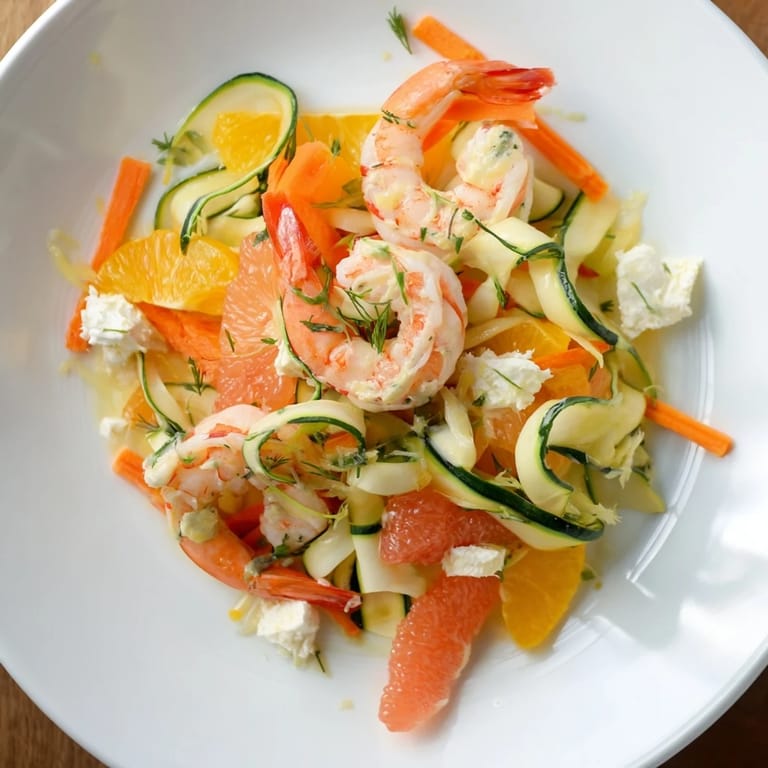
 I discovered this dish on a sunny afternoon when I was playing with color on a plate—trying to arrange ingredients like I was painting rather than cooking. The inspiration hit when I remembered a documentary about coral reefs I'd watched the night before, all those jewel-toned fish and strange formations. I thought, why not build something edible that captured that same sense of wonder? The shrimp's natural pink, the citrus glow, the way the cheese would bubble under the broiler—it all started clicking. That first time I made it, my kitchen smelled like lemon and the ocean, and everyone at the table stopped talking to just look at it before eating.
I made this for my partner's boss once—a dinner that felt like it needed to be impressive but not pretentious. When the platter came out from under the broiler, still steaming with those golden cheese bubbles catching the light, the whole table went quiet. Someone asked if I'd trained as a chef, and I almost laughed because twenty minutes earlier I'd been stress-testing the broiler temperature and worried the shrimp was overcooked. That moment taught me that presentation can make even simple techniques feel like art.
Ingredients
- Large pink shrimp, 500 g: Look for shrimp that are firm and smell like the ocean, not fishy—the pink ones cook to a beautiful coral shade and stay tender if you don't overdo it.
- Oranges and pink grapefruit: The citrus is the heartbeat here, so choose fruits that feel heavy for their size and have thin skin; the segments provide both brightness and that subtle bittersweet note that balances the richness of the cheese.
- Gruyère cheese, 120 g: This cheese bubbles beautifully and develops a nutty flavor when broiled, but don't grate it too far ahead or it'll clump.
- Ricotta cheese, 50 g: It softens under the broiler and becomes almost creamy, acting as pockets of cool contrast against the warm shrimp.
- Zucchini and carrot: Slice these thin—the zucchini ribbons especially should be delicate so they steam through in under two minutes and stay tender enough to curl slightly.
- Fresh chives and dill: Tear the dill by hand rather than cutting it; it preserves the oils and flavor better than a knife can.
- Good olive oil: Use a flavorful one for the finishing drizzle—it's the last thing that touches the plate, so it deserves to shine.
- Lemon juice and salt: The lemon is your flavor anchor for the shrimp, so don't skip it even though there's citrus in the arrangement already.
Tired of Takeout? 🥡
Get 10 meals you can make faster than delivery arrives. Seriously.
One email. No spam. Unsubscribe anytime.
Instructions
- Prep and warm:
- Get your broiler heating to high and arrange everything in bowls before you start cooking—this dish moves fast once the shrimp hits the pan, and you won't have time to hunt for ingredients.
- Coat and season the shrimp:
- Toss the shrimp with olive oil, lemon juice, salt, and pepper; the acid will start working on the shrimp immediately, so coat them evenly and don't let them sit too long raw.
- Sauté until just cooked:
- Heat your skillet over medium-high heat and listen for the sizzle when the shrimp hits the pan—two minutes per side gives you that perfect moment where they're cooked through but still have a slight bounce when you press them, not rubbery at all.
- Build the citrus base:
- Toss your orange and grapefruit segments together with the zest and a pinch of salt; this resting time lets the salt draw out subtle juices that'll add flavor to everything else.
- Steam the vegetables:
- Get your zucchini ribbons and carrot strips just barely tender—they should still have a little resistance when you bite them because they'll keep cooking slightly under the broiler.
- Arrange your reef:
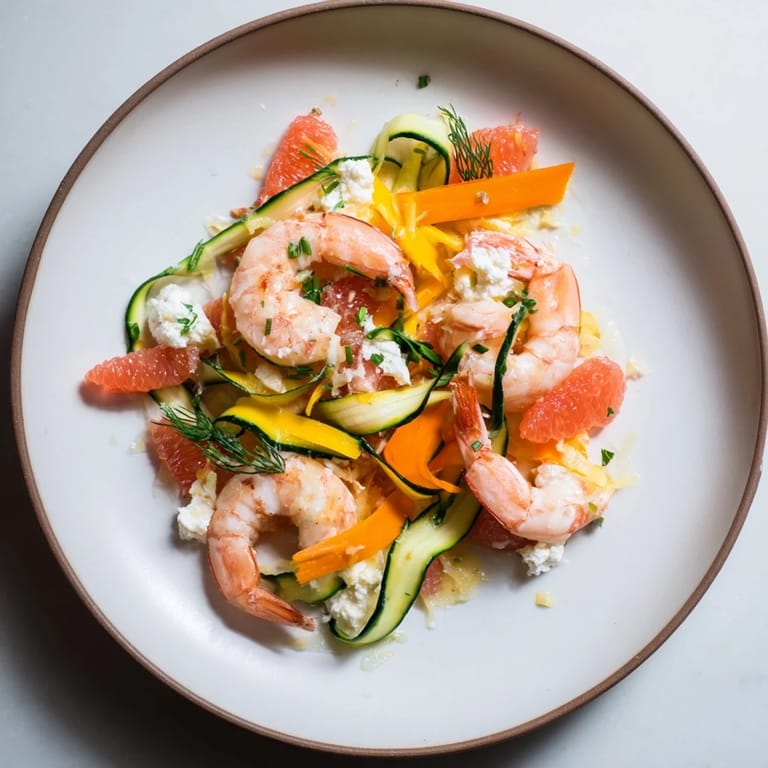
- Layer the steamed vegetables first on your oven-safe platter, then nestle the shrimp and citrus among them in whatever pattern makes you happy; the visual arrangement is part of the eating experience here.
- Add cheese and dots:
- Scatter your grated Gruyère across the whole thing, then drop tiny spoonfuls of ricotta throughout—these spots of cool cheese will melt differently than the Gruyère, creating little pockets of creaminess.
- Broil until bubbling:
- Watch it closely because broilers are temperamental; you're looking for the Gruyère to bubble and turn golden at the edges, which usually takes two to three minutes, but keep your eyes on it—once you see browning start, you're seconds away from it being perfect or slightly overdone.
- Finish and serve:
- Pull the platter out, scatter your torn dill and chopped chives over everything while it's still steaming, and drizzle with that good olive oil; serve immediately because the magic is in the contrast between warm and fresh, melted and bright.
 Save to Pinterest
 I remember my grandmother watching me make this the first time and saying that plating food with intention is its own kind of kindness. She was right—there's something about arranging ingredients so carefully that changes how people experience the meal, makes them slow down and look before they eat. Since then, I make this whenever I want everyone at the table to feel a little bit special.
Why Color Matters on the Plate
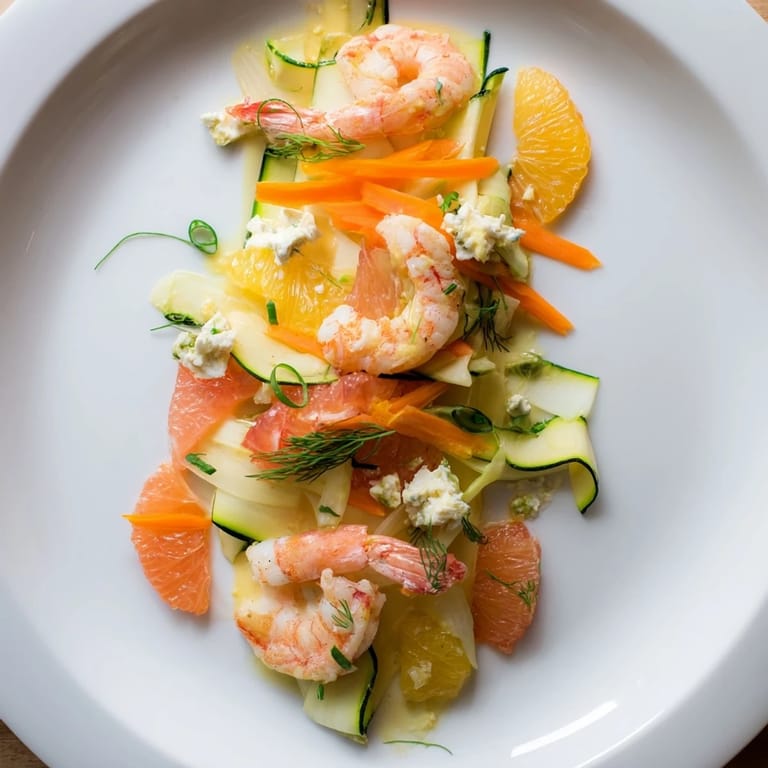
This dish works because every element has its own distinct color—the coral pink of the shrimp, the deep orange segments, the pale yellow-green of zucchini ribbons, the dark punctuation of chives and dill. When colors are this varied and intentional, people eat with their eyes first, and the taste feels more interesting before it even touches their tongue. I've served versions of this with less vibrant vegetables, and honestly, it's just food; the color palette is what makes it feel like something you'd find in a restaurant.
Timing the Broiler Moment
The broiler is the bridge between raw assembly and finished dish, so treat it like the final flourish it is. Set a timer for two minutes and stay in the kitchen watching through the oven window—no stepping away to answer your phone. The moment the cheese starts to show golden spots, you're done; any longer and the citrus loses its brightness, any shorter and the ricotta won't have melted into those little creamy pockets.
Making It Your Own
This recipe is a framework, not a rule, so feel free to swap in whatever fresh vegetables speak to you that day. I've used thinly sliced red radishes, thin ribbons of cucumber, even delicate fennel slices—any vegetable that can soften slightly without falling apart works beautifully here. The key is keeping the flavor profile balanced: you need the acid from citrus, the richness of cheese, the natural sweetness of shrimp, and vegetables that provide textural contrast without overpowering.
- If you can't find pink grapefruit, blood oranges or ruby red grapefruits work just as well and add even more visual drama.
- Emmental or a good melting mozzarella can replace the Gruyère if that's what you have on hand, though the flavor shifts slightly toward milder and creamier.
- Make sure your citrus segments are as dry as possible after removing them from the fruit or they'll release too much liquid on the platter.
 Save to Pinterest
 This dish reminds me that sometimes the most memorable meals are the ones where you took a moment to make something beautiful. Serve it with a crisp Sauvignon Blanc or a dry rosé, and watch people's faces light up when they realize how fresh and balanced every bite tastes.
Recipe FAQs
- → How do I prevent shrimp from overcooking?
Cook shrimp quickly over medium-high heat for about 2 minutes per side until just pink and opaque. This ensures tenderness without rubberiness.
- → Can I substitute Gruyère cheese?
Yes, Emmental or a bubbly mozzarella work well for melting and maintaining the dish's rich, creamy texture.
- → What is the best way to prepare the vegetables?
Steam zucchini ribbons and julienned carrots for 1–2 minutes until just tender to keep their vibrant color and slight crunch.
- → How can I enhance the coral reef presentation?
Add thin slices of watermelon radish or sprinkle pomegranate seeds for extra color and texture contrast.
- → Which wines pair well with this dish?
A crisp Sauvignon Blanc or a dry rosé complements the citrus notes and seafood flavors perfectly.
- → Is this dish suitable for gluten-free diets?
Yes, it’s naturally gluten-free, but check cheese labels to ensure no gluten-containing additives.