 Save to Pinterest
 Years ago, I was standing in the grocery store produce section when my trainer mentioned she'd started eating cottage cheese for extra protein. I nodded politely but internally cringed—cottage cheese felt like something from a 1980s diet commercial. Then one rainy Tuesday, with a half-empty container sitting in my fridge and a mac and cheese craving hitting hard, I thought: what if I just blended it into the sauce? Twenty minutes later, I had something silky, protein-packed, and so genuinely delicious that cottage cheese stopped being a health obligation and became my secret ingredient.
I made this for a potluck where everyone was pretending to diet, and someone asked for the recipe mid-bite. When I told her the main ingredient, she literally stopped chewing. She went home and texted me three days later saying her kids asked for seconds, which apparently never happens. That moment convinced me that food doesn't need to apologize for being good for you.
Ingredients
- Elbow macaroni (300 g): Use whatever pasta shape makes you happy, though smaller shapes trap the sauce better—I've learned this through plenty of saucy, slippery failures.
- Low-fat cottage cheese (400 g): The magic ingredient that nobody will identify but everyone will taste; cold from the fridge works fine since the heat melts it anyway.
- Milk (120 ml): Dairy or unsweetened plant-based both work beautifully, and it thins the sauce to exactly the right pourable consistency.
- Sharp cheddar cheese (120 g): The assertive flavor cuts through the cottage cheese's mildness and prevents the sauce from tasting one-dimensional.
- Parmesan cheese (25 g): Just a quarter cup adds a salty, nutty complexity that makes people swear you've spent hours on this.
- Cream cheese (2 tbsp): It sounds like overkill but it creates a luxurious mouthfeel that keeps everything from feeling too thin.
- Garlic powder, onion powder, smoked paprika (½ tsp each): These seasonings live in the background but completely transform the flavor—skip the smoked paprika if you want a cleaner, brighter cheese sauce.
Tired of Takeout? 🥡
Get 10 meals you can make faster than delivery arrives. Seriously.
One email. No spam. Unsubscribe anytime.
Instructions
- Get the pasta going:
- Fill a large pot with water, salt it generously so it tastes like the sea, and let it come to a rolling boil. Add your pasta and cook until it's tender but still has a slight firmness when you bite it—those last two minutes matter more than people realize.
- Blend the cottage cheese magic:
- While the pasta cooks, dump the cottage cheese, milk, cream cheese, and all those powders into your blender or food processor. Blend until it's completely smooth and looks like heavy cream with a slight grain—stop before it gets too thin, which happens faster than you'd think.
- Melt in the cheese:
- Pour your blended mixture into a saucepan over medium-low heat, then add the shredded cheddar and Parmesan. Stir constantly for a few minutes, watching as it transforms into something glossy and cohesive—do not let it boil or the cheeses can separate and become grainy.
- Bring it together:
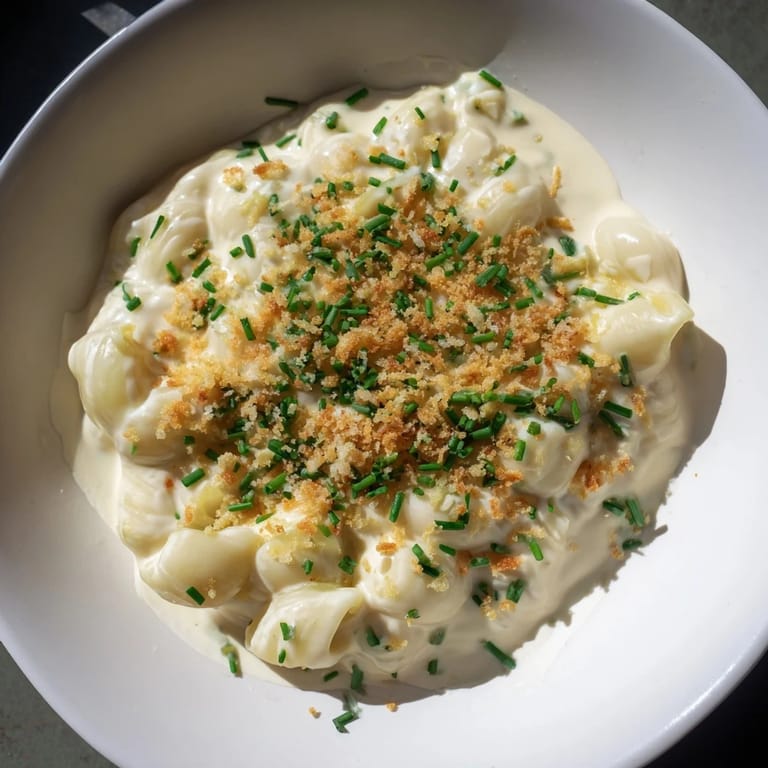
- Drain your pasta and add it directly to the cheese sauce, tossing until every noodle glistens. Taste it, adjust the salt and pepper until it makes you smile, and if it feels thick, add a splash more milk.
- Plate and celebrate:
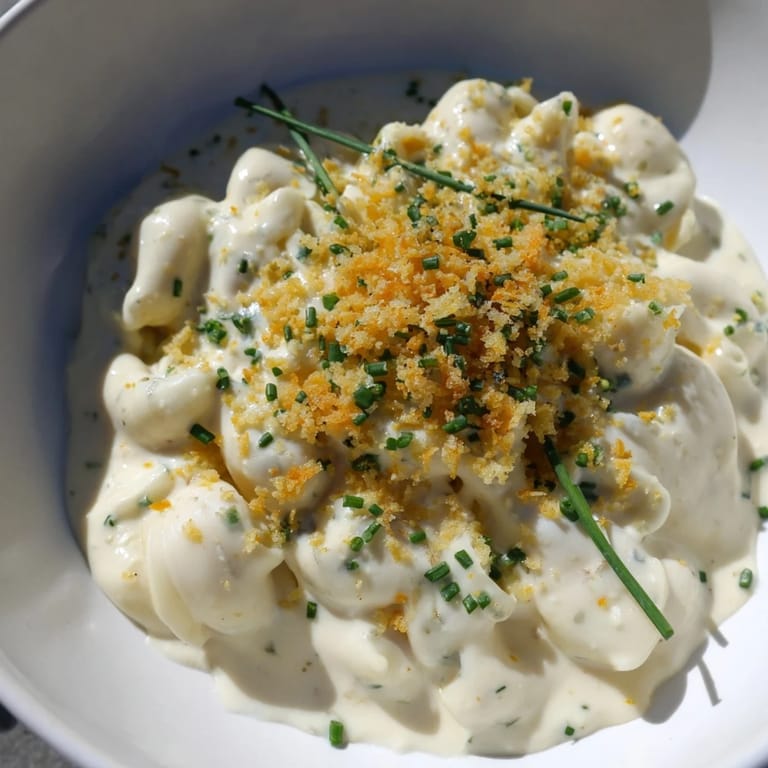
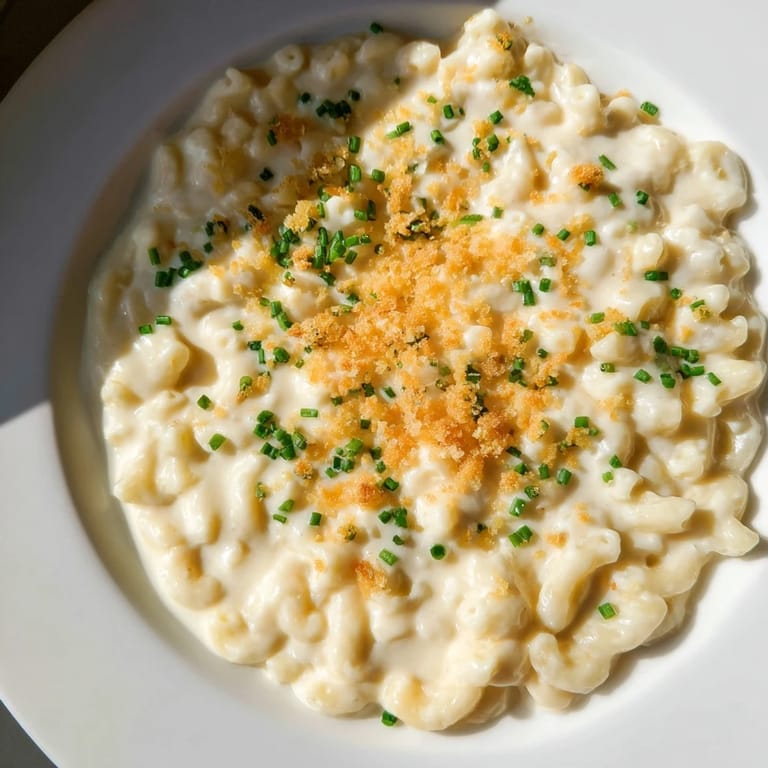
- Serve while it's warm and steaming, topped with fresh chives or parsley and maybe some breadcrumbs that you've toasted in a dry pan until they smell nutty.
 Save to Pinterest
 There's something about a bowl of mac and cheese that makes people soften, you know? I've watched tense conversations find their rhythm over a shared plate of this. It's not fancy, but it feels like someone cared enough to cook something warm.
Why Cottage Cheese Works Here
Most mac and cheese sauces rely on a roux—that butter and flour paste that you have to stand there and stir constantly. Cottage cheese skips all that ceremony. When you blend it smooth, it becomes a naturally creamy base that doesn't require any fussing with heat or timing. The protein content is honestly the bonus; the real reason to use it is that it makes a genuinely silky sauce that coats the pasta without ever feeling thick or floury.
Making It Your Own
The beauty of this formula is that it's forgiving enough to play with. I've stirred in roasted broccoli for color, crumbled bacon for smokiness, and even thrown in some red pepper flakes when I was feeling spicy. One time I mixed in cooked chicken and suddenly had a complete protein-focused dinner that my brother actually ate without complaining. The sauce is sturdy enough to hold whatever you add, as long as you don't overload it past the point where things won't coat evenly.
The Details That Actually Matter
Sharp cheddar makes a difference here because mild cheddar gets completely lost in the sauce's richness. The smoked paprika is optional but if you use it, use it intentionally—just a hint, not enough to dominate. When you're adjusting the seasoning at the end, remember that both cheddar and Parmesan are salty, so taste before you add more salt. The pasta water starch that clings to the noodles actually helps the sauce cling better, so don't rinse it after draining.
- Toast your breadcrumb topping in a dry pan for thirty seconds so it stays crispy instead of getting soggy.
- Make this ahead through step three, then reheat gently and toss in the pasta right before serving for a weeknight dinner that feels planned.
- Leftovers keep in the fridge for three days and reheat beautifully with just a splash of milk to loosen the sauce back up.
 Save to Pinterest
 This isn't the mac and cheese of your childhood, but it might become the one you make for people you care about. Warm, honest, and ready in thirty minutes.
Recipe FAQs
- → Can I use plant-based milk for the sauce?
Yes, unsweetened plant-based milk works well to keep the sauce creamy without changing its flavor.
- → What pasta works best in this dish?
Short pasta like elbow macaroni is ideal to hold the creamy sauce evenly.
- → How can I make the sauce smoother?
Blending the cottage cheese and other sauce ingredients thoroughly ensures a silky, lump-free consistency.
- → Are there variations for extra protein?
Adding cooked chicken or peas boosts protein while complementing the creamy texture.
- → Can I substitute the cheddar cheese?
Gruyère or Gouda can be used for a different but equally rich flavor.