 Save to Pinterest
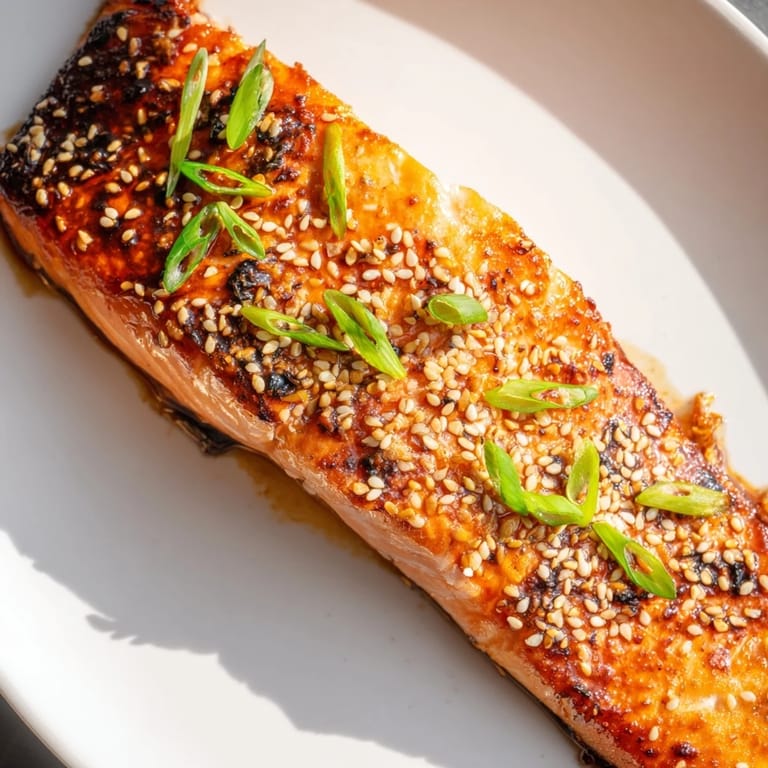
 I was running late on a Tuesday when I remembered I had salmon thawing in the fridge. The idea of something quick but impressive led me to this glaze, a mix of ingredients I already had sitting in my pantry. The kitchen smelled like ginger and toasted sesame within minutes, and I knew I'd stumbled onto something worth repeating. It turned out crispy, glossy, and far more elegant than the effort suggested. That night, my dinner guests asked for the recipe before they'd even finished their plates.
The first time I made this for my sister, she was skeptical about cooking fish at home. She watched as the skin crisped up in the pan, crackling softly, and the glaze bubbled into something shiny and thick. By the time I plated it with steamed rice and a squeeze of lime, she was already planning to make it herself that weekend. It became her go-to for impressing dinner dates, and she still texts me photos every time she nails the sear.
Ingredients
- Skin-on salmon fillets: The skin protects the delicate flesh and crisps up beautifully when seared properly, so resist the urge to remove it.
- Low-sodium soy sauce: This keeps the glaze from becoming too salty and lets you control the seasoning with precision.
- Freshly grated ginger: Fresh ginger has a bright, almost spicy warmth that powdered ginger just cant replicate, so take the extra minute to grate it.
- Honey: It adds a gentle sweetness that balances the salty soy and sharp ginger, and it helps the glaze cling to the fish.
- Rice vinegar: A touch of acidity cuts through the richness and keeps the glaze from feeling heavy.
- Sesame oil: Just a teaspoon brings a toasty, nutty aroma that ties the whole dish together.
- Garlic: Minced fresh garlic gives the glaze depth and a savory backbone that rounds out the sweeter notes.
- Toasted sesame seeds and green onions: These optional garnishes add texture and a pop of color that make the dish feel complete.
Tired of Takeout? 🥡
Get 10 meals you can make faster than delivery arrives. Seriously.
One email. No spam. Unsubscribe anytime.
Instructions
- Prep the salmon:
- Pat each fillet completely dry with paper towels, then season both sides with salt and pepper. Dry skin is the secret to getting it crispy, so dont rush this step.
- Make the glaze:
- Whisk together the soy sauce, honey, grated ginger, minced garlic, rice vinegar, and sesame oil in a small bowl until smooth. Set it aside so the flavors can mingle while you heat the pan.
- Heat the skillet:
- Place your nonstick or cast iron skillet over medium-high heat and let it get hot. You can add a small drizzle of neutral oil if you like, but a good nonstick pan often doesnt need it.
- Sear skin-side down:
- Lay the salmon fillets skin-side down in the hot pan and leave them alone for 4 full minutes. Youll hear a gentle sizzle, and the skin will turn golden and crisp if you resist the urge to peek or move them.
- Flip and cook:
- Carefully flip each fillet and cook for another 2 to 3 minutes. The flesh should be just beginning to turn opaque around the edges.
- Add the glaze:
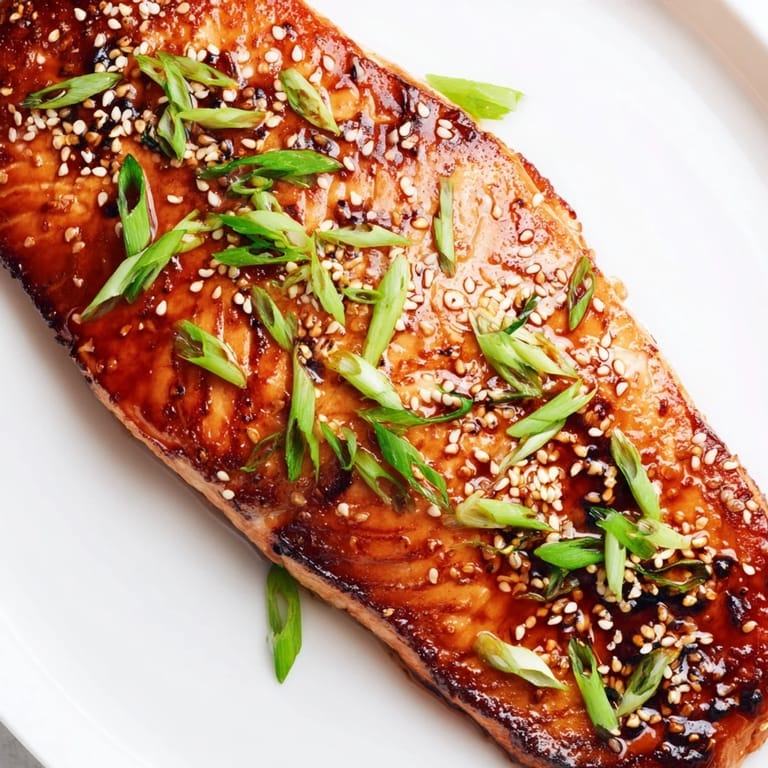
- Lower the heat to medium-low and pour the glaze evenly over the fillets. Use a spoon to baste the tops with the bubbling sauce, letting it thicken slightly and coat the fish for 2 to 3 minutes.
- Serve:
- Remove the pan from the heat and transfer the salmon to plates. Spoon any extra glaze from the pan over each fillet, then garnish with sesame seeds, green onions, and citrus wedges if youre using them.
 Save to Pinterest
 I remember serving this on a rainy evening with a big bowl of jasmine rice and sauteed bok choy. The glaze pooled into the rice, and every bite felt warm and comforting. My friend said it reminded her of a place we used to go for lunch in college, and suddenly the meal became more than dinner. It became a memory we kept coming back to, one sticky, flavorful fillet at a time.
Serving Suggestions
This salmon pairs beautifully with steamed jasmine or brown rice, which soaks up the extra glaze like a dream. I also love it alongside sauteed greens like bok choy or broccolini, or roasted vegetables like asparagus and bell peppers. A squeeze of fresh lime or lemon right before serving brightens everything and adds a little zing that cuts through the richness.
Customizing the Glaze
If you want a bit of heat, stir in half a teaspoon of red chili flakes or a drizzle of sriracha when you whisk the glaze together. You can also swap the honey for maple syrup or brown sugar if thats what you have on hand. I once added a splash of orange juice for a citrusy twist, and it turned out surprisingly well, almost like a teriyaki variation.
Storage and Reheating
Leftover salmon keeps well in an airtight container in the fridge for up to two days. I like to reheat it gently in a skillet over low heat, adding a tiny splash of water to loosen the glaze. You can also enjoy it cold on top of a salad or flaked into fried rice the next day.
- Store the glaze separately if you have extra, it makes a great marinade or stir-fry sauce.
- Avoid microwaving if possible, it can make the salmon rubbery and dry out the edges.
- If youre meal prepping, sear the salmon but hold off on the glaze until youre ready to serve for the best texture.
 Save to Pinterest
 This dish has become my answer to busy weeks and last-minute guests, proof that simple ingredients can feel special with just a little attention. I hope it brings you the same kind of easy joy it brought me, one glossy, ginger-scented bite at a time.
Recipe FAQs
- → How do I get a crispy skin on the salmon?
Pat the salmon skin dry and sear skin-side down in a hot, lightly oiled pan without moving it for about 4 minutes. This helps achieve a crisp texture.
- → Can I adjust the sweetness of the glaze?
Yes, you can substitute honey with maple syrup or brown sugar, or adjust amounts to tailor the glaze's sweetness to your taste.
- → What sides pair well with this salmon?
Steamed rice, sautéed greens, or roasted vegetables complement the dish and balance its rich glaze.
- → Is it possible to add a spicy element?
Adding ½ teaspoon of red chili flakes to the glaze provides a mild spicy kick that enhances the overall flavor.
- → What type of pan is best for cooking this salmon?
A heavy-bottomed nonstick or cast iron skillet evenly distributes heat and helps create a nice sear on the fish.