 Save to Pinterest
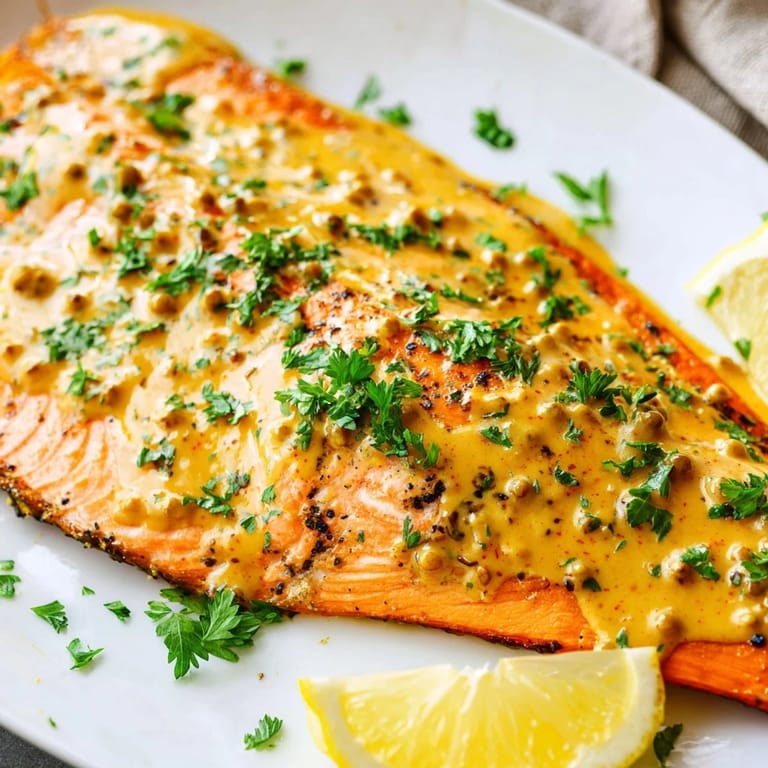
 My kitchen timer went off at exactly the wrong moment—my friend was telling me about a terrible day at work, and I nearly burned the lemon zest I'd been toasting. That's when I realized this honey mustard salmon had become my go-to rescue dinner, the kind of meal that lets you listen while you cook. The sweet-tangy sauce caramelizes just enough to feel special, but the whole thing comes together faster than most people's takeout order.
I made this for my sister after she'd been stress-eating cereal for a week, and watching her close her eyes on that first bite told me everything. She asked for the recipe before she'd even swallowed, which felt like the highest compliment.
Ingredients
- Salmon fillets (4 pieces, 6 oz each): Skin-on holds everything together beautifully, though skinless works just fine if that's what you prefer.
- Dijon mustard (3 tbsp): This is the backbone of your sauce; don't skip it or swap it for yellow mustard unless you want something milder.
- Whole grain mustard (2 tbsp): The seeds add texture and a slight grittiness that makes every bite interesting.
- Honey (3 tbsp): It balances the mustard's tang and caramelizes slightly in the oven, creating little golden pockets of sweetness.
- Olive oil (1 tbsp): Helps the sauce coat evenly and keeps the fish from drying out.
- Lemon juice (1 tbsp): A squeeze of brightness that ties the whole thing together—use fresh if possible.
- Garlic (2 cloves, minced): Raw garlic in this sauce is perfect; cooking mellows it just enough.
- Salt and black pepper (½ tsp and ¼ tsp): Taste as you go; mustard already brings saltiness, so go easy at first.
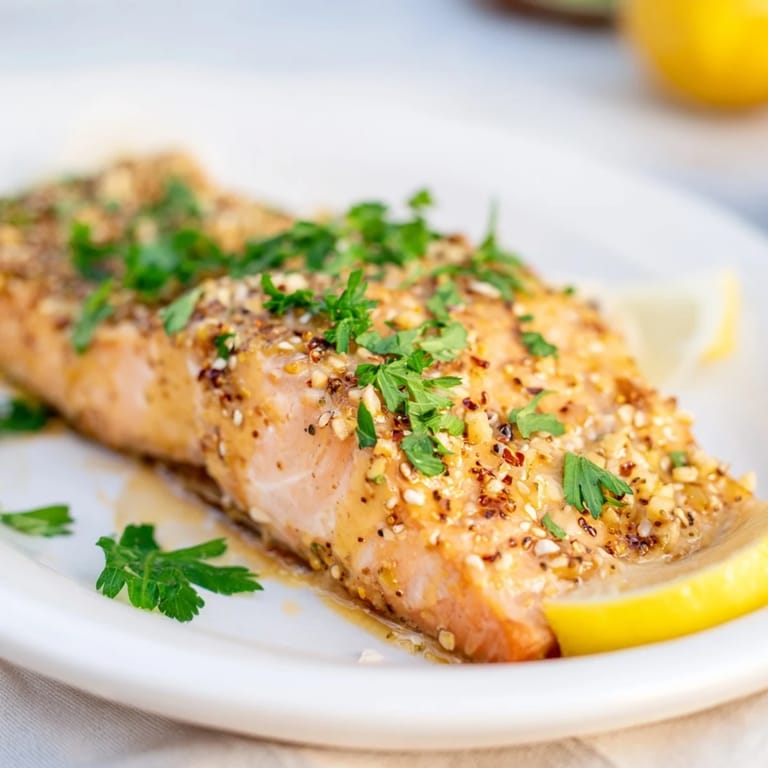
- Fresh parsley and lemon wedges: The garnish isn't just pretty; it's your last-minute brightness and a visual reminder that this came from care, not a package.
Tired of Takeout? 🥡
Get 10 meals you can make faster than delivery arrives. Seriously.
One email. No spam. Unsubscribe anytime.
Instructions
- Set your oven to 400°F:
- Line your baking sheet with parchment paper or give it a light grease. The oven needs those five minutes to come up to temperature while you do the next steps.
- Build your sauce:
- In a small bowl, whisk the Dijon mustard, whole grain mustard, honey, olive oil, lemon juice, minced garlic, salt, and pepper until it's completely smooth and emulsified. Taste it right now while it's raw—this is your chance to adjust if you want more honey or more tang.
- Prepare your salmon:
- Arrange the fillets on your baking sheet and pat them dry with paper towels. Dry skin or flesh helps the sauce stick and prevents steaming.
- Coat generously:
- Spoon the honey mustard mixture over each fillet, spreading it evenly across the top and sides. Don't be shy; the sauce is what makes this sing.
- Bake until done:
- Slide the sheet into your preheated oven for 15 to 20 minutes. The salmon is ready when it flakes gently with a fork and the center is opaque, not translucent. The sauce will darken slightly and smell absolutely incredible around minute 18.
- Finish and serve:
- Pull everything out, sprinkle with fresh parsley, and serve with lemon wedges on the side. Let people squeeze their own—it feels more personal that way.
 Save to Pinterest
 The first time I served this to my partner's parents, they both asked for seconds and his mother wanted to know where I bought the salmon. When I told her I'd made the sauce at home, she looked genuinely surprised in a way that made me feel like I'd unlocked something in the kitchen.
Why This Sauce Works So Well
The magic is in the combination of two mustards—Dijon brings sharpness and sophistication, while whole grain mustard adds a subtle sweetness and texture that keeps things interesting. The honey softens the mustard's edge without making it cloying, and the acid from lemon juice prevents the whole thing from feeling heavy. I've tried simplifying it with just one mustard, and it always feels flat in comparison.
How to Know When It's Perfect
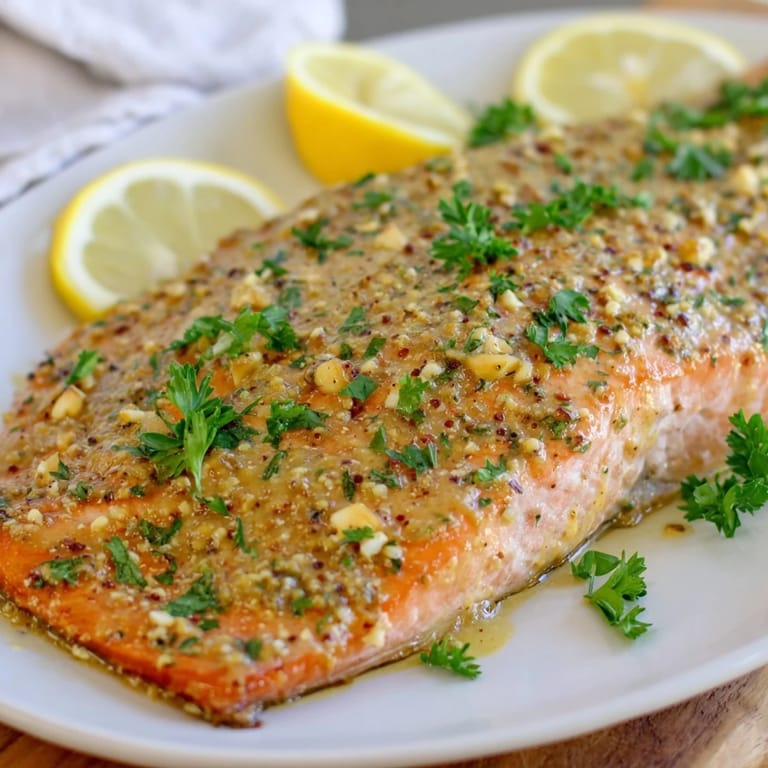
You'll know the salmon is done when a fork easily flakes the flesh into tender pieces and the center looks opaque rather than translucent. The sauce will have darkened slightly at the edges, which isn't burning—it's caramelization, and that's exactly what you want. Some people like to broil for the last two minutes to deepen that color and create a slight char, which I do when I'm feeling fancy.
What Pairs Perfectly Alongside
This salmon doesn't need much, but a bright side dish cuts through the sweetness beautifully. Roasted vegetables like asparagus or broccoli work wonderfully, or serve it over rice or quinoa if you want something heartier. A crisp salad with vinaigrette is my usual choice when I'm cooking for myself, since the acidity echoes the lemon in the sauce.
- Rice or quinoa absorbs the sauce and extends the meal if you're feeding a crowd.
- Roasted vegetables add color and keep the plate feeling balanced and intentional.
- A simple salad with lemon vinaigrette is my favorite—it's light, refreshing, and ties the whole plate together.
 Save to Pinterest
 This recipe has become my answer to the question "What should we make for dinner?" because it never lets me down. It's one of those dishes that reminds me why cooking for people you care about matters.
Recipe FAQs
- → What is the best type of salmon to use?
Wild-caught or farmed salmon fillets work well, skin-on or skinless based on preference.
- → Can I prepare the honey mustard sauce ahead of time?
Yes, the sauce can be whisked in advance and stored in the refrigerator for up to 2 days.
- → How do I know when the salmon is fully cooked?
The fish flakes easily with a fork and appears opaque in the center when done baking.
- → What sides complement this dish?
Rice, quinoa, roasted vegetables, or a fresh green salad pair nicely with the salmon.
- → Is it possible to make this dish dairy-free?
Yes, ensuring all mustard and condiments are dairy-free keeps the dish suitable for dairy-free diets.
- → How can I add more caramelization to the salmon?
Broil the salmon for the last 2 minutes of cooking to achieve a golden, caramelized top.