 Save to Pinterest
 The first time I tasted fesenjan, it arrived at the table in a small earthenware bowl, the sauce so dark and glossy it looked almost like velvet. My Persian friend's mother had simmered it for hours, and when I asked what made it so extraordinary, she smiled and said the secret was patience and the balance between the walnuts and pomegranate molasses. I've made it countless times since, and it never fails to transport me back to that kitchen filled with the most intoxicating aroma of toasted walnuts and tart fruit.
I remember making this for a dinner party where I was nervous about impressing a food-loving crowd, but fesenjan did all the talking for me. Someone asked for the recipe before dessert even arrived, and another guest kept going back for more rice just to soak up every drop of sauce. That's when I realized this dish has a quiet confidence about it—it doesn't need fanfare, just time and good ingredients.
Ingredients
- Boneless chicken thighs or duck, 700 g: Thighs stay tender and flavorful through the long simmer, though duck is the traditional choice and adds a richer depth if you can find it.
- Vegetable oil, 2 tbsp: Just enough to build a foundation for the meat and onions without making the finished dish heavy.
- Large onion, finely chopped: This becomes the sweet base that balances all the other flavors, so don't rush the golden browning step.
- Ground walnuts, 250 g: Toast them lightly in a dry pan before grinding if you want to deepen the nutty flavor, though this is optional and the recipe works beautifully either way.
- Pomegranate molasses, 500 ml: This is the soul of the dish—it brings tartness and complexity that you simply can't replicate with regular pomegranate juice.
- Water, 500 ml: Use good filtered water since it makes up half the liquid base.
- Sugar, 2 tbsp: Start with less and taste as you go; every brand of pomegranate molasses has different tartness levels.
- Ground cinnamon, turmeric, and cardamom: These warm spices whisper in the background rather than shout, creating layers of flavor that emerge with each bite.
Tired of Takeout? 🥡
Get 10 meals you can make faster than delivery arrives. Seriously.
One email. No spam. Unsubscribe anytime.
Instructions
- Season and prepare the meat:
- Pat your chicken thighs or duck dry and sprinkle generously with salt and pepper on both sides. This step matters more than you'd think because it helps the meat brown properly and seasons it from within.
- Build the flavor base:
- Heat oil in your heaviest pot over medium heat, then add the chopped onion and let it cook slowly until it turns a deep golden brown, about 8 to 10 minutes. This isn't a rush—you're coaxing out the onion's natural sweetness, which will be the foundation of everything that follows.
- Brown the meat:
- Push the onions to the side and lay the meat pieces in the hot oil, letting each side contact the heat for a minute or two. You're not cooking it through, just creating a flavorful crust that will keep the meat tender inside.
- Toast the walnuts into the pot:
- Stir in the ground walnuts and cook for 2 to 3 minutes, stirring constantly to prevent them from catching on the bottom. You'll notice the mixture becoming fragrant and slightly darker, which means the walnuts are releasing their oils.
- Add the sauce components:
- Pour in the pomegranate molasses, water, sugar, and all the spices, stirring well until everything is combined. The mixture will look loose at this point, but trust the process.
- Simmer gently for the first hour:
- Bring everything to a gentle boil, then drop the heat to low, cover the pot, and let it bubble softly for one full hour, stirring occasionally. The lid traps the steam and helps the meat become incredibly tender.
- Finish with uncovered cooking:
- Remove the lid and simmer for another 30 minutes, stirring more frequently now. You'll see the oil from the walnuts rise to the top, which tells you the sauce is reaching its final, glossy consistency. Taste and adjust the sugar and pomegranate molasses balance to your preference.
- Serve with rice:
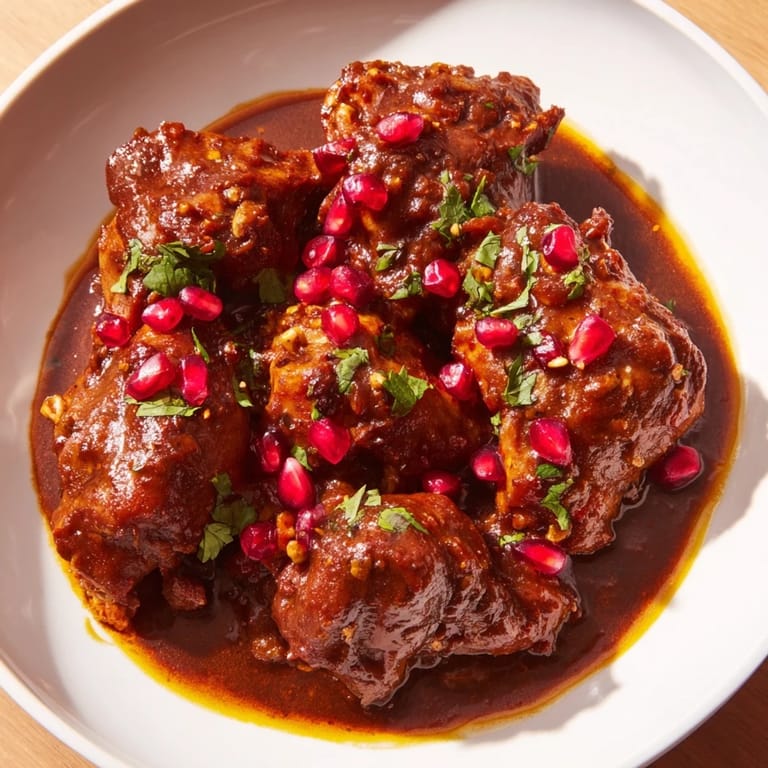
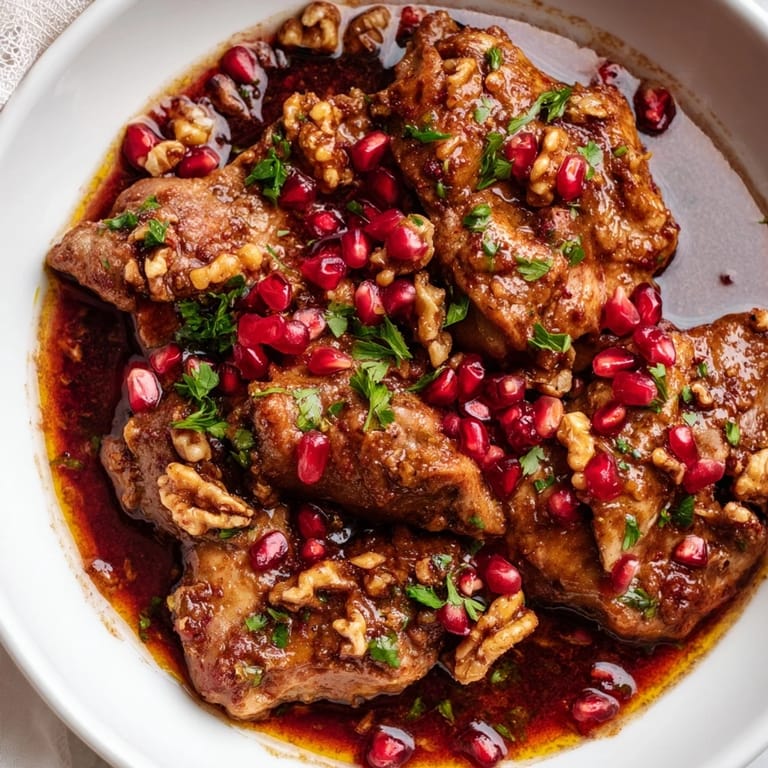
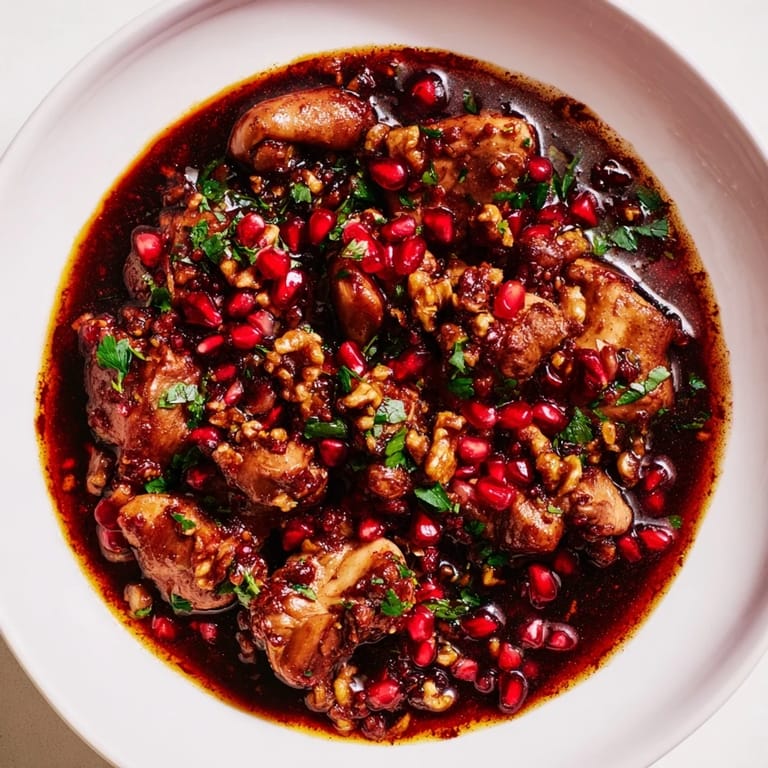
- Ladle the stew into bowls over steamed basmati rice, letting the sauce pool around the grains. Scatter pomegranate seeds and fresh parsley on top if you have them, for brightness and a little textural contrast.
 Save to Pinterest
 There was a moment last winter when my kitchen fogged up completely from the steam, and as I stirred the pot, the warm spice-laden air made me feel like I was standing in a Tehran bazaar instead of my small apartment. That's when I understood why this dish is served at celebrations and gatherings—it fills a space with something unmistakably special, something that says you've made time for the people in your life.
Understanding the Flavor Profile
Fesenjan is a study in balance, and understanding how each element contributes helps you master the dish. The pomegranate molasses provides the essential tartness and fruitiness, the walnuts bring earthiness and richness, and the spices—especially the cinnamon—add warmth without ever becoming dominant. The key is tasting frequently as you cook and adjusting the sweetness and tang to your preference, because this is genuinely a dish that changes based on your mood and the quality of your ingredients.
Making It Your Own
While the traditional recipe calls for duck or chicken, I've successfully made this with lamb for a more complex flavor, and my vegetarian friend swears by her version using large chunks of eggplant and mushrooms that become almost meat-like in their texture after simmering. The beauty of fesenjan is that it's flexible enough to accommodate what you have on hand, but precise enough that it always tastes intentional and composed.
Serving and Storage Tips
Fesenjan actually tastes better the next day or even two days later, when the flavors have had time to meld and deepen. This makes it perfect for meal prep or cooking ahead when you know you're expecting guests. I often double the recipe and freeze half in an airtight container, knowing that on a cold evening I can reheat it gently on the stove with a splash of water if needed.
- Store leftovers in the refrigerator for up to four days, or freeze for up to three months in a well-sealed container.
- Reheat gently over low heat on the stovetop rather than in the microwave to preserve the sauce's glossy consistency.
- If the sauce seems too thick when reheating, add a bit of water or pomegranate juice to loosen it back up.
 Save to Pinterest
 Every time I make fesenjan, I'm reminded that some of the most memorable meals come from slowing down and honoring a recipe's rhythm. This is the kind of dish that brings people to the table and keeps them there, happy and full.
Recipe FAQs
- → What type of meat works best for Fesenjan?
Traditionally duck is used, but boneless chicken thighs provide a tender and flavorful alternative.
- → Can the sauce be adjusted for sweetness?
Yes, sugar and pomegranate molasses quantities can be modified to balance tartness and sweetness to taste.
- → How long should the stew simmer for optimal flavor?
Simmering the stew covered for 1 hour and uncovered for 30 minutes helps thicken the sauce and deepen flavors.
- → What spices enhance the flavor profile?
Cinnamon, turmeric, and optional cardamom add warm, aromatic notes complementing the nuts and pomegranate.
- → Are there vegetarian alternatives using similar techniques?
Mushrooms or eggplant can replace meat, maintaining texture and absorbing the rich sauce flavors.