 Save to Pinterest
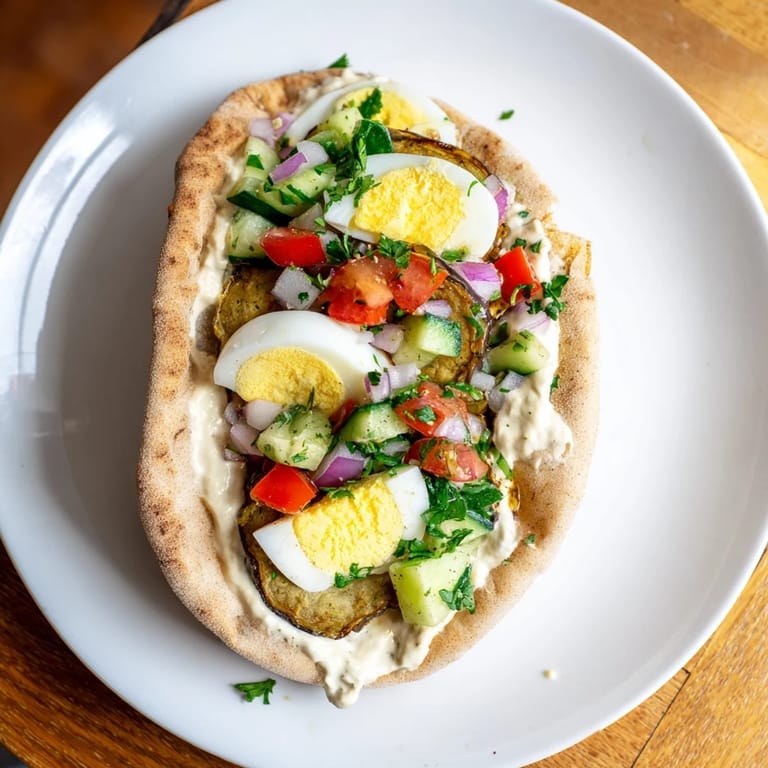
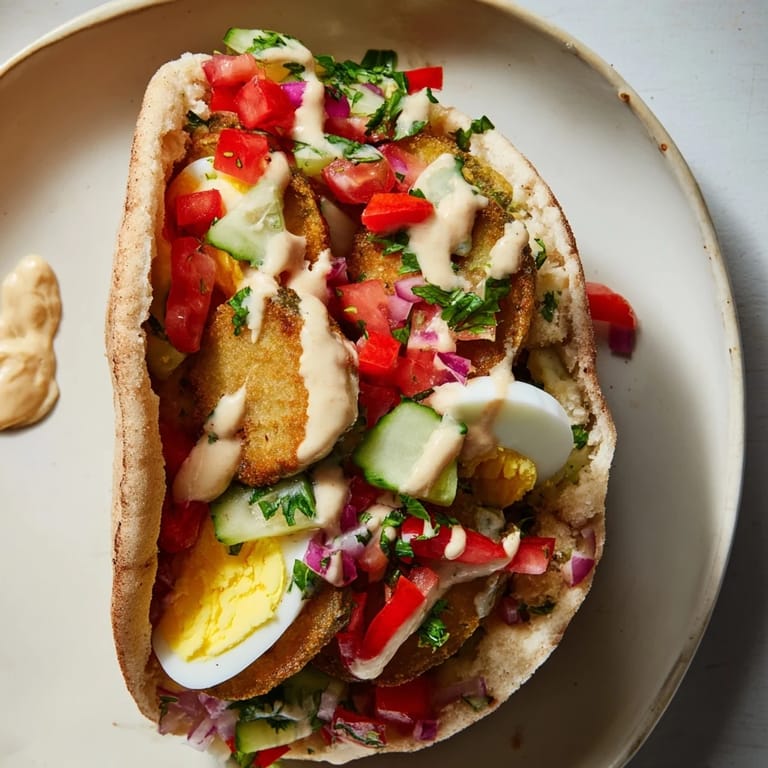
 The first time I really tasted sabich, I was sitting on a curb in Tel Aviv at midnight, grease dripping down my wrists, completely mesmerized by how something so simple could taste so alive. The warm pita was soft enough to fold, the fried eggplant was impossibly crispy, and underneath all of it was this creamy tahini sauce that made everything click. I've since made it countless times, and it never stops feeling like a small celebration.
I made this for my roommate on a random Thursday when she came home stressed, and watching her face light up after that first bite reminded me why I love cooking street food. There's something about the mess of it, the way you can customize every single sandwich, that makes people slow down and actually enjoy eating together instead of just fueling up.
Ingredients
- Eggplant: Two medium eggplants sliced thin are essential - they're your textural anchor, and salting them first removes excess water so they fry golden instead of soggy.
- All-purpose flour: Just enough to dust the eggplant for a delicate crisp, nothing heavy.
- Vegetable oil: A full cup sounds like a lot, but you're shallow frying, not deep frying, so use it wisely and save the used oil if it's still clean.
- Eggs: Hard-boiled and sliced, they add protein and a creamy richness that balances the bright acidity of everything else.
- Tomatoes: Use the ripest ones you can find, diced small so they release their juice into the salad.
- Cucumber: Adds crunch and freshness that keeps the sandwich from feeling heavy.
- Red onion: A quarter is plenty - it's sharp enough to wake up your palate.
- Fresh parsley: The green that ties the whole salad together with an herbaceous bite.
- Tahini paste: The soul of sabich, creamy and nutty, thinned with water and lemon to pour like silk.
- Lemon juice: Brightens everything it touches, from the tahini to the salad to the fried eggplant.
- Pita bread: Warm pita is non-negotiable - it's your delivery system and your edible plate.
- Amba: Pickled mango sauce is traditional and adds a mysterious sweet-sour depth that makes people ask what that flavor is.
Tired of Takeout? 🥡
Get 10 meals you can make faster than delivery arrives. Seriously.
One email. No spam. Unsubscribe anytime.
Instructions
- Salt the eggplant and wait:
- Slice your eggplants into half-inch rounds, sprinkle with salt, and let them sit for 15 minutes while you organize everything else. You'll see beads of moisture form on the surface - that's exactly what you want, and it's why patting them completely dry matters before they hit the oil.
- Fry until golden:
- Dust each slice lightly in flour, then fry in hot oil until both sides are deep golden and crispy, about 2 to 3 minutes per side. You'll know it's ready when the edges look almost caramelized - that's where all the flavor lives.
- Cook the eggs:
- Boil eggs for 9 minutes, cool them in ice water so they peel cleanly, then slice them thick enough that you can actually taste them.
- Build the salad:
- Toss tomatoes, cucumber, red onion, and parsley together with lemon juice and olive oil, seasoning generously. Let it sit while you warm the pita so the flavors marry.
- Make the tahini sauce:
- Whisk tahini with water, lemon juice, minced garlic, and salt until it's smooth and pourable - it should taste rich but not heavy, bright but not harsh.
- Warm the pita:
- A warm pita is a happy pita - heat it gently so it's still flexible enough to fill without tearing.
- Assemble with intention:
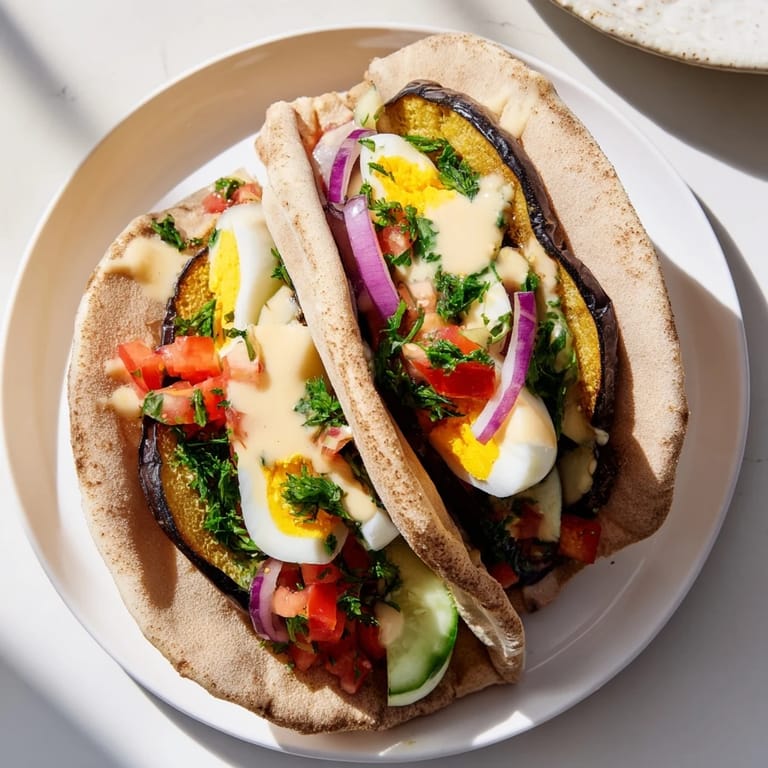
- Fill each pita with eggplant first so the heat stays trapped, then add eggs, salad, and a generous drizzle of tahini. Top with amba, pickles, cilantro, and hot sauce if you want that final kick.
- Eat immediately:
- Don't wait - the magic is in the warmth meeting the cool salad, the crispy eggplant still steaming inside the pita.
 Save to Pinterest
 There was this moment when I realized sabich isn't really about technique at all - it's about honoring each ingredient by letting it be exactly what it is. The eggplant doesn't need to be fancy, the salad doesn't need a fancy vinaigrette, and the tahini sauce gets its depth from time and good garlic, nothing else.
The Secret of Crispy Eggplant
Eggplant gets a bad reputation for being spongy and bland, but that's only true if you skip the salt step or use too much oil. I've learned to think of that initial 15 minutes as your eggplant's chance to confess all its excess water before it ever touches heat. The flour coating is feather-light, just enough to catch color without creating a crust that blocks flavor.
Why This Works as a Meal
Sabich landed in my regular rotation because it hits all the checkboxes - it's vegetarian but not apologetic about it, it's fast but tastes like comfort, and somehow it works for lunch, dinner, or that weird in-between time when you're not quite hungry but desperately need something good. You can make it as simple or as elaborate as your mood allows, and it never feels wrong.
The Art of Customization
What I love most about sabich is that it begs to be made your own - it's a platform for whatever's in your kitchen and whatever your taste is craving that day. The tahini sauce is creamy enough to hold everything together, but the individual components stay distinct enough that you taste each one, from the earthiness of eggplant to the sharp brightness of fresh herbs.
- Keep hot sauce nearby - the final splash of heat is what ties all those flavors together.
- If you can't find amba, a spoonful of harissa or even mango chutney works in a pinch.
- Make extra tahini sauce because somehow there's never quite enough and people always ask for more.
 Save to Pinterest
 Sabich taught me that the best food doesn't need to be complicated, just honest and generous. Make this when you want to eat something that tastes like someone cares.
Recipe FAQs
- → What type of eggplant is best for Sabich?
Medium-sized eggplants sliced into 1/2-inch rounds work well as they fry evenly and absorb flavors.
- → How do I achieve a crispy texture on the eggplant?
After salting to remove moisture, lightly dredge eggplant slices in flour before frying in hot oil until golden brown on both sides.
- → Can Sabich be made vegan?
Yes, by omitting the hard-boiled eggs or substituting with tofu, the dish becomes fully vegan while maintaining rich flavors.
- → What is traditional Israeli salad in this dish?
The salad combines diced tomatoes, cucumber, red onion, fresh parsley, lemon juice, olive oil, salt, and pepper for a refreshing contrast.
- → How is tahini sauce prepared for Sabich?
Whisk tahini paste with water, lemon juice, minced garlic, and salt until smooth. Adjust water to achieve desired consistency.
- → Are there common serving variations?
Yes, optional additions include pickled mango sauce (amba), fresh cilantro, pickles, and hot sauce to enhance flavor layers.