 Save to Pinterest
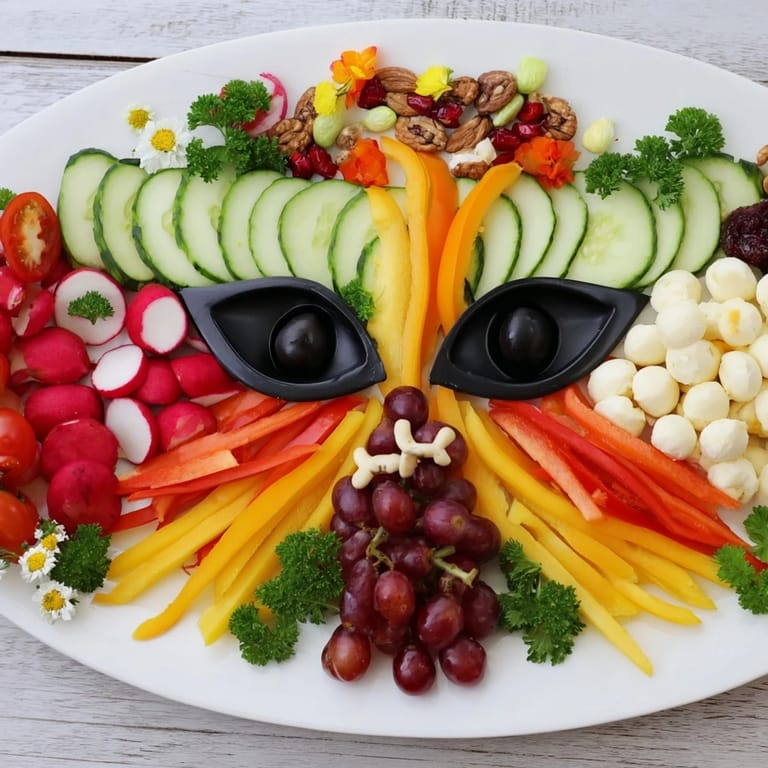
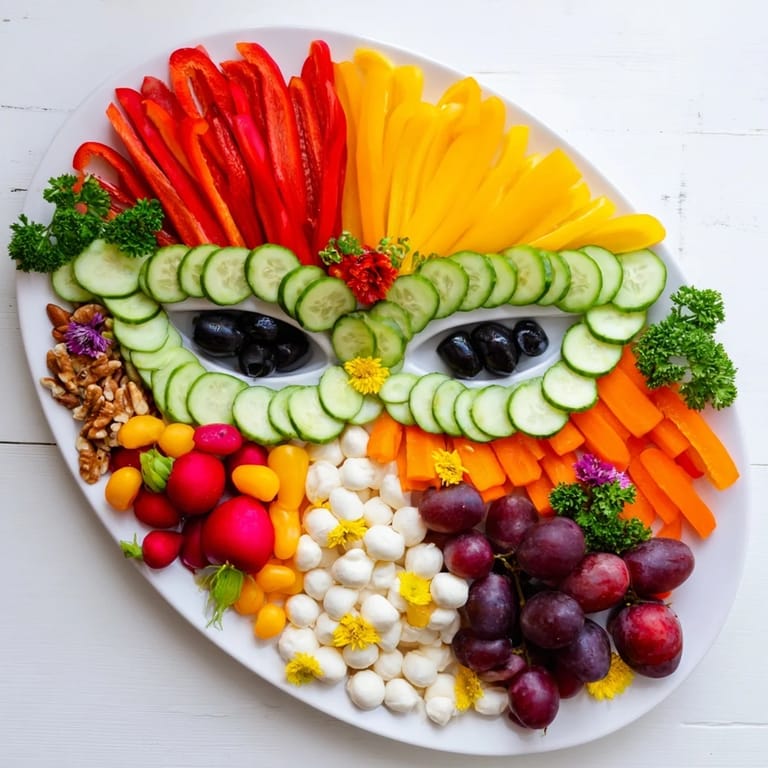
 I'll never forget the year I decided to turn appetizers into art. It was New Year's Eve, and I wanted something that would make my guests pause before diving in—something that would spark conversation and make them smile the moment they saw it. That's when the masquerade mask platter came to life on my kitchen counter. I spent an evening arranging vegetables like feathers, and watching people's faces light up when they realized what they were looking at made every careful slice worthwhile.
I still remember my friend Sarah reaching for a bell pepper slice, then stopping mid-grab to take a photo. That's when I knew this platter had transcended being just food—it had become an experience, a moment where everyone felt like they were part of something special, even though all I'd really done was arrange what nature had already made beautiful.
Ingredients
- 2 large green or black olives, pitted (or cheese cubes): These become your mask's dramatic eyes, so choose ones that are evenly sized and have good color contrast with your board
- 1 cup cucumber slices, thinly sliced: The key here is slicing them just thin enough to drape beautifully in arcs without falling apart—aim for about an eighth inch
- 1 cup colorful bell pepper strips (red, yellow, orange): These are your mask's feathered edges in miniature, so cut them into long, thin strips that fan outward naturally
- 1/2 cup cherry tomatoes, halved: The halves give you that perfect jewel-like appearance and work beautifully for filling visual gaps
- 1/2 cup red radish slices: Don't skip these—they add a peppery crunch and that vibrant pink that makes the whole mask pop
- 1/2 cup baby carrots, halved lengthwise: The natural sweetness and bright orange are essential for the mask's visual drama
- 1/2 cup seedless grapes (red or green): These act as little jewels, filling spaces and adding a luxurious touch to your design
- 1 cup assorted cheeses, cubed: Mix textures and colors here—cheddar's golden, Swiss has those beautiful holes, and gouda brings richness
- 1/2 cup mini mozzarella balls: These are the secret to white accents that tie your whole palette together
- 1/2 cup nuts (walnuts, almonds, or pistachios): They add texture and depth, plus they're your guests' little pockets of protein and satisfaction
- 1/4 cup dried fruits (apricots, cranberries, or figs): These jewel-toned pieces become natural embellishments that feel intentional rather than accidental
- 1/2 cup crackers or breadsticks (optional): If you include them, they frame the mask's bottom like a sophisticated neckline
- Fresh herbs and edible flowers: These are your finishing touches—the difference between beautiful and absolutely unforgettable
Tired of Takeout? 🥡
Get 10 meals you can make faster than delivery arrives. Seriously.
One email. No spam. Unsubscribe anytime.
Instructions
- Set Your Stage:
- Choose a large oval or rectangular board—this is your canvas. I learned the hard way that a round board fights against the mask shape, so go with what gives you those clean lines. Place your board where it'll catch light, because that's when the colors really sing.
- Create the Eyes:
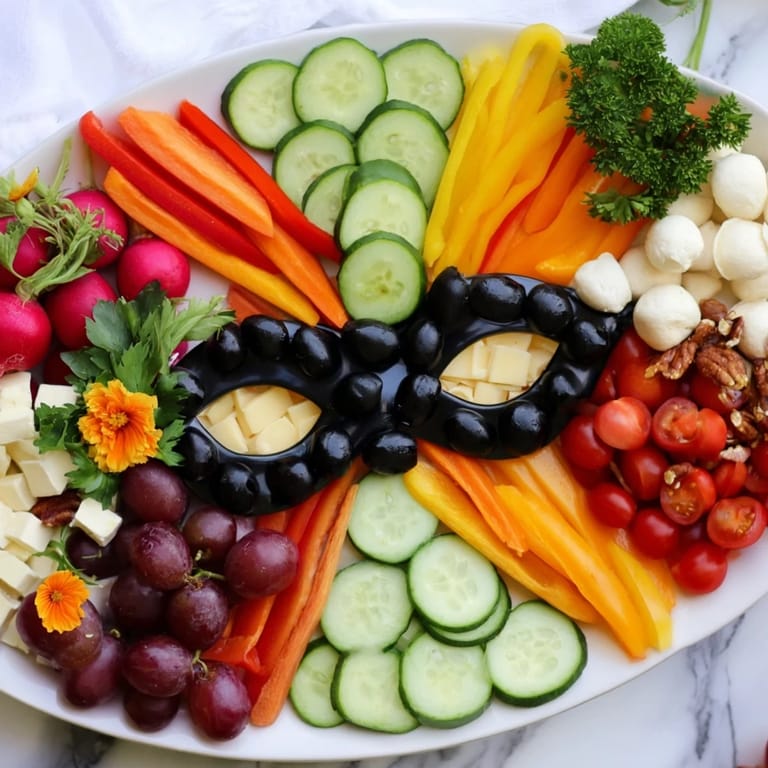
- Position your two olives or cheese cubes near the center top of the board, spacing them about 3 inches apart horizontally. These need to be the focal point, so make sure they have breathing room and aren't crowded.
- Build the Mask's Feathered Edge:
- This is where it becomes art. Start above and around your eyes, and fan out your vegetable slices and bell pepper strips in wide, symmetrical arcs. Think of how a peacock's feathers radiate outward—each piece should flow from the center point of the eyes. Work slowly, and step back every few pieces to check your symmetry.
- Layer in the Jewels:
- Tuck cheese cubes and mozzarella balls among the vegetables, letting them nestle in naturally. These aren't randomly scattered—they're placed where they'll catch the eye and add dimension to your design.
- Fill the Gaps:
- Now comes the detail work. Fill empty spaces with nuts and dried fruits. This is actually where your mask gets its personality—these little pockets of texture and color are what transform it from simply arranged to thoughtfully composed.
- Frame the Bottom:
- If you're using crackers or breadsticks, arrange them along the lower edge or sides like an elegant masquerade costume coming down from the mask.
- Add the Finishing Magic:
- Scatter fresh herbs and any edible flowers across your creation. Parsley adds green movement, basil brings unexpected freshness, and edible flowers are your secret weapon for that wow factor that makes people gasp a little.
- Serve with Confidence:
- Bring it to the table immediately while everything is crisp and the arrangement is pristine. This is your moment—let people admire it for a few seconds before they start reaching in.
 Save to Pinterest
 There was this moment at midnight when everyone raised their glasses and someone said, 'This is the most beautiful thing I've eaten all year'—and I realized that sometimes the most meaningful food moments have nothing to do with cooking techniques and everything to do with making people feel celebrated.
The Art of Arrangement
Plating is a form of love, and this mask proves it. When you arrange food this way, you're not just feeding people—you're telling them they're worth the effort. The secret is understanding that every element serves both your eyes and your palate. That arch of cucumber slices isn't just beautiful; it's meant to be grabbed and enjoyed. The cheese cubes aren't filler; they're little pockets of richness tucked strategically throughout. Think of your board as a map where every color and texture is placed intentionally.
Customization for Your Crowd
The beautiful part about this platter is that it adapts to whoever's coming. Vegan guests? Swap the cheese for marinated tofu cubes and add extra nuts and dried fruits—honestly, it looks even more sophisticated. People who want protein? Layer in some smoked salmon or cured prosciutto along the sides; the salt and smoke complement the fresh vegetables beautifully. Seasonal produce changes the whole feel—summer means stone fruits and heirloom tomatoes, while winter welcomes pomegranate seeds and dried cranberries. You're not limited by the recipe; you're inspired by what's available and who's at your table.
Making It Last
The truth about appetizer platters is that their magic lives in the moment—that first impression of freshness and artistry. But here's what I've learned from years of entertaining: if you want your masterpiece to stay beautiful throughout the evening, there are some tricks. Keep the platter cool, use a shallow board so nothing tumbles, and if you're prepping ahead, keep your vegetables in separate containers with damp paper towels until the last possible moment. Set out dips like hummus or herbed cream cheese nearby so people have something to accompany their grazing. And here's the thing nobody talks about: the platter actually gets more interesting as people eat from it, because the negative space creates new patterns and shapes.
- Cover with plastic wrap and refrigerate up to 4 hours ahead if you must prep early
- Bring to room temperature for 10 minutes before serving so the flavors aren't muted by the cold
- Keep your herbs and edible flowers as your last-minute flourish so they stay perky and perfect
 Save to Pinterest
 This isn't just a recipe; it's permission to make ordinary ingredients feel extraordinary. When you serve this mask, you're showing your guests that they're worth beauty and thoughtfulness. That's the real magic.
Recipe FAQs
- → How do I create the mask's eye openings?
Place two olives or small cheese cubes spaced apart near the center top of the serving board to mimic the eyes.
- → Can this platter be made vegan?
Yes, simply omit cheeses and replace them with marinated tofu cubes or additional vegetables and fruits.
- → What vegetables work best for the fan arrangement?
Thin cucumber slices, colorful bell pepper strips, cherry tomatoes, radishes, baby carrots, and seedless grapes create vibrant arcs.
- → Are nuts necessary for this platter?
Nuts add texture and flavor but can be omitted or substituted for dietary restrictions.
- → How can I enhance the presentation further?
Garnish with fresh herbs like parsley, basil, dill, and add edible flowers for a festive touch.
- → Is cooking required for this platter?
No cooking is necessary; preparation primarily involves arranging fresh ingredients artistically.