 Save to Pinterest
 There's something about a soup that comes together in one pot that feels like a small victory, especially on those evenings when you want something warm and real but don't have the energy for fuss. I discovered this chicken and rice soup during a particularly gray November afternoon when I was craving the kind of meal that tastes like it took hours but actually doesn't. The beauty of it is how the rice absorbs all those flavors as everything simmers together, turning what could be a plain broth into something genuinely comforting.
I made this for my neighbor last winter when she was recovering from surgery, and watching her face light up when she tasted it reminded me why simple, honest food matters so much. She actually asked for the recipe that same afternoon, and now it's become her go-to when she needs something that feels like a hug in a bowl. That's when I knew this wasn't just a recipe—it was the kind of meal that quietly shows up for people.
Ingredients
- Boneless, skinless chicken breasts (about 400 g), cut into bite-sized pieces: Cutting them small means they cook through quickly and distribute evenly throughout the pot, so every spoonful has that tender chicken you're craving.
- Medium onion, finely chopped: This is your flavor foundation—don't skip the step of letting it soften in the oil, as it builds the entire soup's depth.
- Carrots, peeled and sliced: They add natural sweetness and a subtle earthiness that balances the broth beautifully.
- Celery stalks, sliced: Along with the onion and carrots, this is the classic trio that makes soup taste like soup, if that makes sense.
- Garlic cloves, minced: Just three cloves keeps it subtle enough that the soup feels clean and bright rather than overpowered.
- Long-grain white rice, rinsed: Rinsing removes excess starch, which keeps the broth clear and prevents a gluey texture as everything cooks.
- Low-sodium chicken broth (6 cups): This is where your flavor really lives, so taste your broth first—if it's salty, you might need slightly less salt later.
- Olive oil or unsalted butter: Use whichever you have on hand; the oil keeps it lighter, while butter adds a subtle richness.
- Dried thyme: One teaspoon is enough to perfume the whole pot without making it taste medicinal.
- Bay leaf: This quietly deepens everything; remove it before serving or you'll get an unpleasant surprise.
- Black pepper and salt: Season gradually and taste as you go, especially since the broth already contains salt.
- Fresh parsley: Stir this in at the very end so it keeps its bright flavor and color instead of fading into the broth.
- Lemon wedges: A squeeze of lemon at the table is optional but transforms the whole experience, so don't skip them if you have one on hand.
Tired of Takeout? 🥡
Get 10 meals you can make faster than delivery arrives. Seriously.
One email. No spam. Unsubscribe anytime.
Instructions
- Warm your pot and soften the vegetables:
- Heat your oil or butter over medium heat until it shimmers, then add the onion, carrots, and celery all at once. Stir them every minute or so for about five minutes—you're looking for them to soften but not brown, and you'll notice the kitchen starts smelling noticeably better as they release their flavors.
- Add the garlic:
- Once the vegetables are tender, add your minced garlic and let it cook for just one minute until fragrant—any longer and it starts to brown and turn bitter, which would be a shame.
- Introduce the chicken:
- Add your bite-sized chicken pieces and stir them around for a couple of minutes so they develop a light golden exterior. They don't need to be cooked through yet; you're just building flavor here.
- Combine everything with the broth and rice:
- Add the rinsed rice, chicken broth, thyme, bay leaf, salt, and pepper all at once and stir to combine. Everything should be submerged and evenly distributed in the pot.
- Simmer everything together:
- Bring the pot to a boil, then reduce the heat to low and cover it. Let it simmer gently for twenty to twenty-five minutes, stirring every few minutes to prevent the rice from sticking to the bottom. You'll know it's done when the rice is tender and the chicken is cooked through completely.
- Season and finish:
- Remove the bay leaf and taste your soup—this is your chance to add more salt or pepper if needed. Stir in the fresh parsley just before serving so it stays bright green.
- Serve warm with lemon:
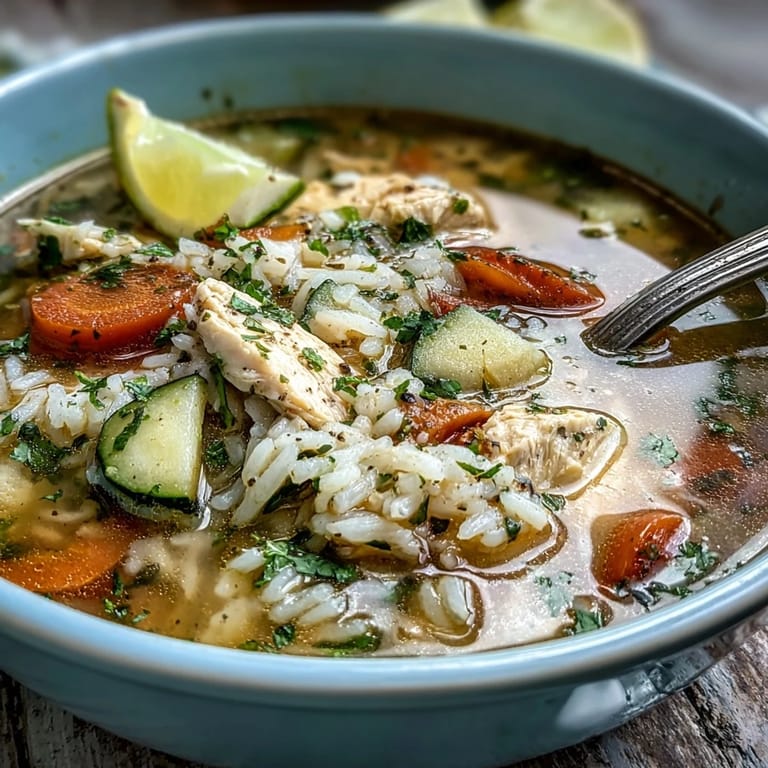
- Ladle the soup into bowls and squeeze a little lemon over the top if you have it; the acid wakes up all the flavors and adds a welcome brightness.
 Save to Pinterest
 I've learned that this soup is one of those recipes that actually gets better as the week goes on, with flavors deepening as everything sits together in the fridge. There's something almost magical about having this kind of nourishment ready to reheat on a busy day.
The Secret to Tender Chicken
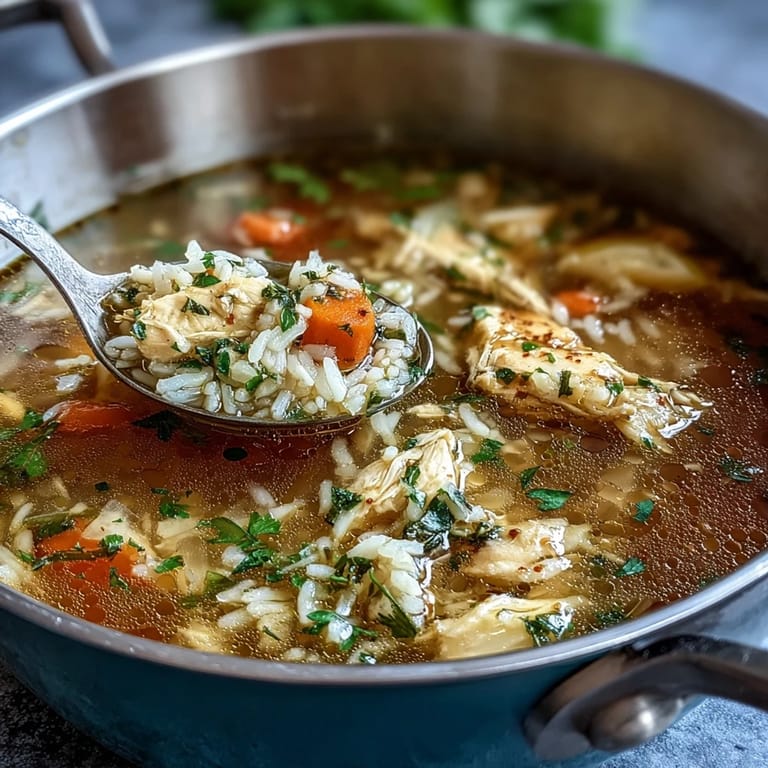
The key to keeping your chicken tender is cutting the pieces into consistent bite-sized chunks so they cook evenly, and not letting the soup boil aggressively once the chicken is in. A gentle simmer respects the protein instead of making it seize up and turn rubbery, which is the most common mistake I see people make with chicken soups.
Making It Your Own
This soup is remarkably flexible, which is part of why it's become my go-to base for experimenting. I've added everything from spinach to mushrooms to leftover roasted vegetables, and it absorbs each addition without losing its essential character. The thyme and bay leaf provide enough anchor that you can be creative without the soup feeling like it's lost its way.
Storing and Reheating
Leftovers thicken as the rice continues absorbing liquid overnight, so when you reheat, you'll likely need to add a splash more broth to get back to your preferred consistency. I've found that storing it in the fridge for up to three days works beautifully, and you can even freeze portions in jars if you want future-you to have an easy dinner waiting.
- Always cool the soup to room temperature before refrigerating so you don't warm up your whole fridge.
- When reheating, do it gently over medium heat rather than blasting it on high, which helps the flavors stay vibrant.
- If you've frozen it, thaw it overnight in the fridge and then reheat it slowly, tasting as you add back liquid to reach your preferred consistency.
 Save to Pinterest
 This soup has become the recipe I reach for when I want to cook something that feels nurturing without being complicated, which honestly is what good food should be. There's comfort in knowing you can make something this honest in under an hour.
Recipe FAQs
- → How can I make this soup dairy-free?
Use olive oil instead of butter to keep the soup dairy-free without sacrificing flavor.
- → Can I substitute brown rice for white rice?
Yes, brown rice can be used but requires extending the simmering time by 15–20 minutes for tenderness.
- → What is the best way to add extra greens?
Add spinach or kale during the last five minutes of cooking to keep them vibrant and tender.
- → Is it necessary to brown the chicken pieces first?
Browning the chicken briefly enhances flavor and texture but isn't required for cooking through.
- → How do leftovers hold up after reheating?
The soup thickens as rice absorbs liquid; adding broth when reheating restores the ideal consistency.