 Save to Pinterest
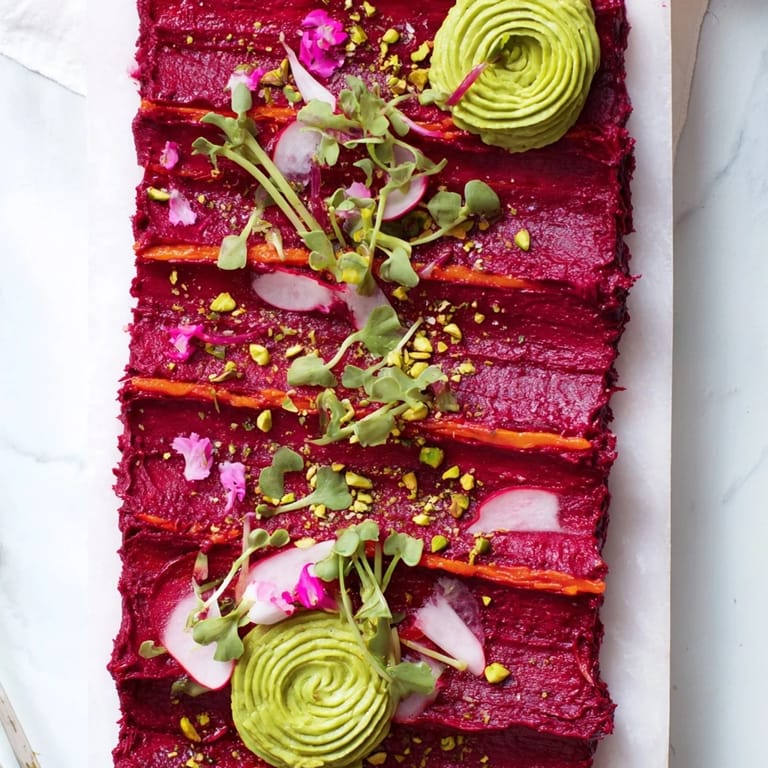
 I was rifling through a cooking magazine at a café when a photograph stopped me cold—a single, audacious stripe of color against white porcelain, nothing else on the plate. It looked so confident, so sure of itself. That image haunted me for weeks until I finally decided to recreate it in my own kitchen, trading the formal plating for a raw wooden board and inviting friends over to scoop directly from the edge. What started as visual inspiration became a dinner that felt less like eating and more like witnessing something beautiful happen.
The first time I made this for people, my partner laughed at how seriously I was taking the stripe—measuring it with my fingers, adjusting the angle of the spatula like a painter. Then our friends arrived, and there was this moment of pure silence before anyone ate, everyone just staring at the board. That's when I knew this dish had something special, something that bridged the gap between food and art in a way that felt genuine.
Ingredients
- Beets (2 medium): The foundation of your stripe, earthy and deep—roasting concentrates their sweetness and ensures they're tender enough to blend into silk.
- Carrots (3 large): Their natural brightness cuts through the beet's density, and steaming keeps them from becoming watery or losing that gentle, vegetal warmth.
- Fresh ginger (1 tsp grated): A whisper of heat that wakes up the carrots; don't skip this, it's what transforms the purée from good to memorable.
- Ripe avocado (1): Choose one that yields slightly to pressure but isn't mushy—it's the cream that holds everything together, literally and philosophically.
- Greek yogurt (2 tbsp): The secret to an avocado cream that pipes cleanly without becoming gluey; it adds air and structure without overpowering.
- Lime juice (1 tsp): Brightness and a tiny acidic anchor that keeps the avocado from browning and keeps your palate engaged.
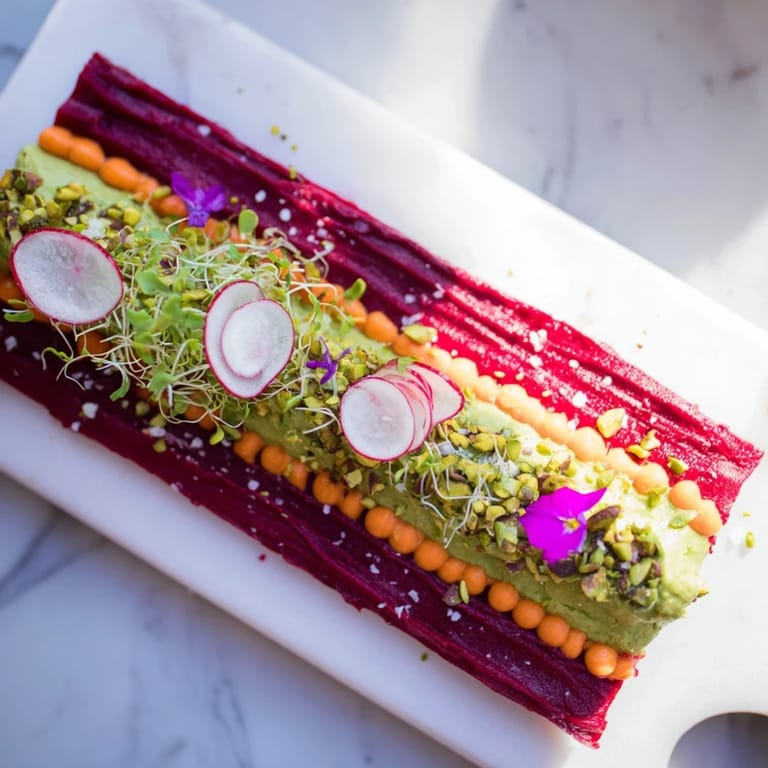
- Microgreens, edible flowers, pistachios, flaky sea salt: These aren't decoration—they're texture, color, and that final punch that reminds you this is still food, still meant to be eaten.
Tired of Takeout? 🥡
Get 10 meals you can make faster than delivery arrives. Seriously.
One email. No spam. Unsubscribe anytime.
Instructions
- Roast the beets until they smell like earth and sweetness:
- Toss your diced beets with olive oil and sea salt, then spread them on a tray and let the oven work for 30 to 35 minutes at 400°F. You'll know they're ready when a fork slides through without resistance and the edges are slightly caramelized.
- Steam the carrots until they surrender:
- While the beets are in the oven, cook your carrot slices in boiling salted water for 15 to 20 minutes—they should be tender enough to break with a spoon. Drain them well and let them cool slightly so they don't steam themselves into mush.
- Blend the beet purée with intention:
- Add your roasted beets and lemon juice to a blender and pulse, then blend on high until completely smooth. If it's too thick, add a splash of water—you want something that spreads like thick paint but flows slightly on the board.
- Blend the carrots into warm velvet:
- Combine your cooked carrots with ginger, butter, and salt in the food processor and blend until silky. Taste it—this should make you pause and think about what you're making.
- Mash the avocado into cloud-like cream:
- In a bowl, mash your ripe avocado with Greek yogurt, lime juice, and a tiny pinch of salt until it's completely smooth and pale green. Transfer this to a piping bag if you want precision, or keep it looser if you prefer organic, swooping gestures.
- Paint your stripe down the center of a clean board:
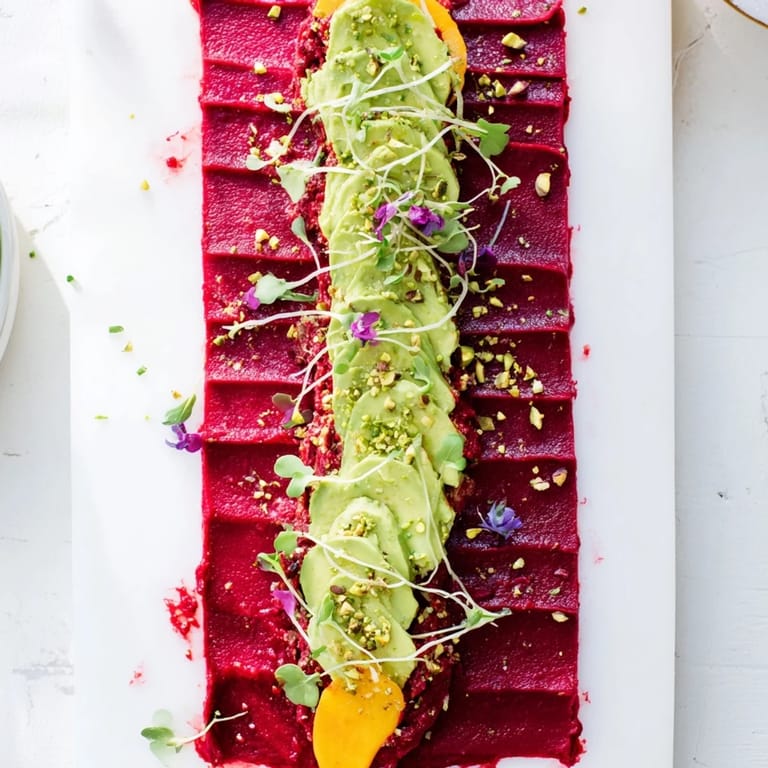
- Using an offset spatula or the back of a spoon, spread the beet purée in one confident, deliberate stripe down the middle. This is your anchor, so make it about 3 inches wide and as long as the board allows.
- Layer or pipe the secondary purées in artistic flourishes:
- Now pipe or spoon the carrot purée and avocado cream along the beet stripe, creating layers or dots or whatever feels right in the moment. There's no wrong way here—this is where you become the artist.
- Scatter your garnishes with restraint and care:
- Finish with a handful of microgreens, a few edible flowers, a sprinkling of crushed pistachios, and a final touch of flaky sea salt. Don't overload it—let the colors breathe.
- Serve immediately and let people scoop:
- Bring the board straight to the table and invite your guests to tear off pieces of bread or scoop directly from the stripe with their fingers if they want to. This dish tastes best when eaten with a sense of joy and abandon.
 Save to Pinterest
 There's a moment when you step back from the finished board, before anyone touches it, where you realize you've made something that's almost too beautiful to eat. My friend Sarah actually hesitated, phone in hand, wanting to photograph it first—and I let her, because that hesitation was the whole point. Food doesn't always have to be about sustenance; sometimes it's about the pause before the bite.
Why This Concept Works
The stripe isn't just a plating trick—it's a structure that lets each purée shine while creating harmony through constraint. When everything is scattered, your eye doesn't know where to land, but a single bold line tells a story. The three elements have different densities, temperatures, and flavors, so eating from one end of the board to the other is like a conversation, each taste building on the last. This is the philosophy of modernist cooking boiled down to its essence: use restraint to create impact.
Making It Your Own
The beet-carrot-avocado combination is a starting point, not a rule. I've made this with roasted sweet potato purée instead of beets, and it was just as striking. Pea purée in the spring, roasted squash in autumn—any colorful vegetable that blends smooth enough to spread will work. The real skill is thinking about how the colors interact and what textures would make each spoonful interesting rather than just pretty.
Serving and Pairing
I serve this as the opening act of a meal, something to reset the palate and set a tone of thoughtfulness. A crisp white wine—Sauvignon Blanc works perfectly—cuts through the richness of the avocado and echoes the brightness of the lime and lemon. Some people bring bread, which is fine, but encourage your guests to experience the stripe on its own first, in all its minimalist glory.
- If you want textural contrast, scatter roasted chickpeas or pickled onions across the top just before serving for a crunch that surprises.
- The stripe stays fresh for about 15 minutes before the edges start to blur, so plate it as close to service time as you can manage.
- Remember: this dish is as much about the moment you create as it is about what's on the board.
 Save to Pinterest
 This dish taught me that sometimes the most impressive thing you can do in a kitchen is know when to stop. Everything here is simple—just roasted vegetables and mashed fruit—but arranged with intention and served with generosity. That's the whole secret.
Recipe FAQs
- → How do I achieve a smooth beet purée?
Roast the beets until tender, then blend with a splash of water and lemon juice until perfectly silky, ensuring no lumps remain.
- → Can I substitute the dairy in the avocado cream?
Yes, use coconut yogurt or another plant-based yogurt for a dairy-free version that maintains creaminess and flavor.
- → What garnishes complement the layered purées?
Microgreens, edible flowers, crushed pistachios, and a sprinkle of flaky sea salt add texture, color, and a fresh taste contrast.
- → How should I plate the purées for best visual impact?
Use a wide offset spatula to spread a wide stripe in the center of a clean serving board, then layer the other purées in artistic lines or dots on top.
- → What cooking time is needed for the carrot purée?
Steam or boil the carrots for 15–20 minutes until very soft to ensure a smooth, creamy purée consistency.
- → Is this dish suitable for gluten-free diets?
Yes, all ingredients are naturally gluten-free, making it an ideal choice for gluten-sensitive individuals.