 Save to Pinterest
 My neighbor stopped by one April evening with a bunch of fresh mint from her garden, still dewy from the morning, and asked what I was making for dinner. I had peas in the freezer and Arborio rice on the shelf, so we decided right then to throw together a risotto. That simple conversation turned into one of those kitchen moments where everything just clicked—the steam rising off the pot, the bright green peas tumbling in at just the right moment, and that mint hitting the hot rice with a fragrance that felt like spring itself. It became the dish I now make whenever I want to feel like I'm cooking with intention, not just cooking to eat.
I made this for a small dinner party last spring when a friend was going through a tough time, and she told me later that it was the first meal in weeks where she actually tasted her food and felt present. There's something about the ritual of standing at the stove, stirring constantly, waiting for the rice to transform—it slows you down. My guests lingered at the table longer than usual that night, talking and laughing, and I realized the risotto had somehow created the exact kind of evening we all needed.
Ingredients
- Fresh or frozen green peas (1 cup, 150 g): Fresh peas in spring are incomparable, but frozen ones work beautifully and sometimes taste fresher than what's at the market. Add them late so they stay vibrant and don't turn mushy.
- Arborio rice (1 1/2 cups, 300 g): This short-grain rice releases starch as it cooks, creating that signature creamy texture—don't substitute with long-grain or you'll lose the magic.
- Vegetable stock (4 cups, 1 L): Keep it warm on a separate burner so each addition stays hot and helps the rice cook evenly, rather than shocking it with cold liquid.
- Dry white wine (1/2 cup, 120 ml): This adds brightness and a subtle complexity that makes people ask what the secret ingredient is.
- Unsalted butter (3 tbsp, divided): The first batch toasts the rice and builds flavor, while the final tablespoon stirred in at the end creates that silky finish.
- Freshly grated Parmesan (1/2 cup, 40 g, plus extra): Grate it yourself right before cooking—pre-grated cheese has anti-caking agents that prevent it from melting smoothly into the risotto.
- Fresh mint leaves (1/4 cup, 10 g): This is the heart of the dish, so use the best, brightest mint you can find and chop it just before stirring it in.
- Lemon zest (from 1 lemon): This tiny addition does enormous work, cutting through the richness and making everything taste more like itself.
Tired of Takeout? 🥡
Get 10 meals you can make faster than delivery arrives. Seriously.
One email. No spam. Unsubscribe anytime.
Instructions
- Start with the aromatics:
- Melt two tablespoons of butter in your saucepan over medium heat until it smells nutty and inviting. Add your chopped onion and let it soften slowly—this usually takes about four minutes and should look translucent and gentle, not browned. Stir in the garlic and cook for just a minute more until the kitchen smells incredible.
- Toast the rice:
- Pour in your Arborio rice and stir it constantly for about two minutes so each grain gets coated in butter and turns slightly translucent at the edges. This step matters more than people think—it seals the grain and helps it cook evenly rather than turning to mush.
- Deglaze with wine:
- Add your white wine and keep stirring until it's mostly absorbed—you're building flavor layer by layer, and this step adds a subtle brightness. When the pan stops sounding wet, you're ready to move forward.
- Add stock gradually:
- This is where patience becomes your best friend. Add warm stock one ladle at a time, stirring constantly, and wait until most of it's absorbed before adding the next ladleful. The whole process takes about eighteen to twenty minutes, and yes, you need to stay with it—this constant stirring is what releases the rice's starch and creates that creamy texture.
- Introduce the peas:
- Drop your peas in during the last five minutes of cooking so they stay bright green and tender rather than turning dull and soft. They'll warm right through in that time.
- Finish with richness and fragrance:
- Remove the pan from heat and stir in the remaining butter, Parmesan, fresh mint, lemon zest, and seasonings. The hot rice will melt everything together into something silky and cohesive—taste and adjust your salt and pepper because this is your last chance to make it sing.
- Serve with intention:
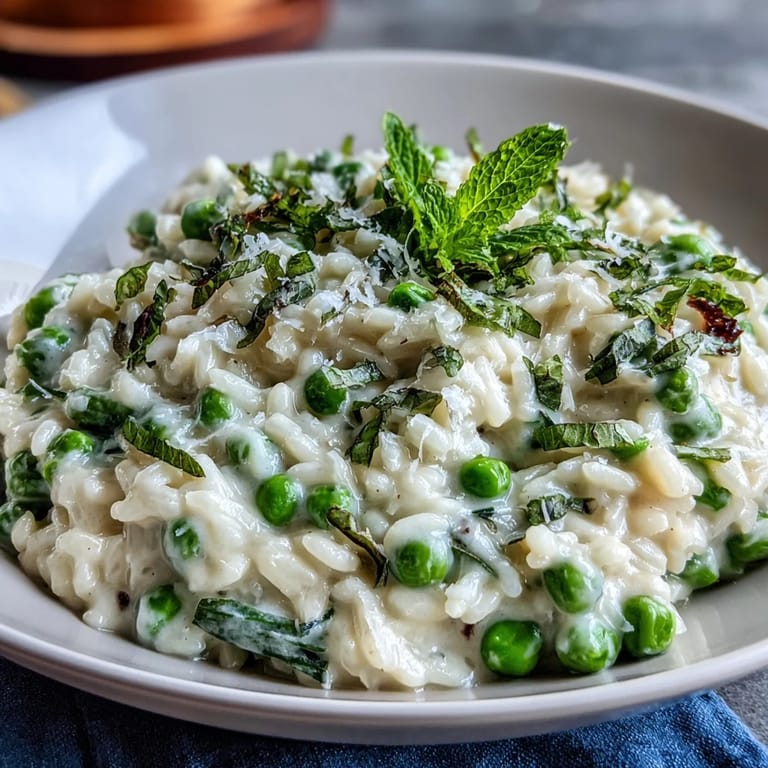
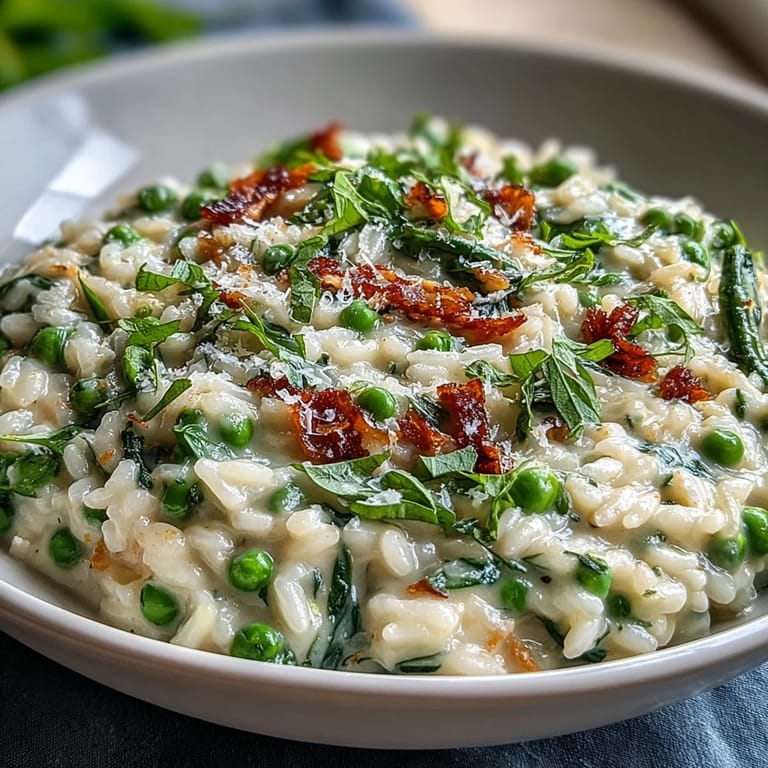
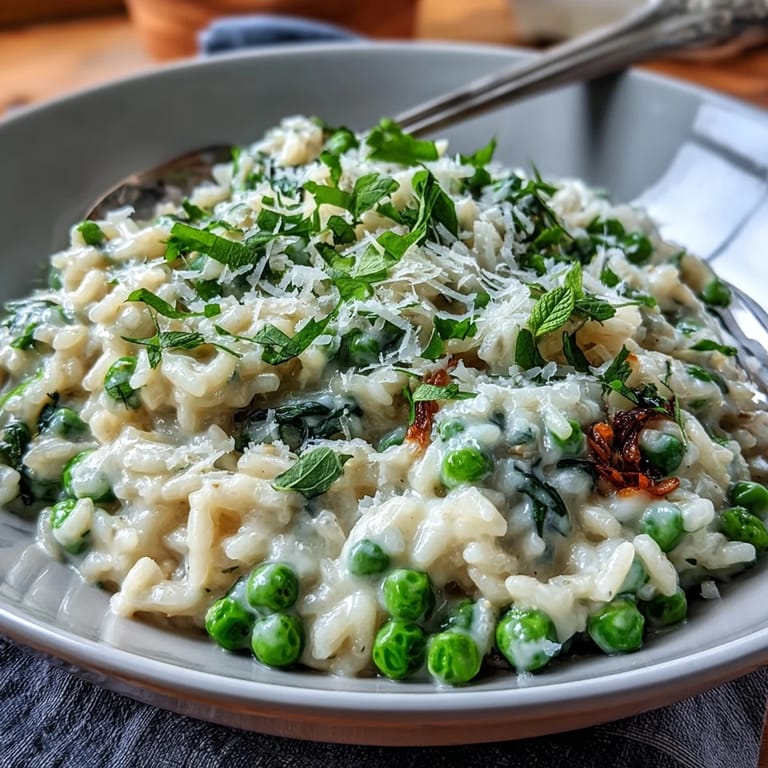
- Plate it immediately while it's still flowing slightly, and top with extra Parmesan and a few fresh mint leaves. Risotto waits for no one.
 Save to Pinterest
 There's a moment near the end when you stir in the mint and the whole pot releases this burst of fresh green fragrance, and that's when you know you've made something special. It's the moment that reminds you why cooking matters—not because you need to eat, but because transforming simple ingredients into something that makes people feel cared for is one of the best things you can do.
Why Spring Matters Here
This risotto doesn't work the same way in December, even if you have good frozen peas and determined energy. There's something about making this dish in spring that changes it—the natural abundance outside your window, the way people are ready for lighter meals again after winter, how a single recipe can suddenly feel like it's celebrating the whole season. When fresh peas are actually available and mint is practically growing in every garden, this dish tastes like you've captured something time-sensitive and wonderful.
The Timing Dance
The thing about risotto is that everything has to happen at the right moment, and everything depends on everything else. Your stock needs to stay warm, your stirring needs to be consistent, your ingredients need to be prepped before you start because you won't have a free hand once the rice is going. I learned this the hard way when I tried chopping garlic mid-risotto and burned a whole batch, so now I do all my prep work first and stand there with everything within arm's reach, ready to move.
Variations and Flexibility
While this risotto shines as written, it also welcomes gentle creativity once you understand how it works. Some nights I add a splash of cream at the end, other times I stir in ricotta for something even richer. You could add asparagus in place of or alongside the peas, or swap the mint for basil if that's what you have. The structure stays the same—constant stirring, gradual stock, finishing with butter and cheese—but the specifics can shift based on what's in your kitchen and what your mood is calling for.
- If you prefer a lighter version, use less butter and Parmesan but don't skip them entirely, because they're essential to the dish's character.
- For vegetarians, confirm your Parmesan is made with vegetable rennet rather than animal, since most risottos use traditional Parm and some people care about that distinction.
- This reheats poorly, so make it just before you're ready to eat and accept that risotto is a dinner-time commitment, not a make-ahead dish.
 Save to Pinterest
 Make this when you want to feel like you're cooking something that matters, because risotto demands your presence and rewards your attention. It's the kind of dish that turns an ordinary evening into something your guests will remember.
Recipe FAQs
- → Can I use frozen peas instead of fresh?
Yes, frozen peas work well and should be added during the last few minutes of cooking to maintain their color and texture.
- → What type of rice is best for this dish?
Arborio rice is preferred for its high starch content, which helps achieve the creamy consistency typical of this style of cooking.
- → How can I tell when the risotto is done?
The rice should be tender with a slight bite (al dente) and the mixture creamy but not runny; stirring constantly while adding stock helps achieve this.
- → Is it necessary to add white wine?
White wine enhances flavor and acidity, but it can be omitted; just replace it with extra warm stock if preferred.
- → How do I prevent the risotto from becoming mushy?
Add stock gradually and stir gently but consistently, allowing the rice to absorb liquid slowly, which preserves texture.