 Save to Pinterest
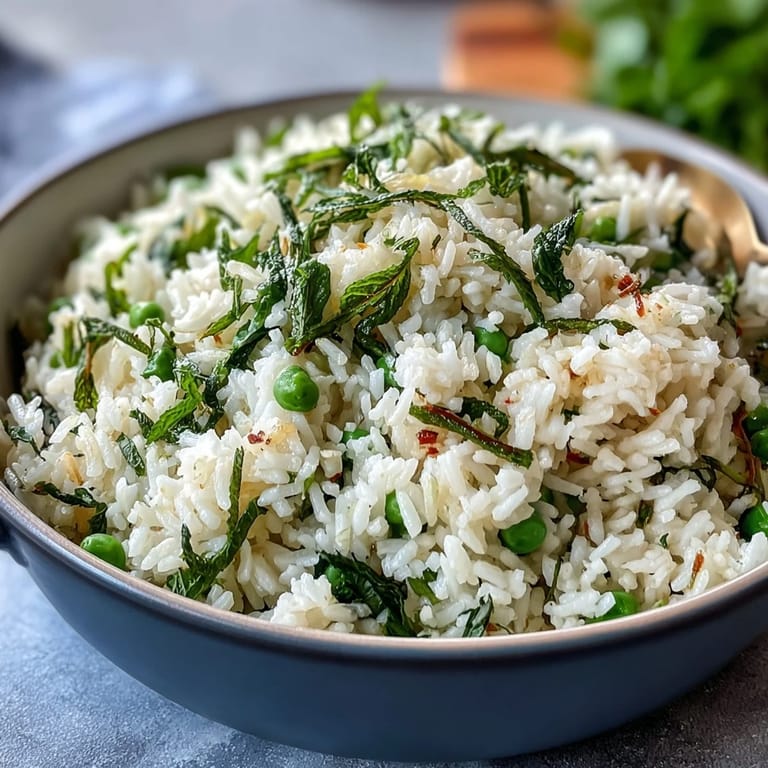
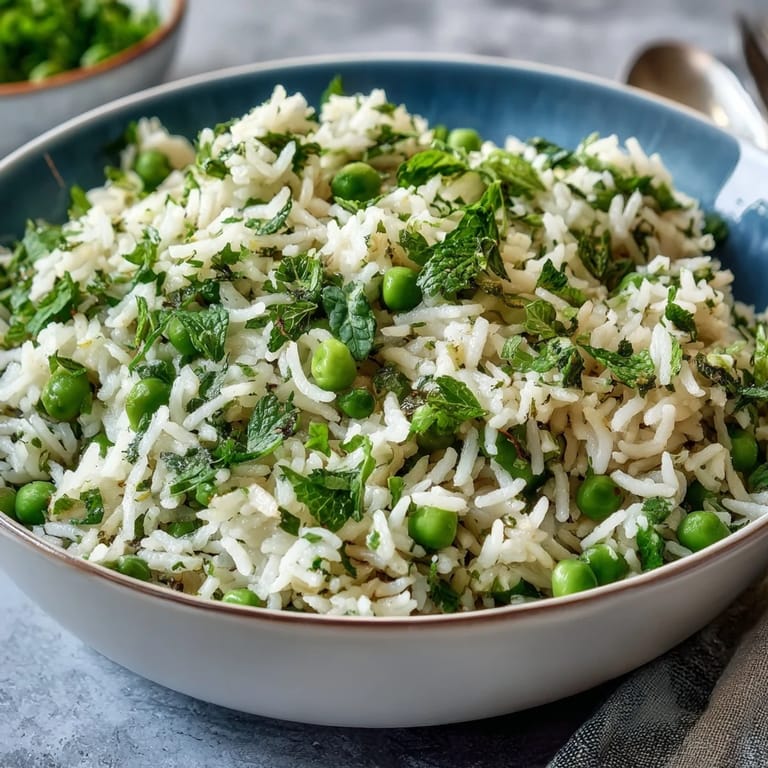
 My neighbor knocked on my door last spring with a handful of mint from her garden, still wet with morning dew, and asked if I knew what to do with it. I'd been staring at a bag of fresh peas at the market that morning, thinking they deserved something better than plain steaming. That's when this pilaf came together—a dish that tastes like the season itself, bright and alive on the plate.
I served this alongside a honey-glazed ham at a small Easter gathering, and watching people go back for seconds told me everything. One guest mentioned she'd never thought to finish rice with fresh herbs like that, and suddenly everyone at the table was leaning in, discussing the brightness of it. It became one of those dishes people remember not just for how it tastes, but for the moment it appeared.
Ingredients
- Long-grain white rice (basmati or jasmine): These varieties stay separate and fluffy rather than turning into porridge, which keeps the whole dish feeling light and elegant.
- Low-sodium vegetable broth: This lets the rice and herbs shine without drowning everything in salt—you'll control the seasoning at the end anyway.
- Fresh or frozen spring peas: Either works beautifully; frozen peas are picked at peak ripeness and add sweetness that balances the mint.
- Yellow onion: Diced small so it almost melts into the rice, building a subtle savory foundation without overpowering the spring flavors.
- Unsalted butter: Two tablespoons coats each grain and carries the flavors forward—it's the difference between good rice and pilaf that makes you pause mid-bite.
- Garlic: Just two cloves, minced fine and bloomed quickly in butter, so it stays fragrant rather than harsh.
- Fresh mint leaves: Added at the very end so they stay vibrant green and don't lose their punch to cooking.
- Fresh parsley: Optional, but it adds another layer of herbaceousness if you want the pilaf to feel even more garden-fresh.
- Lemon zest: This one teaspoon does more work than you'd expect, brightening everything without needing juice.
- Salt and black pepper: Taste as you go—the broth has some sodium, so you're really just balancing.
Tired of Takeout? 🥡
Get 10 meals you can make faster than delivery arrives. Seriously.
One email. No spam. Unsubscribe anytime.
Instructions
- Rinse and drain your rice:
- Run it under cold water, stirring gently with your fingers until the water turns clear—this removes the starch that would make it gluey. It takes about a minute and changes everything about the final texture.
- Soften the onion in butter:
- Medium heat matters here; you want the butter to melt and the onion to turn translucent and sweet, not brown. Listen for the gentle sizzle and watch until the pieces are almost see-through, about 2 to 3 minutes.
- Wake up the garlic:
- Add your minced garlic and cook just for 30 seconds—you'll smell it shift from raw to fragrant. This quick bloom makes a real difference in depth.
- Toast the rice in aromatics:
- Stir the rinsed rice into the butter and onion mixture until every grain looks glossy and coated. This step is what separates pilaf from plain boiled rice.
- Add broth and seasonings:
- Pour in the vegetable broth, salt, and pepper, then bring everything to a rolling boil. You'll see the rice start to dance on top of the liquid.
- Simmer low and covered:
- Reduce the heat to low, cover the pan, and let it cook undisturbed for 15 minutes. Resist the urge to peek; the steam is doing the work.
- Fold in the peas:
- Open the lid carefully to avoid the escaping steam, stir in your peas straight from the freezer if frozen, then cover again for 5 more minutes. The rice will absorb the last of the liquid while the peas warm through.
- Rest and fluff:
- Turn off the heat, keep the lid on for 5 minutes, then use a fork to gently separate the grains. This resting period lets everything settle and finish cooking in its own residual heat.
- Finish with fresh herbs and zest:
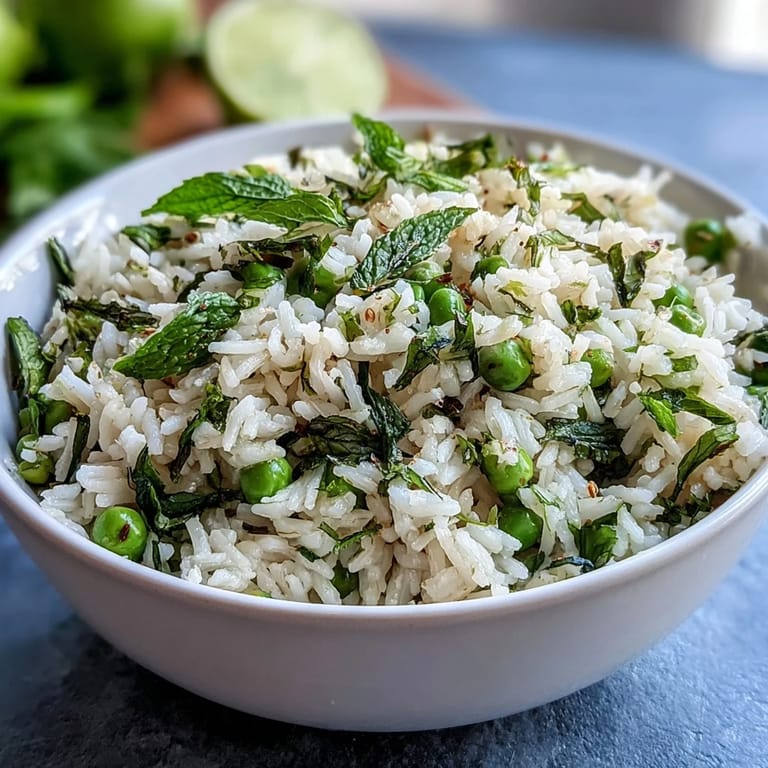
- Stir in your chopped mint, parsley if using, and that precious lemon zest. This is where the dish transforms from good rice into something that tastes like spring.
- Taste and adjust:
- Give it a quick taste before serving and add a pinch more salt or pepper if it needs it. Everyone's palate is different, and this step takes just a second.
 Save to Pinterest
 There's something about watching someone taste this for the first time—their face always does the same thing, a little surprise at how alive it feels, how the mint doesn't overpower but instead opens up everything else. That moment, more than anything else, is why I keep making it.
Why This Works as a Side Dish
This pilaf doesn't try to steal the show; instead it plays beautifully with what's next to it. The mint and lemon are bright enough to cut through rich proteins like ham or roasted chicken, but gentle enough not to compete. I've learned that the best sides are ones that make the main dish taste even better, and this one does exactly that.
Timing and Make-Ahead Strategy
One evening I made this pilaf three hours before dinner, covered it, and left it on the counter. When it came time to eat, I warmed it gently in the same pan with a splash of broth, and it came back to life without any mushiness. The rice actually benefits from sitting a bit; the flavors meld and it becomes easier to reheat without drying out.
Variations and Flexibility
The skeleton of this pilaf is solid enough to play with, but not so rigid that changes break it. I've swapped the vegetable broth for chicken broth when I had it, added a handful of pine nuts one time for texture, and once tried swapping half the butter for good olive oil when I wanted something lighter. The mint and lemon are what keep it tasting like itself.
- For extra richness, use half butter and half olive oil instead of all butter.
- Frozen peas work just as well as fresh, and there's no shame in that convenience.
- Fresh herbs like chives or scallions can stand in for the mint if that's what you have on hand.
 Save to Pinterest
 This pilaf has become one of those recipes I make without thinking much about it anymore, my hands just knowing the motions. It reminds me every time that the best dishes are the ones that feel effortless to make but generous to eat.
Recipe FAQs
- → Can I use frozen peas in this dish?
Yes, frozen peas can be added directly from the freezer during the last cooking stage to maintain their bright color and sweetness.
- → What type of rice works best for this pilaf?
Long-grain rice varieties like basmati or jasmine provide the ideal fluffy texture and subtle aroma for this dish.
- → How can I make this dish vegan?
Replace the butter with plant-based butter or olive oil to keep it flavorful and suitable for a vegan diet.
- → Is it possible to prepare this ahead of time?
Yes, the pilaf can be made ahead and gently reheated with a splash of vegetable broth to restore moisture.
- → What herbs complement the spring peas and mint?
Fresh flat-leaf parsley adds a mild herbal note, while lemon zest enhances brightness and balances flavors.