 Save to Pinterest
 My neighbor Marcus used to make this on Friday nights, and the smell would drift through our kitchen window—garlic, sausage, and tomato all tangling together. One evening he handed me a plate while I was watering the garden, and I realized right then that some of the best dishes aren't fancy or complicated, they're just honest. That's when I understood what made this pasta stick with me: it's the kind of food that makes people linger at the table longer than they planned.
I made this for the first time during a rainy Sunday in March when my sister called saying she was stopping by unexpectedly. I had everything in my pantry, threw it together in forty minutes, and somehow it became the meal we still talk about. She asks me to make it every time she visits, which tells me something about how straightforward and satisfying it really is.
Ingredients
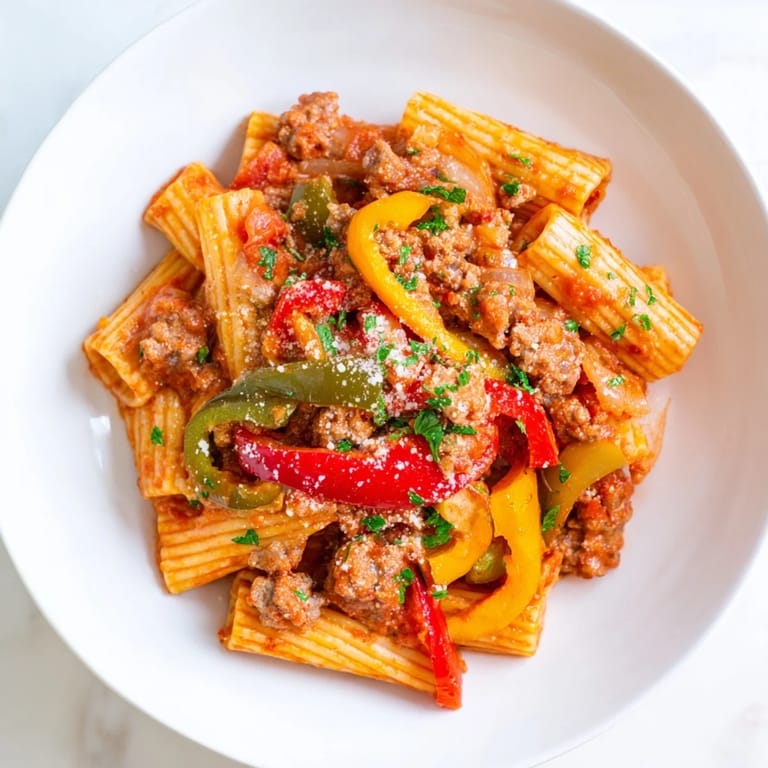
- Italian sausage (1 lb, casings removed): This is where most of the flavor comes from, so don't skip quality here—the fat renders out and creates the backbone of your sauce.
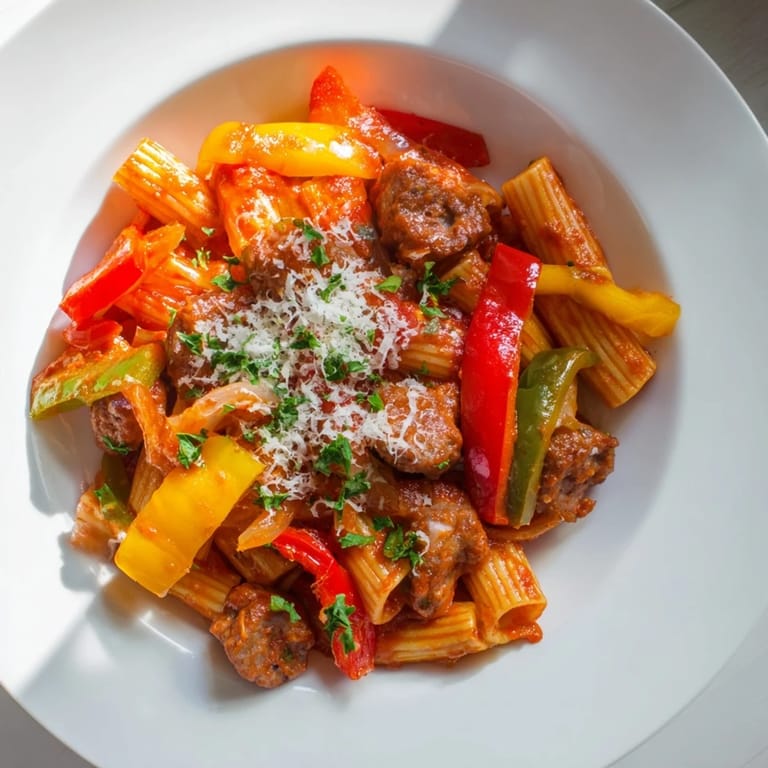
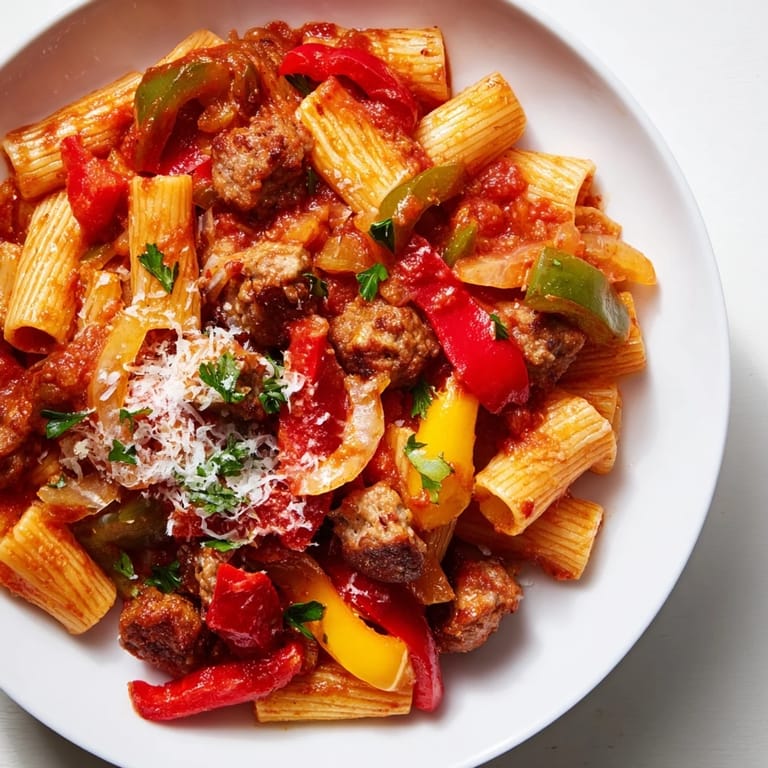
- Red, yellow, and green bell peppers: The mix of colors isn't just for looks; each pepper brings a slightly different sweetness and they cook down to almost melt into the sauce.
- Large onion, thinly sliced: Slice them thin and be patient while they soften, because that's when they transform into something almost caramel-like.
- Garlic (3 cloves, minced): Add it after the peppers have softened or it'll burn and turn bitter on you.
- Penne or rigatoni pasta (12 oz): The ridges catch the sauce, so smooth pasta won't hold onto all those good flavors.
- Crushed tomatoes (14 oz can): Fresh tomatoes are wonderful in season, but canned ones here are actually more reliable and less watery.
- Tomato paste (2 tbsp): This concentrates everything and adds a depth that makes people think you simmered this for hours.
- Dried oregano and basil (1 tsp and 1/2 tsp): Don't be shy—dried herbs in cooked sauces actually need to be pronounced or they disappear.
- Red pepper flakes (1/2 tsp, optional): I always add this because a little heat wakes up all the other flavors.
- Olive oil (2 tbsp): Use something you'd actually eat on bread; the flavor matters here.
- Fresh parsley and Parmesan: These are the final notes that make it taste like someone cared about the plate in front of you.
Tired of Takeout? 🥡
Get 10 meals you can make faster than delivery arrives. Seriously.
One email. No spam. Unsubscribe anytime.
Instructions
- Get your pasta water ready:
- Start your pasta in heavily salted boiling water before you touch anything else. That starchy pasta water is secretly what makes the sauce cling to the noodles at the end, so reserve about half a cup before draining.
- Brown the sausage until it loses its shape:
- Heat olive oil in a large skillet over medium heat and crumble the sausage as it cooks, breaking it up with the back of a spoon so it browns evenly rather than staying in clumps. It'll take about 5-7 minutes, and you want it to look golden and cooked through, not pale.
- Let the peppers and onions get soft and slightly charred:
- Toss the sausage onto a plate and use the same skillet with all its flavorful bits still clinging to the bottom. Add your sliced peppers and onions and let them sit for a bit without stirring too much, so they actually caramelize instead of just steaming.
- Toast the garlic for just a moment:
- Once everything is soft and the onions have turned golden, add your minced garlic and stir constantly for about a minute until the kitchen smells incredible. Stop right there before it can burn and turn harsh.
- Build the sauce and let it simmer:
- Stir in the tomato paste first, coating everything in the pan, then add your crushed tomatoes, oregano, basil, and red pepper flakes. Season with salt and pepper, then let it bubble gently for about 5 minutes so the flavors meld and the raw tomato taste mellows.
- Reunite the sausage with the sauce:
- Return that cooked sausage to the skillet and let everything simmer together for 3-4 minutes, stirring occasionally. If it looks too thick, splash in some of that reserved pasta water a little at a time until it flows like you want it to.
- Toss the pasta in and warm it through:
- Add your drained pasta right to the skillet and tumble it around in the sauce for 1-2 minutes so every piece gets coated. You can always add more pasta water if it needs loosening.
 Save to Pinterest
 The night my sister came over unexpectedly, we sat at that table past dark, and nobody mentioned how simple it was. It was just good food that made everyone feel seen, and that's really all any recipe should try to do.
Cooking Together
There's something almost meditative about the way peppers soften in a hot skillet if you let them. Don't rush that part—let them sit and caramelize a little, and you'll taste the difference. The smell alone is worth slowing down for, and it gives you time to set the table or pour a glass of wine.
Flavor Building
This sauce works because it layers flavors instead of trying to do everything at once. The sausage brings savory depth, the peppers bring gentle sweetness, the tomato paste brings umami, and the herbs tie it all together. That's the whole secret—nothing fancy, just things that actually belong together.
Making It Your Own
Once you understand how this dish works, it becomes a canvas. Some nights I add a splash of red wine to the sauce and let it bubble away, which adds a subtle richness that makes people wonder what you did differently. You can swap the sausage for something lighter if that's your preference, or use whatever vegetables you have on hand and they'll probably be delicious.
- A splash of red wine added with the tomatoes deepens the whole dish without anyone being able to pinpoint what's different.
- Turkey or chicken sausage works beautifully if you want something lighter, and it cooks the same way.
- Those three bell peppers can become two if that's what you've got, or even add zucchini or mushrooms if you're in the mood for something different.
 Save to Pinterest
 This is the kind of meal that reminds you why cooking matters. It brings people together without any fuss, and that's really what it's all about.
Recipe FAQs
- → What type of sausage works best for this dish?
Italian sausage, either mild or spicy, provides a flavorful base. Removing casings helps it cook evenly and break apart nicely.
- → Can I substitute the pasta shape?
Penne or rigatoni are ideal as they hold sauce well, but other tubular pasta options work just as well.
- → How do I prevent the sauce from becoming too thick?
Reserve some pasta cooking water and add it gradually to adjust the sauce consistency while simmering.
- → What can I use instead of bell peppers?
Sweet or mild chili peppers or roasted red peppers can be used to maintain the dish’s balance of sweetness and texture.
- → Is there a tip for enhancing the sauce flavor?
Add a splash of red wine during simmering for deeper richness and complexity.