 Save to Pinterest
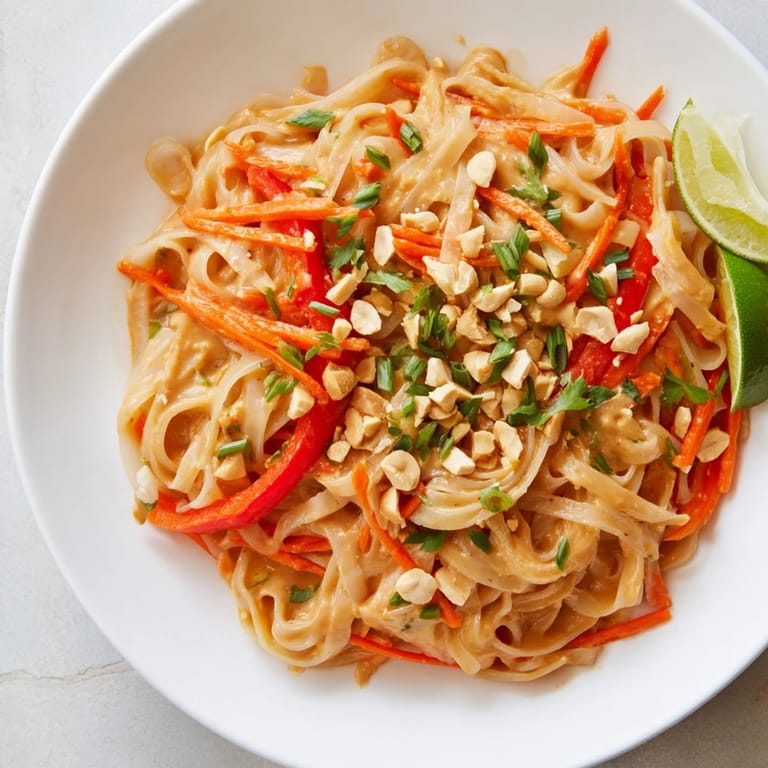
 One Tuesday evening, my roommate came home with a bag of rice noodles and said, "Make something that won't put us to sleep." Twenty minutes later, we were standing over steaming bowls of spicy peanut noodles, the kind that makes you sweat a little and smile a lot. That night taught me that the best meals don't need hours of planning—just good ingredients and a willingness to taste as you go.
I made this for friends who were skeptical about noodles without butter or cream, and watching their faces when they took the first bite was worth the tiny bit of prep work. Someone asked for the recipe before they'd even finished eating, which in my experience is the truest compliment a cook can receive.
Ingredients
- Rice noodles or spaghetti, 12 oz: Use rice noodles if you want a lighter texture that drinks up the sauce, or stick with spaghetti for something more substantial and familiar.
- Creamy peanut butter, 1/2 cup: This is your backbone—the creamier it is, the silkier your sauce becomes, so skip the natural stuff if it separates easily.
- Soy sauce, 1/4 cup: The umami that ties everything together; tamari works if you need gluten-free.
- Rice vinegar, 2 tbsp: A splash of brightness that prevents the sauce from tasting heavy or one-note.
- Toasted sesame oil, 1 tbsp: Just a drizzle gives nuttiness that peanut butter alone can't achieve, so don't skip it even if you think you might.
- Honey or maple syrup, 2 tbsp: The small amount of sweetness that makes spice more interesting instead of just hot.
- Sriracha or chili garlic sauce, 2–3 tbsp: Adjust to your heat tolerance, but remember it builds with each bite, so taste before you add the last tablespoon.
- Garlic, 2 cloves minced: Fresh garlic makes the difference between a good sauce and one that tastes alive in your mouth.
- Fresh ginger, 1 tbsp grated: Grate it fresh instead of using powder—the brightness is completely different.
- Warm water, 1/4 cup plus more: Warm water helps everything blend smoothly and you'll likely need more than you think, so have extra on hand.
- Shredded carrots, 1 cup: They add crunch and a touch of natural sweetness that balances the heat.
- Bell pepper, 1 cup thinly sliced: Pick a color you like; I usually go red because it looks beautiful and tastes sweeter than green.
- Scallions, 2 thinly sliced: These go on at the end for a sharp, fresh bite that cuts through richness.
- Roasted peanuts, 1/4 cup chopped: The crunch here matters—it's the textural contrast that makes you want another bite.
- Fresh cilantro, 1/4 cup chopped: If you're cilantro-tolerant, it adds an herbal brightness that feels necessary at the end.
- Lime wedges, for serving: A squeeze of lime before you eat transforms the whole dish with acidity, so don't skip it.
Tired of Takeout? 🥡
Get 10 meals you can make faster than delivery arrives. Seriously.
One email. No spam. Unsubscribe anytime.
Instructions
- Boil and cool your noodles:
- Cook them according to the package because noodle timing is specific and packaging instructions exist for a reason. Drain them, then rinse under cold water so they stop cooking and won't clump together while you make the sauce.
- Whisk the sauce into existence:
- Combine peanut butter, soy sauce, vinegar, sesame oil, honey, sriracha, garlic, and ginger in a medium bowl and whisk until it looks like a cohesive sauce, not separated. Add warm water a little at a time until it's pourable—you want it thin enough to coat noodles but thick enough to actually cling to them.
- Toss everything together:
- Put cooled noodles, carrots, and bell pepper in a large bowl and pour sauce over them, then toss until every strand of noodle is coated and the vegetables are evenly distributed. This is the moment where you taste and adjust—more sriracha if you want heat, more water if it's too thick.
- Assemble and serve:
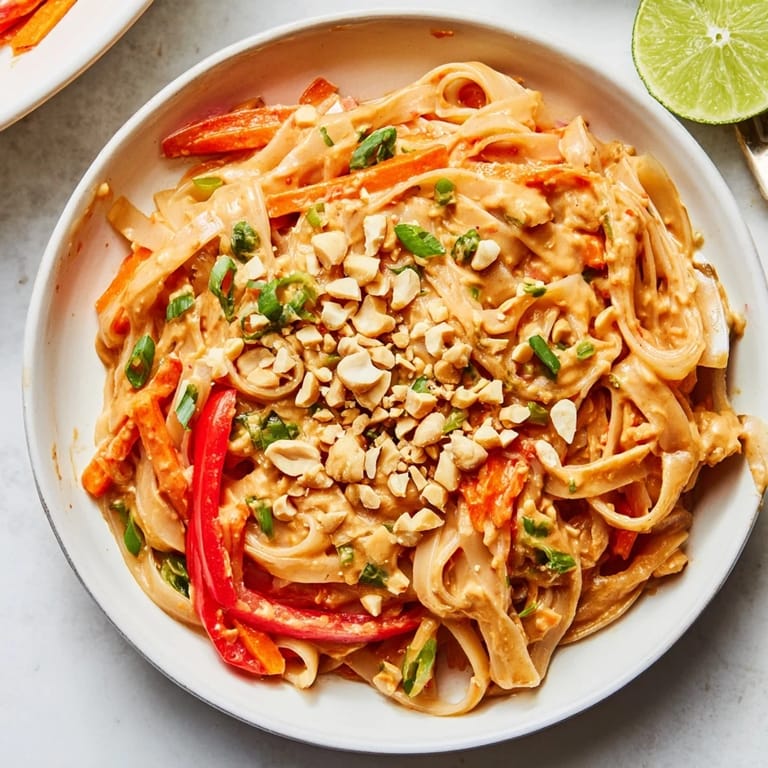
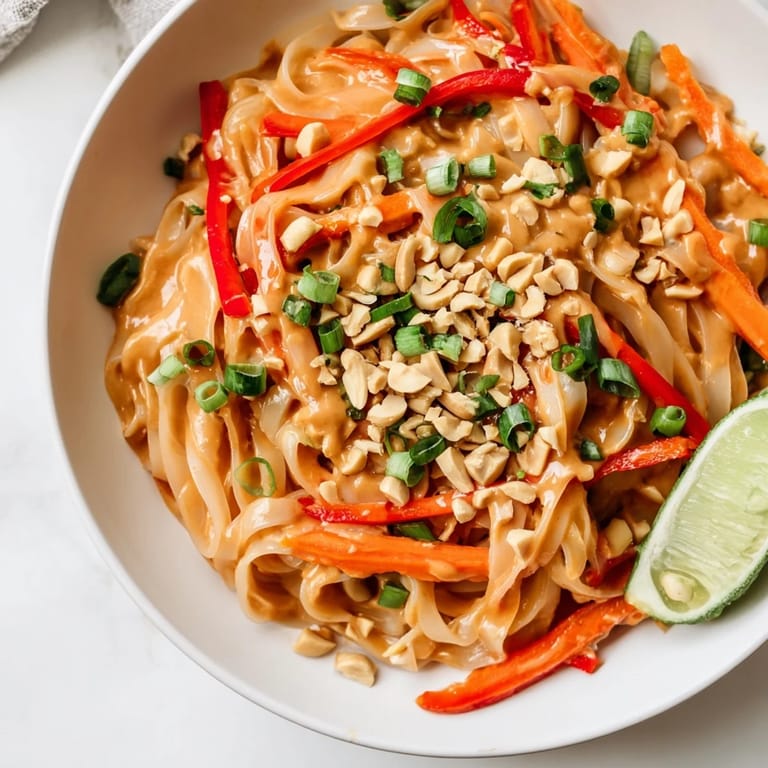
- Divide into bowls and top with scallions, peanuts, cilantro, and a wedge of lime on the side. Eat immediately while the noodles are still warm and the vegetables have some snap to them.
 Save to Pinterest
 There's something about a dish that's ready faster than you can set the table that changes how you think about cooking. This one taught me that satisfying food doesn't require hours or complicated technique, just intention and good peanut butter.
The Secret to Creamy Peanut Sauce
The magic happens when you whisk warm water into peanut butter slowly instead of dumping it all at once. I learned this by making the sauce too thick the first time and then spending ten minutes trying to thin it out at the last second. Warm water emulsifies with the peanut butter better than cold water because it helps the fats and liquids marry together into something silky instead of separated and grainy. Start with less water, whisk well, and add more if you need it—you can always make it thinner but you can't un-thin a sauce.
Playing with Heat and Flavor
Sriracha and chili garlic sauce have different personalities, and which one you choose changes the whole vibe of this dish. Sriracha is vinegary and layered, while chili garlic sauce hits you with immediate pepper and garlic heat. I usually mix them half and half because I like the complexity, but if you're building this for guests, start with just one and less than you think—spice perception is deeply personal and it's easier to add more than to rescue something that's too hot. The honey or maple syrup isn't there to make it sweet; it's there to round out the spice so it doesn't just burn, it dances.
Timing and Temperature Choices
This is a noodle dish that works hot or cold depending on your mood and the season. I make it warm on nights when I want comfort, and cold on afternoons when it's actually hot outside and the kitchen is already warm enough. The vegetables stay crisp either way, and the sauce coats beautifully whether it's just-made or chilled. One thing I've noticed: if you're making it cold, undercook the noodles very slightly because they firm up as they cool, and you don't want them starchy or mushy by the time you eat.
- Add cooked chicken, crispy tofu, or shrimp if you want protein and are serving this as your entire meal.
- Roasted broccoli or snap peas can replace some of the raw vegetables if you want something cooked and tender.
- A drizzle of sriracha mayo on top adds richness if you're feeling indulgent.
 Save to Pinterest
 The best part about this recipe is how it feels like a small piece of a restaurant meal you can make at home without becoming someone's kitchen servant. It's the kind of dish that disappears fast and leaves people asking for more.
Recipe FAQs
- → What type of noodles work best?
Dried rice noodles or spaghetti are ideal as they absorb the peanut sauce well and maintain a pleasant texture.
- → How can the spice level be adjusted?
Adjust sriracha or chili garlic sauce quantity to increase or reduce the heat according to taste preferences.
- → Can this dish be served cold?
Yes, chilling the noodles after mixing enhances the flavors and makes for a refreshing cold noodle dish.
- → Are there suitable substitutions for peanut butter?
Almond or cashew butter can replace peanut butter, and sunflower seed butter is a good option for those with nut allergies.
- → How to make it gluten-free?
Use tamari instead of soy sauce and ensure the noodles are labeled gluten-free to accommodate gluten sensitivities.