 Save to Pinterest
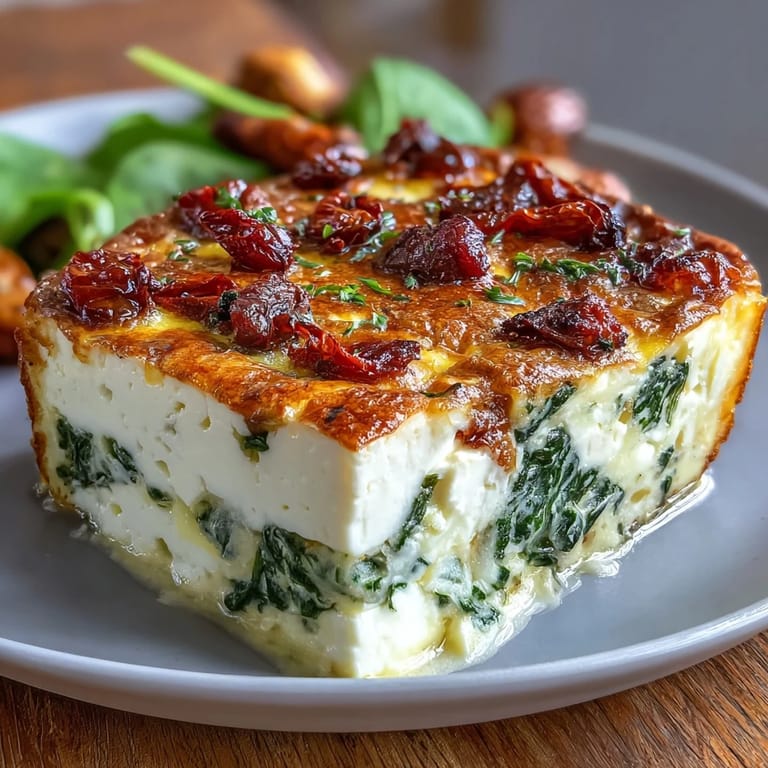
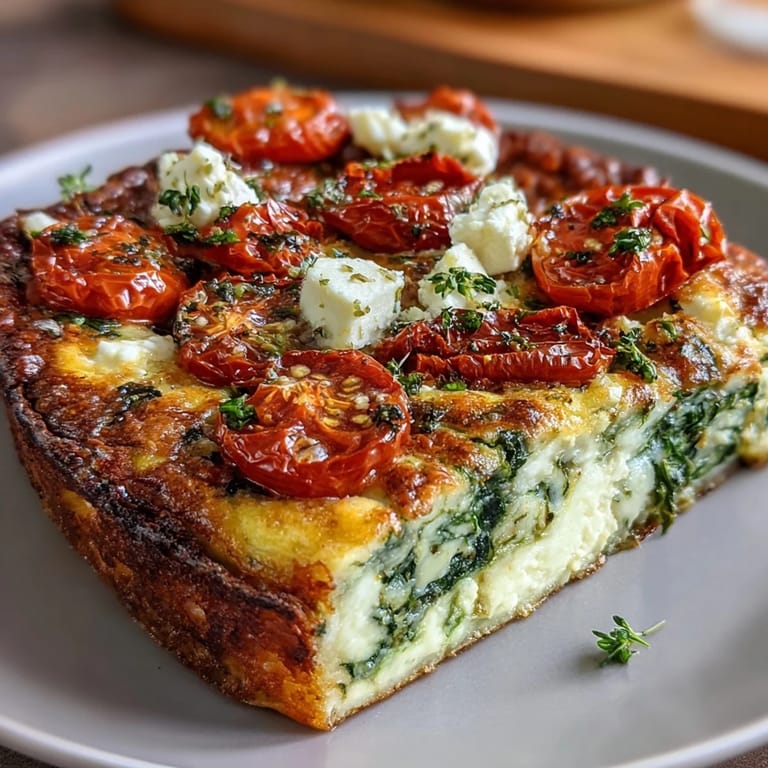
 My neighbor knocked on my door one Saturday morning with a basket of sun-dried tomatoes from her garden project, and I suddenly remembered a frittata I'd eaten years ago at a tiny café in Athens. The combination of those wrinkled, jewel-like tomatoes with creamy feta felt like it deserved a second act in my kitchen. That afternoon, I threw together eggs, spinach, and whatever cheese I had on hand, and what emerged from the oven was this golden, puffy thing that tasted like someone had bottled Mediterranean sunshine. Now it's become my go-to when I want something that feels fancy but requires almost no fuss.
I made this for my sister's book club once, and she took a bite and immediately asked for the recipe before even sitting down. What struck me was how the sun-dried tomatoes' tang played against the feta's salt and the eggs' gentle richness—everything balanced itself without trying too hard. She said it tasted like the kind of thing that would appear on a tiny plate at a place with exposed brick and expensive coffee, yet here it was emerging from my regular oven on a Tuesday evening.
Ingredients
- Fresh baby spinach: Use the tender leaves if you can find them; they wilt down to almost nothing, so don't be shy with the volume.
- Sun-dried tomatoes packed in oil: Drain them well before using, but save that oil for drizzling over salads later—it's liquid gold.
- Yellow onion: Finely chopped ensures it softens completely and distributes its sweetness throughout every bite.
- Garlic: Just one clove keeps things subtle; too much can overpower the delicate egg canvas.
- Large eggs: Room temperature eggs whisk more smoothly and incorporate air better for that signature fluffy texture.
- Whole milk: This adds richness without making the frittata dense; some people skip it, but the difference is noticeable.
- Feta cheese: The crumbly texture melts slightly during cooking, creating pockets of tangy creaminess.
- Parmesan cheese: Grated fresh adds a nutty depth that shaker-can Parmesan simply cannot match.
- Dried oregano: A whisper of Mediterranean flavor that ties everything together without announcing itself.
- Black pepper and salt: Taste as you season; feta is already quite salty, so go easy at first.
- Olive oil: Good quality olive oil makes a real difference in the base flavor, so use something you'd actually enjoy eating straight.
Tired of Takeout? 🥡
Get 10 meals you can make faster than delivery arrives. Seriously.
One email. No spam. Unsubscribe anytime.
Instructions
- Heat your oven and prep your pan:
- Set the oven to 375°F and give it time to fully preheat while you organize your ingredients. Having an oven-safe skillet ready means you won't scramble when it's time to transfer everything.
- Build the flavor foundation:
- Pour olive oil into your skillet over medium heat and let it shimmer for a moment before adding the chopped onion. You'll know it's ready when the onion turns translucent and the kitchen fills with that sweet, caramelized smell—about 3 to 4 minutes.
- Add the aromatic notes:
- Once the onion softens, add your minced garlic and let it cook for just one minute, stirring constantly so it doesn't brown. You want to release its fragrance, not turn it bitter.
- Introduce the greens and tang:
- Stir in your chopped spinach and watch it transform from a pile of leaves into a compact, dark green mass within about 2 minutes. Add those drained sun-dried tomatoes and give everything another minute to get acquainted.
- Create your egg mixture:
- In a separate bowl, whisk together the eggs and milk until they're pale and foamy, then add your oregano, salt, and pepper. Fold in the crumbled feta and grated Parmesan gently so the cheese stays in distinct little pockets rather than completely blending in.
- Combine and set the edges:
- Pour this egg mixture over your vegetables and give it one gentle stir to distribute everything, then let it cook on the stovetop for 2 to 3 minutes. You're looking for the edges to start looking firm while the center still wobbles slightly—that's your signal it's time to move to the oven.
- Finish in the oven:
- Transfer your skillet to the oven and bake for 10 to 12 minutes, checking around the 10-minute mark by gently jiggling the pan. The frittata is ready when the top is just set and faintly golden, with just a tiny bit of jiggle remaining in the very center.
- Rest and serve:
- Let it cool for a few minutes—this isn't just about temperature, but about allowing the structure to set so it slices cleanly. Serve it warm, room temperature, or even chilled; it's honestly delicious at any temperature.
 Save to Pinterest
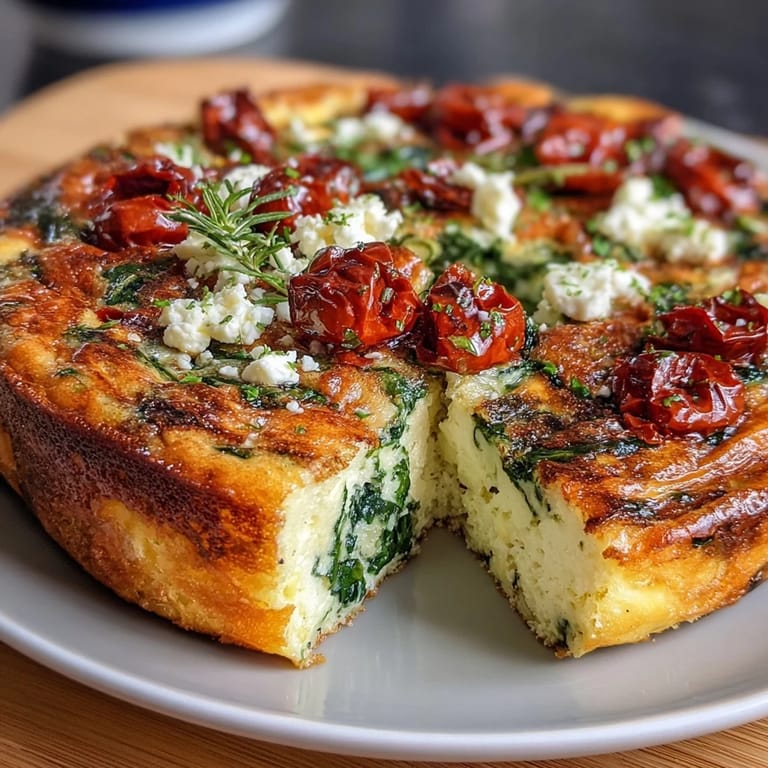
 There's something about watching this frittata puff up in the oven that never gets old. The first time a friend said, 'You made this?' with genuine surprise, I realized that this dish had become my secret weapon for looking like I knew what I was doing in the kitchen.
Why an Oven Finish Matters
Finishing in the oven instead of cooking entirely on the stovetop gives you that distinct texture: a set exterior with a tender, custard-like interior that somehow stays moist without being undercooked. The gentle, surrounding heat ensures the top browns lightly while the eggs cook through evenly, without the burnt bottom that can happen when you rely on direct stovetop heat the whole time. It's the difference between a frittata and scrambled eggs baked in a pan.
Making It Your Own
The beauty of a frittata is how forgiving it is—swap the sun-dried tomatoes for fresh cherry tomatoes in summer, or add roasted red peppers if that's what calls to you. I've made versions with caramelized leeks, fresh herbs, different cheese combinations, and even leftover cooked vegetables that needed rescuing from the back of the fridge. The egg base remains constant, but the flavor possibilities expand with whatever your mood and pantry suggest.
Serving Suggestions and Storage
Serve this with a simple green salad dressed in lemon vinaigrette to cut through the richness, or alongside crusty bread if you want something more substantial. It pairs beautifully with a crisp Sauvignon Blanc or Pinot Grigio, and honestly holds its own as part of a casual dinner spread. This frittata keeps in the refrigerator for up to three days, making it perfect for meal prep or unexpected guests who might drop by.
- Slice it into wedges and serve at room temperature for a picnic or potluck—no reheating required.
- If you're feeding dairy-averse friends, substitute plant-based feta and skip the Parmesan without losing anything essential.
- Make this when you have leftovers from other dishes; half-used vegetables find purpose here.
 Save to Pinterest
 This frittata has become the dish I make when I want to feel confident in the kitchen without spending hours there. It's the kind of food that makes people think you've been cooking for hours, even when you've barely put in any effort.
Recipe FAQs
- → Can I use frozen spinach instead of fresh?
Yes, thaw and well-drain frozen spinach before adding to avoid excess moisture.
- → How do I achieve a fluffy texture?
Whisk eggs thoroughly with milk and seasonings, and cook gently before transferring to the oven for a light rise.
- → Can I substitute the cheeses for a dairy-free option?
Plant-based feta alternatives can be used, and Parmesan can be omitted to keep flavors balanced.
- → What is the best cooking vessel for this dish?
An ovenproof skillet, preferably 10-inch, ensures even cooking both on stovetop and in oven.
- → What dishes pair well with this preparation?
Serve with a fresh green salad, crusty bread, or a crisp white wine like Sauvignon Blanc for a full meal.