 Save to Pinterest
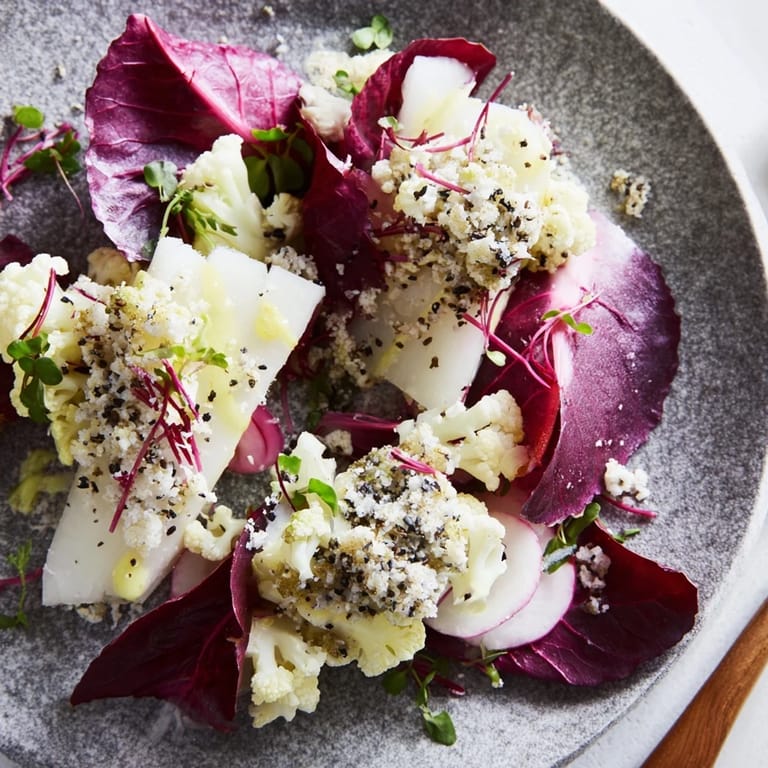
 The first time I assembled this dish, I was captivated by how something so minimal could feel like edible art. I'd been reading about arctic landscapes and suddenly thought: what if I could translate that stark, windswept beauty onto a plate? The challenge wasn't adding more flavors but learning to trust emptiness, to let each pale vegetable shine against cold stone. It felt like painting with vegetables instead of cooking.
I made this for a dinner party last winter, and what I remember most isn't the compliments but the silence when everyone took their first bite. There was this moment where they seemed to taste the quietness of it, the intentionality. A friend later told me she'd been expecting something fussy and was relieved to find it was just vegetables and honesty.
Ingredients
- Daikon radish: Its crisp, slightly sweet crunch is the backbone here; slice it thin enough to catch the light.
- Kohlrabi: Often overlooked, this vegetable has a delicate cabbage-like texture that softens beautifully against the cold stone.
- Belgian endive: Those pale, oblong leaves are nature's way of saying "use me as a canvas."
- Cauliflower florets: Finely chopped so they scatter like snow across the plate; raw cauliflower is sweeter than cooked.
- Unsweetened coconut flakes: They add a whisper of tropical warmth that contrasts with the arctic theme.
- White and black sesame seeds: Lightly toasted so they're fragrant but not dark; they create visual movement.
- Microgreens: Use pea shoots or radish sprouts for their delicate texture and subtle peppery notes.
- Flaky sea salt: The only seasoning besides the dressing; don't skip it.
- Extra-virgin olive oil: Use your best bottle; it's a major flavor player here.
- Fresh lemon juice: Squeeze it yourself just before use.
- White pepper: Milder and less sharp than black pepper; it won't dominate.
- White wine vinegar: Subtle acidity that doesn't compete with the delicate vegetables.
Tired of Takeout? 🥡
Get 10 meals you can make faster than delivery arrives. Seriously.
One email. No spam. Unsubscribe anytime.
Instructions
- Chill your canvas:
- Place your stone or marble platter in the freezer for 15 minutes. The cold preserves the crisp texture of the vegetables and makes the whole experience feel intentional.
- Build your dressing:
- Whisk together the olive oil, lemon juice, white wine vinegar, and white pepper in a small bowl. Taste it before moving forward; this is where the balance happens.
- Scatter like nature:
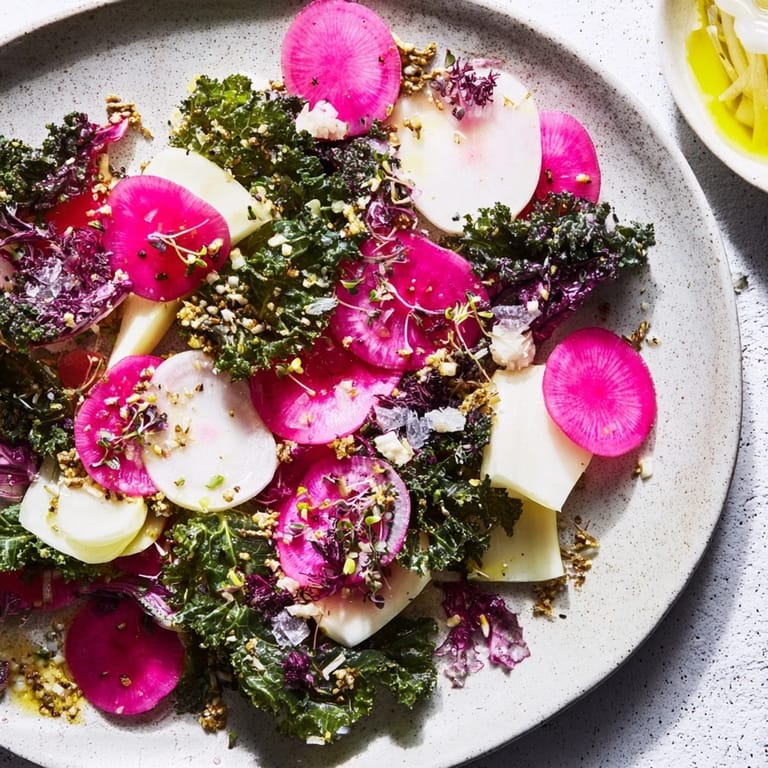
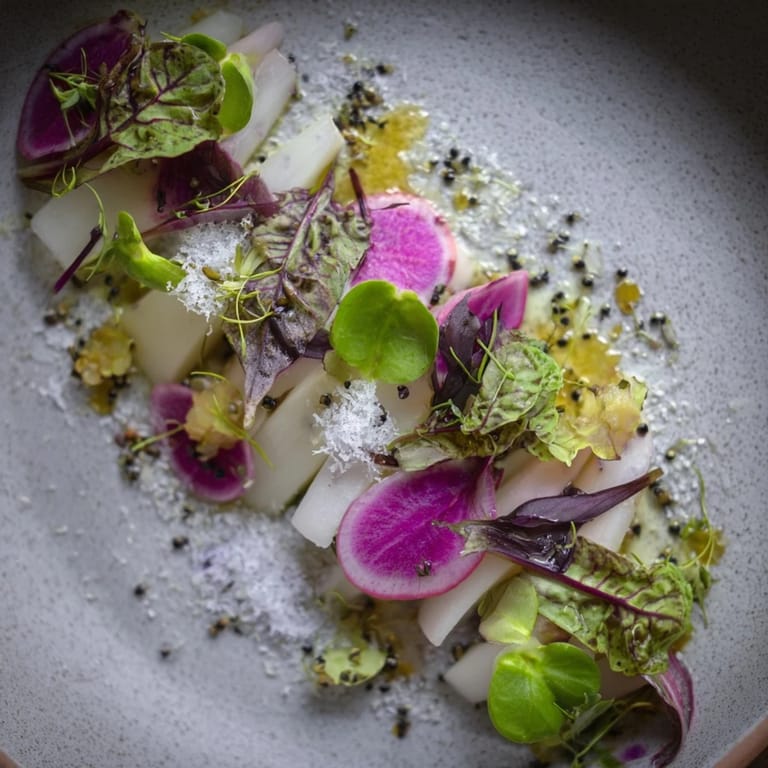
- Arrange the daikon, kohlrabi, and endive leaves sparsely across the chilled stone, leaving empty space between each element. Think of windswept tundra, not a crowded market.
- Layer with intention:
- Sprinkle the finely chopped cauliflower, coconut flakes, and both sesame seeds in a random, organic pattern. Avoid symmetry; chaos is your friend here.
- Dress and finish:
- Drizzle the dressing lightly over the arrangement so it pools slightly in crevices. Garnish with microgreens and a pinch of flaky sea salt just before serving.
- Serve in the moment:
- Bring the dish immediately to the table while the stone is still cold and the vegetables are at their crispest.
 Save to Pinterest
 What surprised me about this dish is that it became a moment of permission—permission to serve something delicate, permission to leave space on a plate, permission for less to actually be more. Guests seemed to relax into it, eating slowly, noticing textures and subtle flavors they usually rush past.
On Embracing Minimalism
Cooking with restraint is harder than cooking with abundance. Every ingredient you include has to justify itself, and that discipline teaches you something about flavor and texture. With this dish, I learned that the palette knife—or in this case, the absence of clutter—can be as expressive as any elaborate technique.
The Nordic Influence
The inspiration came from Scandinavian design and cooking philosophy: clean lines, respect for raw ingredients, and the belief that a beautiful vegetable needs very little to shine. If you serve this with chilled aquavit or a dry white wine, you're completing the narrative.
Variations and Personal Touches
Once you understand the structure, you can riff on it. Try yuzu juice instead of lemon for a citrus shift, or rice vinegar for a softer acidity. In warmer months, I sometimes add a few paper-thin slices of radish that are almost translucent. The dish is a framework, not a rigid rule.
- For added protein without sacrificing the vegetarian angle, try smoked whitefish flakes or chilled poached shrimp scattered across the top.
- Experiment with other pale vegetables: parsnips, celeriac, or very young turnips all echo the tundra aesthetic.
- Keep the cold stone moment precious—it's what elevates this from a salad to an experience.
 Save to Pinterest
 This dish reminds me why I cook: not always to fill stomachs, but sometimes to create moments where people pause and really taste. It's a small rebellion against noise and excess.
Recipe FAQs
- → What is the best way to prepare the vegetables?
Peel and thinly slice daikon radish and kohlrabi using a sharp knife or mandoline for uniform crispness. Separate the Belgian endive leaves gently to keep their shape intact.
- → How should the dish be served to maintain freshness?
Arrange the vegetables on a large chilled stone or marble plate kept in the freezer beforehand. This helps keep the textures cold and crisp until serving.
- → Can the sesame seeds be substituted?
Lightly toasted white sesame and black sesame seeds add nuttiness and crunch. You may try toasted sunflower or pumpkin seeds as alternatives for texture variation.
- → What flavors does the dressing offer?
The dressing blends extra-virgin olive oil, fresh lemon juice, white wine vinegar, and white pepper, providing a subtle acidic brightness balanced with gentle spice.
- → Are there suggested pairings for this dish?
Pair with a chilled dry white wine or aquavit to complement the fresh and delicate flavors inspired by Nordic cuisine.
- → How can I add more protein to this dish?
For a non-vegetarian option, add smoked whitefish flakes or chilled poached shrimp to introduce a savory protein element.