 Save to Pinterest
 There's something magical about a Turkish table that stretches before you, crowded with small bowls and plates that seem to multiply as you add them. I discovered meze platters not in Turkey, but in a cramped apartment kitchen in Brooklyn, where my neighbor Aylin was teaching me that food doesn't need to be complicated to be memorable. She arranged creamy hummus, briny olives, and tangy cheeses with the casual confidence of someone who'd grown up eating this way, and suddenly I understood that meze isn't really about following rules—it's about gathering what makes you happy and inviting people to share it.
I made this platter for the first time when unexpected guests arrived on a Saturday evening, and I was convinced I'd have nothing impressive to offer. I pulled together what I had—some canned chickpeas, store-bought dolmas, and whatever cheese was in the fridge—and by the time everyone arrived, that humble collection had transformed into something that felt generous and intentional. My friend Mark still talks about the hummus from that night, and I've never told him it came together in under thirty minutes.
Ingredients
- Chickpeas: The foundation of silky hummus, and they're already cooked when you buy them canned, which is a kindness to yourself on any ordinary evening.
- Tahini: This sesame paste is what gives hummus its distinctive creamy texture and subtle nuttiness, though it can be pricey, so don't feel bad about using a little less if money's tight.
- Extra-virgin olive oil: Use good oil here because it's not just cooking—it's finishing and drizzling, so it deserves to taste like something.
- Garlic: Just one clove keeps the hummus approachable; add more only if you want people to remember you ate garlic, not remember the hummus itself.
- Fresh lemon juice: Bottled works if you must, but fresh lemon makes a noticeable difference in how bright everything tastes.
- Ground cumin: A whisper of warmth and earthiness that makes people wonder what makes this hummus taste like home.
- Stuffed grape leaves (dolmas): Store-bought versions are perfectly respectable and save you the time of rolling leaves by hand unless you're feeling ambitious.
- Feta cheese: Salty and crumbly, it's the backbone of any Turkish cheese selection and worth seeking out real Feta rather than the blocks labeled feta-style.
- Beyaz peynir: A creamy white cheese that tastes mild and slightly tangy; if your market doesn't carry it, more feta or a mild ricotta salata will do.
- Kasseri or halloumi: These cheeses have higher melting points, so they hold their shape when arranged and won't soften into a puddle if the platter sits out.
- Mixed olives: The variety of green and black creates visual interest and gives people choices, though you can lean toward whichever type you actually enjoy eating.
- Fresh vegetables: Cucumber and tomato add crunch and freshness that balance the richness of cheese and oil, and they make the platter look alive.
- Pita or flatbread: Warm bread is essential for scooping hummus and wrapping around cheese, so don't skip this part of the experience.
Tired of Takeout? 🥡
Get 10 meals you can make faster than delivery arrives. Seriously.
One email. No spam. Unsubscribe anytime.
Instructions
- Blend your hummus:
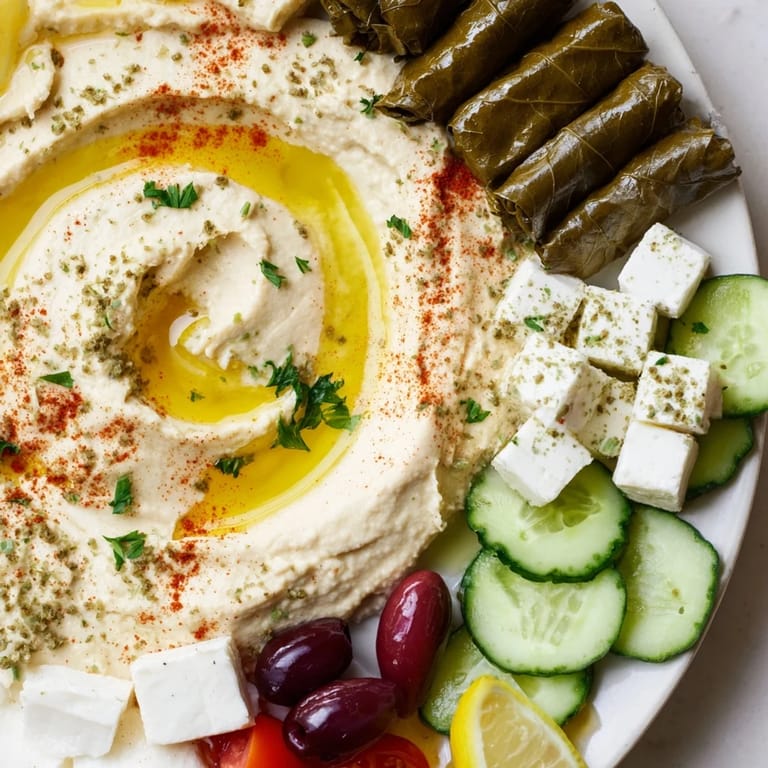
- Pulse the drained chickpeas with tahini, olive oil, minced garlic, lemon juice, cumin, salt, and pepper until the mixture shifts from chunky to smooth and creamy, stopping to taste and adjust the seasoning as you go. If it feels too thick, a splash of water or more lemon juice loosens it into the right consistency.
- Arrange the dolmas:
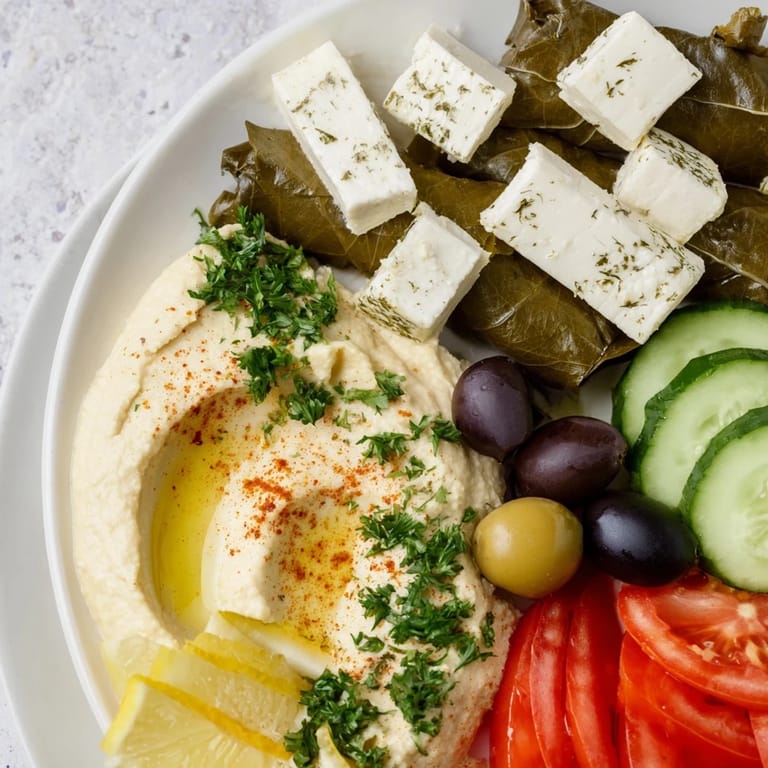
- Place the stuffed grape leaves on your platter in a casual cluster, letting them overlap slightly like they belong together. They're already cooked, so this step is purely about presentation.
- Gather the cheeses:
- Cut feta into rough cubes, slice the beyaz peynir into bite-sized pieces, and cut kasseri into thin slices that will be easy to pick up with bread or fingers. Arrange them in gentle groupings so each cheese gets its moment rather than blurring together.
- Season the olives:
- Toss your olives with a drizzle of olive oil and a scatter of dried oregano, then pour them into a small bowl or distribute them across the platter for bursts of briny flavor. The oregano smells sharp and alive when it hits the oil.
- Add the fresh elements:
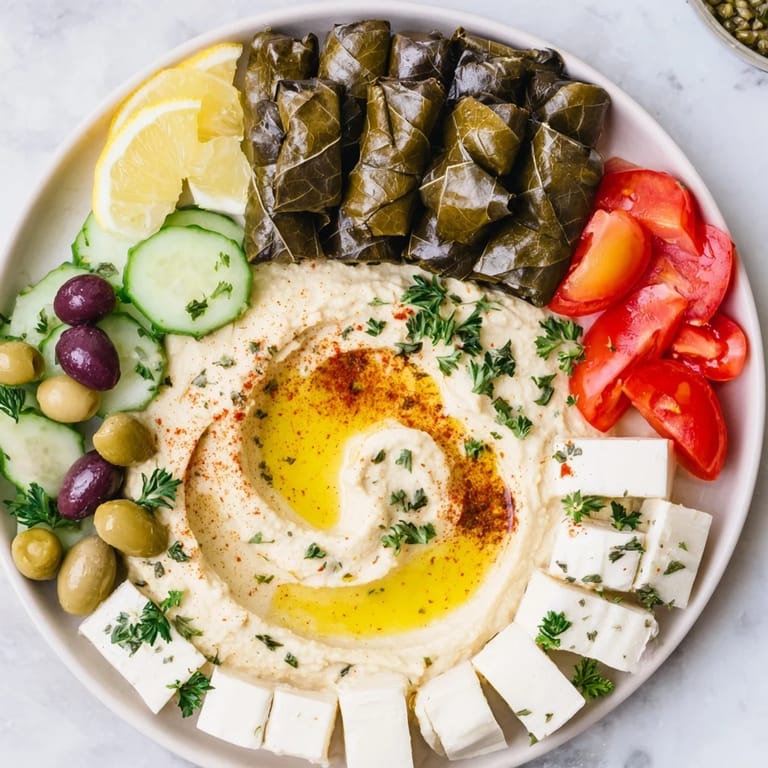
- Arrange thin cucumber slices and tomato wedges around the platter, scatter fresh parsley over everything for color, and tuck lemon wedges into gaps so people can squeeze them over their hummus or cheese. The green and red brighten the whole table.
- Warm your bread:
- Wrap pita or flatbread in foil and warm it in a 325°F oven for about five minutes, or wrap it in a clean kitchen towel to keep it soft and inviting. Warm bread makes everything taste better and feel more intentional.
- Present and serve:
- Once everything is arranged, drizzle the hummus with a little more olive oil and a pinch of paprika or sumac if you have it, then step back and let your platter be the center of attention. Serve it at room temperature or slightly warm, with bread close by.
 Save to Pinterest
 What I love most about meze is watching people slow down around it. There's no main course rushing toward them, no timer on the oven, just small bites and the freedom to eat what calls to them. A simple platter becomes an excuse to sit longer, talk more, and notice flavors you might otherwise miss.
Building Flavor Through Contrast
The genius of a meze platter is that every element plays against something else—creamy against salty, tangy against rich, soft against crunchy. The hummus needs the brightness of lemon and the earthiness of cumin to taste like itself, and the sharp feta makes you appreciate the mild sweetness of the tomato. When you're arranging your platter, think about these conversations happening between the foods, and let them guide your choices about what else to include.
When to Make This (and When to Make More)
Meze works perfectly as a first course before a fuller meal, but it's also generous enough to be dinner itself if you're not too hungry. I've found myself making bigger platters as soon as the weather turns warm and people start wanting reasons to linger outside, or on nights when I want to cook something that feels special without spending hours in the kitchen. It's the kind of food that scales gracefully—double the recipe when more people arrive, and you'll still be done in time to enjoy it together.
Personal Touches and Variations
The beauty of this platter is that it welcomes your own additions without losing its identity. I've added roasted red peppers when the mood called for something slightly sweet, scattered toasted walnuts spiced with sumac when I wanted crunch, and arranged grilled eggplant slices for earthiness and texture. Some nights I add a small bowl of yogurt for dipping, or scatter pomegranate seeds for unexpected bursts of brightness. The core stays the same—the hummus, dolmas, cheeses, and olives—but the extras become your way of saying something personal without changing the recipe.
- Roasted red peppers add sweetness and a silky texture that plays beautifully against tangy cheese.
- Sumac-spiced walnuts bring crunch and a tart, lemony flavor that's addictive.
- A small bowl of labneh or full-fat yogurt creates another creamy element for dipping bread.
 Save to Pinterest
 A Turkish meze platter is one of those rare dishes that feels both effortless and impressive, giving you time to enjoy your guests instead of panicking in the kitchen. Once you've made it once, you'll find yourself making it again and again.
Recipe FAQs
- → What ingredients create the authentic flavors of this platter?
The platter combines creamy chickpea hummus with tahini, savory stuffed grape leaves (dolmas), a selection of tangy Turkish cheeses like feta and kasseri, marinated olives, fresh cucumber, tomato, lemon wedges, and parsley for authentic flavors.
- → Can I prepare the dolmas from scratch?
Yes, making dolmas involves cooking rice with herbs and spices, then wrapping it in grape leaves before simmering. This adds freshness but increases cooking time to about 10 minutes.
- → What is the best way to serve this meze platter?
Arrange all components neatly on a large platter with fresh garnishes and serve alongside warm pita or flatbread for easy sharing and diverse textures.
- → Are there common pairings with this Turkish meze?
It pairs well with crisp white wines like Turkish Narince or traditional drinks such as raki, enhancing the vibrant flavors of the platter.
- → How can I make the hummus smoother and creamier?
Using well-drained chickpeas and blending with tahini, olive oil, lemon juice, garlic, and cumin until very smooth contributes to a creamy, flavorful hummus base.