 Save to Pinterest
 My neighbor knocked on my kitchen door one April morning with an armful of courgettes from her garden, the kind that arrive in late spring when everyone's suddenly drowning in them. I had peas in the freezer and a jar of pesto I'd made weeks before, so I threw together this soup almost by accident. The smell that filled my kitchen that afternoon—bright green, herbaceous, nothing like the heavy soups of winter—felt like opening a window after months of keeping them shut.
I made this soup for my daughter's school friends one lunchtime, and watching them ask for seconds while sitting on the kitchen counter made me realize how a bowl of green soup could somehow make a Tuesday feel like a celebration. That's when I knew this recipe belonged in regular rotation.
Ingredients
- Courgettes (zucchini): Two medium ones, diced into small cubes so they soften quickly and blend into the soup without leaving tough chunks—the smaller the dice, the creamier the result.
- Onion and garlic: One medium onion and two garlic cloves build the aromatic foundation; don't skip the sauté step because raw garlic will shout at you from every spoonful.
- Potato: A medium potato acts as a natural thickener and gives the soup body without needing cream, making it naturally lighter than you'd expect.
- Peas: Use frozen or fresh, but frozen peas are actually your friend here because they're picked at peak sweetness and locked in immediately.
- Vegetable stock: One liter of good quality stock makes all the difference; cheap, salty stock will mask the delicate vegetable flavors.
- Olive oil: Two tablespoons for sautéing, chosen because it complements the basil pesto without overpowering it.
- Basil pesto: Four tablespoons total, either homemade or store-bought, applied in two stages so you get fresh herbaceous notes in both the soup and the garnish.
- Salt and black pepper: Season gently at first because pesto is already salty, and you can always add more but can't take it back.
Tired of Takeout? 🥡
Get 10 meals you can make faster than delivery arrives. Seriously.
One email. No spam. Unsubscribe anytime.
Instructions
- Start the aromatics:
- Heat your olive oil over medium heat and add the chopped onion and minced garlic, stirring occasionally for 3 to 4 minutes until they soften and turn translucent. You're looking for them to smell sweet and fragrant, not brown or crispy.
- Build the base:
- Add your diced potato and courgette to the pan, stir well to coat with the oil, and let them cook for about 3 minutes. This brief cooking time helps them start softening while you prepare to add the liquid.
- Simmer the vegetables:
- Pour in your vegetable stock, bring everything to a boil, then immediately lower the heat and let it simmer gently for about 15 minutes until the potato is completely tender when pierced with a fork. The potato is your signal that you're ready for the next step.
- Add the peas:
- Stir in the peas and simmer for 5 more minutes, just enough time to warm them through and let them release their sweetness into the broth. Don't overcook or they'll lose their bright color.
- Blend to silky smoothness:
- Remove the pan from heat and use an immersion blender to puree the soup until it reaches a smooth, velvety consistency. If using a countertop blender, work in batches and let the soup cool slightly first for safety.
- Season and enrich:
- Stir in 3 tablespoons of pesto directly into the hot soup, tasting as you go, then adjust salt and pepper to your preference. The pesto will deepen the color to a beautiful sage green.
- Serve with flourish:
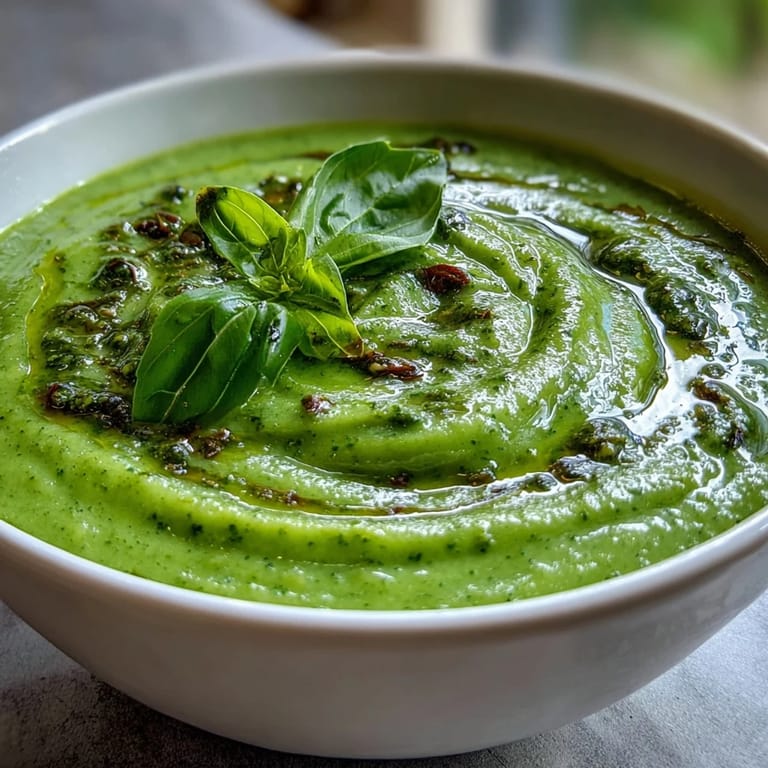
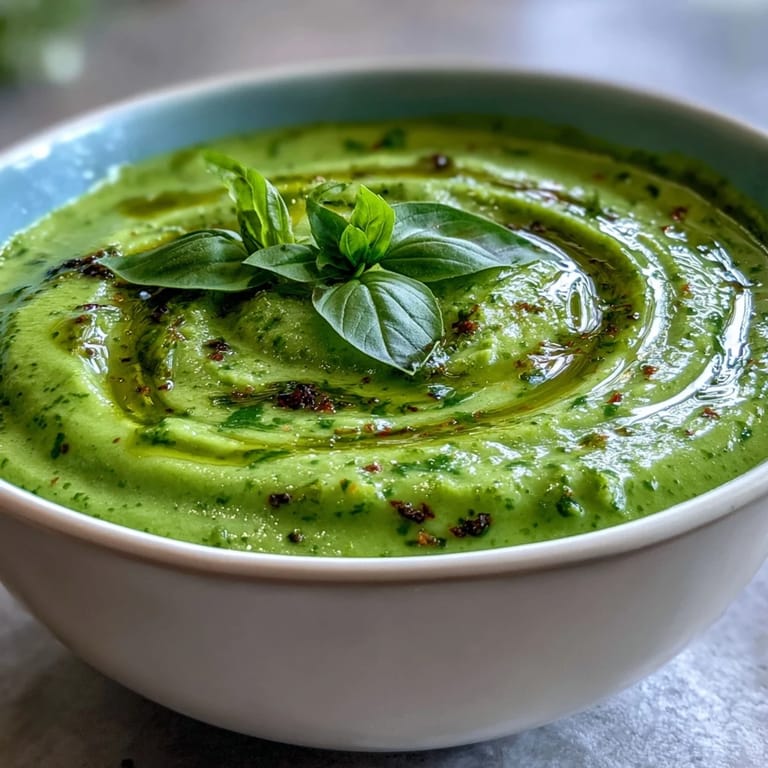
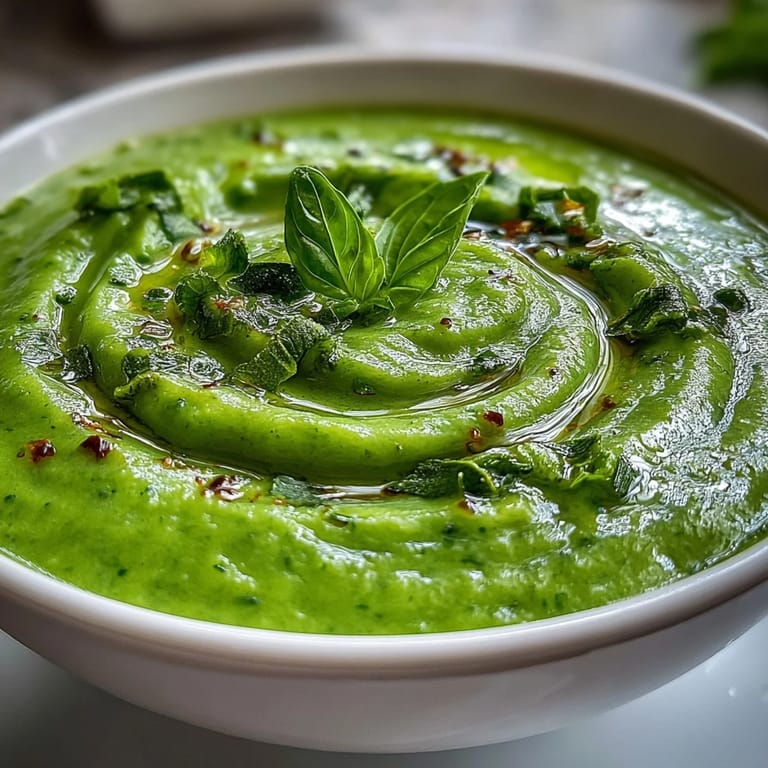
- Ladle the soup into bowls and swirl the remaining pesto on top like a secret, garnish with fresh basil leaves if you have them, and serve hot with crusty bread alongside. That final swirl is where the magic happens.
 Save to Pinterest
 There's a moment when you're blending soup and suddenly the color shifts from chunky vegetables to glossy jade green that makes you feel like you've created something quietly elegant. That's when you know you've got this recipe right.
When Spring Vegetables Become Poetry
This soup arrived in my cooking life during that specific moment in spring when courgettes finally seem worth eating again. They're at their best when they're smaller and younger, before they grow watery and hollow, so if you have access to farmer's market courgettes in season, this is your moment to use them. The sweetness of fresh peas—whether frozen at their peak or picked that same day—transforms this from a simple vegetable soup into something that tastes like concentrated springtime.
The Pesto Problem (and How to Solve It)
I learned the hard way that not all pesto is created equal, and adding a spoonful of aggressive, garlicky pesto straight from the jar can hijack your entire soup. The solution is restraint and tasting—start with 3 tablespoons mixed throughout, then finish with the remaining tablespoon as a swirl on top, which gives you fresh basil flavor where it matters most. If you're making your own pesto, use it fresh and don't cook it; the heat of the soup is gentle enough to keep the basil bright green instead of turning it dark and metallic.
Four Ways to Make It Your Own
This soup is a blank canvas that invites gentle experimentation. A splash of cream or coconut milk stirred in before blending adds luxurious creaminess without overwhelming the vegetables, while swapping the peas for fresh broad beans creates a slightly earthier version that feels just as spring-like. You can serve it hot in winter when you want comfort, or chill it completely for summer days when you want something refreshing but still substantial. Finally, fresh herbs beyond basil—a handful of parsley or dill stirred in at the end—add unexpected layers without disrupting the core character of the soup.
- For a lighter version, skip the cream and let the potato do all the thickening work.
- Homemade pesto made with walnuts instead of pine nuts creates a deeper, slightly earthier flavor that complements the soup beautifully.
- A squeeze of fresh lemon juice just before serving brightens everything and makes the green color feel even more vibrant.
 Save to Pinterest
 This soup taught me that sometimes the best meals come from constraints and kindness—a neighbor's surplus vegetables and an afternoon to let them simmer into something nourishing. Make it when spring arrives, and it will remind you why seasonal cooking matters.
Recipe FAQs
- → Can I make this soup ahead of time?
Yes, prepare up to 2 days in advance and refrigerate. Reheat gently on the stovetop, adding a splash of water if needed. Add fresh pesto just before serving.
- → Is this soup suitable for freezing?
Absolutely. Cool completely, then freeze in portions for up to 3 months. Thaw overnight in the fridge and reheat gently. Note: pesto is best added fresh after reheating.
- → Can I use fresh peas instead of frozen?
Fresh peas work beautifully when in season. Shell about 500g peas to get 200g shelled. Add fresh peas during the last 3-4 minutes of simmering to preserve their bright colour and sweetness.
- → How do I make this soup vegan?
Simply use a vegan pesto (skip parmesan and use nutritional yeast or vegan cheese). Ensure your vegetable stock is plant-based. The soup is naturally creamy without any dairy.
- → What can I substitute for the potato?
The potato adds body and creaminess. Replace with 1 small parsnip for similar texture, or add a small handful of arborio rice while simmering for natural thickening.
- → Can I serve this cold?
Yes, this makes an excellent chilled summer soup. Blend, chill thoroughly for at least 4 hours, then serve cold. The flavours develop beautifully and the texture remains smooth.