 Save to Pinterest
 My uncle arrived from Riyadh one winter with a container of the most incredible spice blend, and within minutes of opening it, my whole kitchen smelled like cardamom, cinnamon, and possibility. He spent the afternoon teaching me how to make kabsa the way his mother had taught him, moving around the stove with the kind of patience that only comes from cooking the same dish a hundred times. That day, I learned that kabsa isn't just rice and meat—it's a celebration in a pot, the kind of dish that transforms an ordinary evening into something ceremonial and warm.
I made this for my daughter's friends after she joined her university's cultural club, and watching them go quiet when they took that first bite—really quiet, the kind of quiet that means something is working—made me understand why my family had guarded this recipe like a treasure. The meat was so tender it fell apart on the fork, the rice had soaked up every spice-laden note, and suddenly I was the cool parent in the room.
Ingredients
- Bone-in lamb or chicken pieces (1 kg): The bones release gelatin that makes your broth silky and gives the whole dish depth; I learned this the hard way after trying boneless meat and getting something flat and one-dimensional.
- Vegetable oil (1 tbsp): Just enough to let the onions caramelize without drowning them; more would tip the balance toward greasy instead of luxurious.
- Large onion, finely sliced: This is your foundation—golden onions create the sweet, savory base that everything else builds on.
- Garlic, minced (3 cloves): Fresh garlic makes all the difference; jarred garlic tastes like an afterthought in comparison.
- Ground cumin (2 tsp): Warm, earthy, the backbone of the whole spice profile.
- Ground coriander (2 tsp): Adds brightness without being sharp; it keeps the dish from feeling too heavy.
- Ground cinnamon (1 ½ tsp): This is where the sweetness whispers through, playing against the savory notes.
- Ground black pepper (1 ½ tsp): Don't skimp here; the heat brings everything into focus.
- Ground turmeric (1 tsp): A touch of earthiness and that golden color that makes people lean in for a second bite.
- Ground cardamom (1 tsp): This is the spice that makes people ask what that incredible flavor is, and smile when you tell them.
- Ground cloves (½ tsp): A pinch is enough; it's the whisper that adds complexity.
- Ground allspice (½ tsp): Rounds out the spice blend with a subtle warmth.
- Dried bay leaves (2): Remove these after cooking; they're flavor workers, not meant to be eaten.
- Dried black lime, pierced (1, optional): Loomi adds an authentic citrus funk that elevates the dish beyond what most people expect from rice; worth tracking down if you can.
- Tomatoes, chopped (2 medium): Fresh or canned both work; they add brightness and a little acidity that balances the richness.
- Carrot, grated (1 medium): Sweetness and texture that softens as it cooks into the broth.
- Basmati rice, rinsed and soaked (3 cups): Soaking matters—it keeps the grains from breaking and helps them cook evenly into something almost fluffy.
- Chicken or lamb stock (5 cups): Homemade is worth the effort, but good-quality store-bought works too; this is where your liquid flavor lives.
- Golden raisins (½ cup): They plump up and add pockets of sweetness throughout the rice.
- Slivered almonds, toasted (½ cup): Toast them yourself—the aroma alone is reason enough, and the flavor is sharper and more alive than pre-toasted.
- Fresh parsley, chopped (¼ cup, optional): A bright finish that doesn't feel necessary but looks and tastes beautiful.
- Salt, to taste: Add gradually as you cook; you can always add more, but you can't take it out.
Tired of Takeout? 🥡
Get 10 meals you can make faster than delivery arrives. Seriously.
One email. No spam. Unsubscribe anytime.
Instructions
- Start with the foundation:
- Heat the oil over medium-high heat and add your sliced onion, letting it turn golden and sweet—this takes about 5 minutes, and you'll know it's right when the smell alone makes you hungry. Patience here pays off; rushed onions taste raw and sharp.
- Build the flavor base:
- Stir in the minced garlic and cook for about a minute until it softens and releases its perfume, then add your meat pieces. Let them brown on all sides, about 8 minutes total—this crust is where deep flavor hides.
- Wake up the spices:
- Add all your spices, bay leaves, and black lime if using, stirring constantly for 1–2 minutes until the kitchen fills with that warm, complex aroma. This is the moment when kabsa starts to smell like itself.
- Add freshness:
- Stir in your chopped tomatoes and grated carrot, cooking for 4–5 minutes until the tomatoes break down slightly and everything smells cohesive and rich.
- Simmer the meat:
- Pour in your stock, bring it to a boil, then lower the heat to gentle, cover the pot, and let the meat become so tender you can almost shred it with a spoon—35–40 minutes for chicken, 60 minutes for lamb. The longer cook time is worth it for lamb; the depth is different.
- Separate the components:
- Remove the meat with a slotted spoon and set it aside somewhere warm where it won't dry out while everything else finishes.
- Let the rice absorb the soul:
- Stir your soaked and drained rice right into the broth, add salt to taste, then nestle the meat back in among the grains. Cover and cook on low heat for 25–30 minutes until the rice is tender and has absorbed all that savory liquid.
- Final touches:
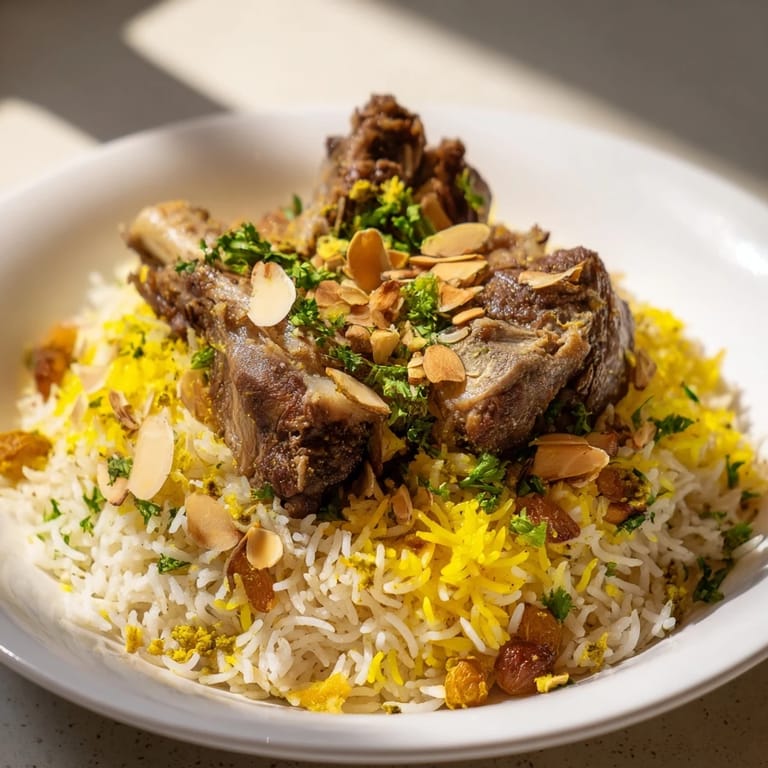
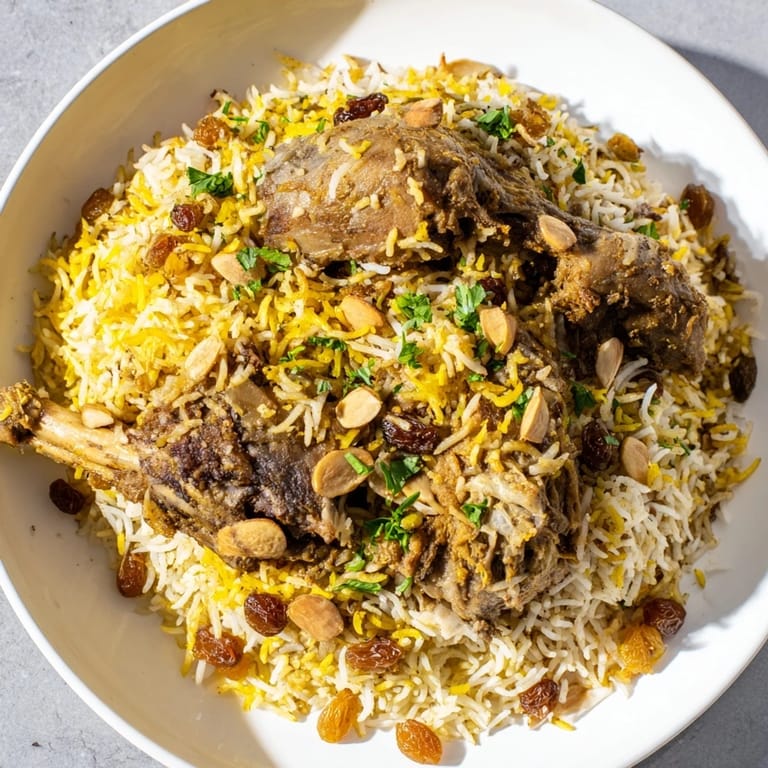
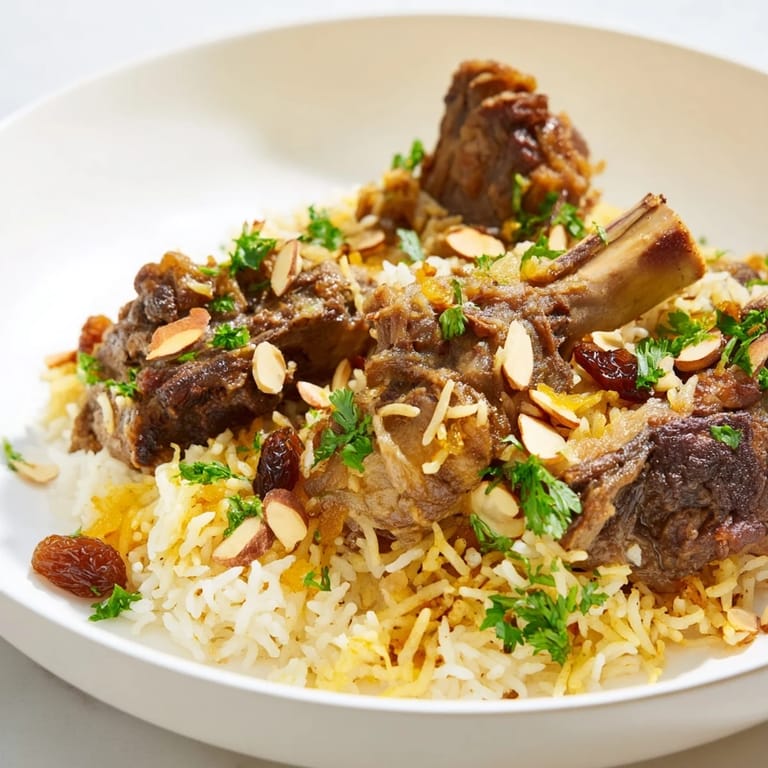
- Discard the bay leaves and black lime, then gently fluff everything with a fork—be tender here so the rice stays separate and light. Transfer to a serving platter, scatter your toasted almonds and parsley over the top, and watch people's faces light up.
 Save to Pinterest
 There's a moment during the simmering stage when your whole house becomes a fragrant sanctuary, and anyone who walks through the door stops and breathes deeply—that's when kabsa becomes more than just dinner, it becomes an invitation. It's the smell that says someone is taking care of you, that something special is happening.
Choosing Your Meat
Lamb is traditional and gives you that deeper, more complex flavor that makes the spices sing louder, but chicken works beautifully too if you prefer something lighter or if that's what's available. Beef is another solid choice, though it sits somewhere between the two in terms of richness. I've made this with all three, and each one tastes different enough that you're not choosing wrong—you're just choosing which version you want today. The bone-in element matters more than which animal you pick; it's what makes your broth silky and gives everything that savory backbone.
The Black Lime Question
Loomi, that dried black lime with its funky, almost umami quality, is the ingredient that makes people taste this dish and think, 'What is that, exactly?' It's not necessary, but it's the difference between a good kabsa and the kind you remember. You can find it at Middle Eastern markets or online, and one piece goes a long way—just pierce it a few times so it releases its flavor without falling apart. If you can't find it or want to skip it, the dish is still delicious, but you're leaving an interesting layer untouched.
Timing and Make-Ahead Magic
The beauty of kabsa is that most of the work happens in that first half-hour—browning meat, blooming spices, building flavor—and then you can essentially walk away and let the pot do the thinking for you. I've made this for dinner after work and had it ready in just under two hours, which feels almost impossible when you taste how much thought went into each bite. Leftovers are incredible; this dish tastes even better the next day when everything has settled and married together, so don't hesitate to make extra.
- Prep your ingredients before you start cooking—mise en place makes the whole process feel smoother and less stressful.
- If you're timing this for guests, the broth can simmer while you set the table and get everything else ready.
- Let it rest covered for 5 minutes after the rice is done, just like you would with bread; it lets everything firm up slightly and makes serving cleaner.
 Save to Pinterest
 Kabsa is the kind of dish that makes your table feel generous and intentional, the kind of meal that says 'I took time with this for you.' Every time you make it, you'll find your own rhythm with the spices, your own preference for which meat, your own version of perfect—and that's exactly how it should be.
Recipe FAQs
- → What type of meat works best for this dish?
Bone-in lamb or chicken pieces are traditional choices. Lamb offers a richer flavor, while chicken cooks faster and yields tender results.
- → Can the dish be made without the dried black lime?
Yes, the dried black lime adds a unique tang but can be omitted if unavailable without greatly affecting the overall flavor.
- → How should the spices be prepared for maximum flavor?
To enhance aroma, toast the ground spices lightly before adding them to the dish, releasing deeper and richer flavors.
- → What is the purpose of soaking the rice beforehand?
Soaking basmati rice softens the grains, reduces cooking time, and helps achieve fluffy, separate rice with a light texture.
- → Are the raisins and almonds essential for this dish?
Yes, golden raisins add a touch of natural sweetness while toasted almonds contribute crunch and nuttiness, balancing the spices and textures.