 Save to Pinterest
 There's something almost magical about watching egg whites transform into clouds under the whir of an electric mixer—that moment when you realize you're about to create something that tastes like dessert but feels like air. My friend Sarah brought a pavlova to a garden party last summer, and I watched people's faces light up when they bit through the crisp shell into the marshmallow interior, then that whisper of tartness from the strawberries cut through the sweetness. I went home determined to master it, and after a few sticky kitchen experiments, I finally understood why this Australian classic has stolen so many hearts. It's not just elegant; it's genuinely delicious in a way that feels a little bit like magic.
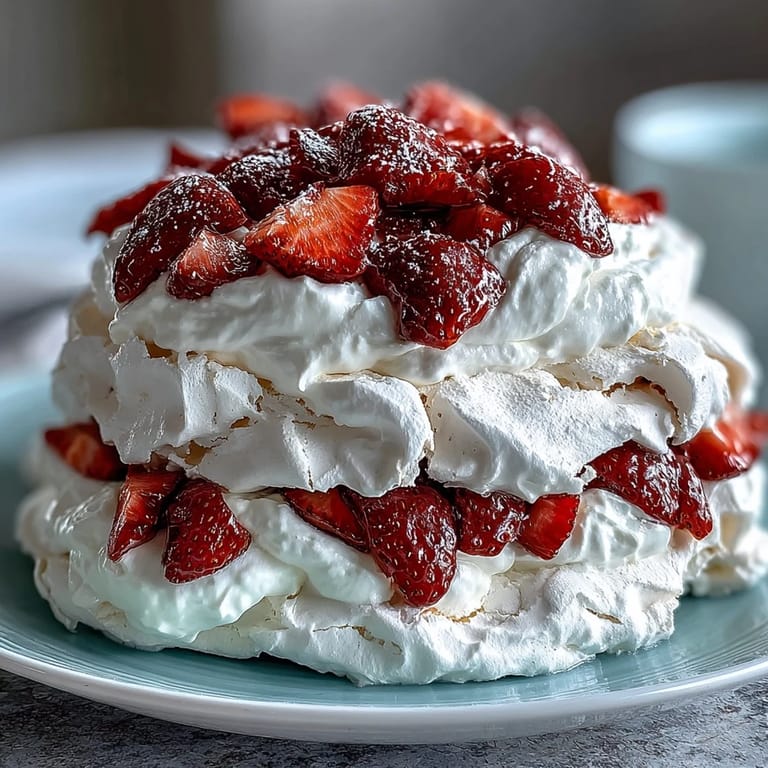
I made this for my sister's engagement dinner when everyone was stressed about whether the evening would feel special enough, and watching the pavlova arrive at the table—that tower of cream and red berries—somehow shifted the whole mood. People actually paused mid-conversation to admire it before eating, and that's when I realized a good dessert does more than just taste good; it creates a moment. She still texts me photos of pavlovas she sees at cafes, which is the highest compliment anyone could pay my kitchen adventures.
Ingredients
- Egg whites (4 large, room temperature): Room temperature means they'll whip to greater volume and create more stable peaks—cold eggs take forever and never quite get as fluffy.
- Superfine sugar (1 cup): The fine grains dissolve completely into the egg whites, creating that glossy finish; regular sugar leaves a grainy texture that nobody wants to bite into.
- Cornstarch (1 tsp): This is the secret ingredient that keeps the inside chewy while the outside crisps up—leave it out and you'll get a meringue that's either all crisp or all marshmallow.
- White vinegar (1 tsp): The acid stabilizes the meringue and adds a subtle flavor depth that balances the sweetness without anyone knowing what it is.
- Vanilla extract (1 tsp for meringue, 1 tsp for cream): A little goes a long way, and real vanilla makes more difference here than in dishes with lots of other flavors competing.
- Heavy cream (1 cup, chilled): Cold cream whips faster and holds its peaks better—warm cream is basically a lost cause.
- Powdered sugar (2 tbsp): It dissolves into the cream instantly without any grainy feeling, unlike granulated sugar which stays crunchy.
- Fresh strawberries (2 cups, hulled and sliced): The tartness is what makes this dessert sing; sweet strawberries get lost against all the sugar, so choose berries that have a bit of snap to them.
Tired of Takeout? 🥡
Get 10 meals you can make faster than delivery arrives. Seriously.
One email. No spam. Unsubscribe anytime.
Instructions
- Prep your workspace:
- Preheat the oven to 275°F and line your baking sheet with parchment paper, then draw a 9-inch circle as your guide—this takes the guesswork out of shaping and gives you something to aim for.
- Whip the egg whites:
- In a scrupulously clean bowl (any hint of yolk or grease will sabotage you), beat the egg whites on medium speed until soft peaks form, which takes about 3-4 minutes. You'll notice the mixer suddenly gets quieter, which is your cue that they're ready to move to the next step.
- Add sugar gradually:
- With the mixer running on high, add the superfine sugar one tablespoon at a time, beating for about 7-10 minutes total until the meringue turns thick, glossy, and holds stiff peaks that point straight up. This is the part where patience matters—rushing it means grainy meringue.
- Fold in the secret ingredients:
- Gently fold the cornstarch, vinegar, and vanilla extract into the meringue using a spatula with as few strokes as possible—you want to keep all that air you've worked so hard to incorporate.
- Shape the meringue:
- Spoon the mixture onto your marked circle, using the back of your spatula to create a nest shape with slightly raised edges that will cradle the cream and berries. Don't stress about it being perfect; the rustic look is actually more charming.
- Low and slow baking:
- Bake for 1 hour 15 minutes until the outside is pale and crispy but still white—you're not browning it, just drying it out. When the time's up, turn off the oven and crack the door open a few inches, letting the meringue cool inside for at least an hour so it doesn't crack from temperature shock.
- Whip the cream:
- While the meringue is cooling (or while it's baking), chill your mixing bowl and beaters, then whip the heavy cream with powdered sugar and vanilla until it reaches soft peaks. Stop as soon as it's fluffy; overbeating turns it into butter, which sounds dramatic but absolutely happens.
- Prepare the strawberries:
- Slice your berries into a separate bowl and toss with granulated sugar if you'd like—letting them sit for 10 minutes draws out their juice and creates a light syrup that adds flavor to every bite.
- Assemble with care:
- Once everything is ready, carefully transfer your cooled meringue to a serving plate, spread the whipped cream over the center, and top with the strawberries and mint. Serve immediately so the meringue stays crisp.
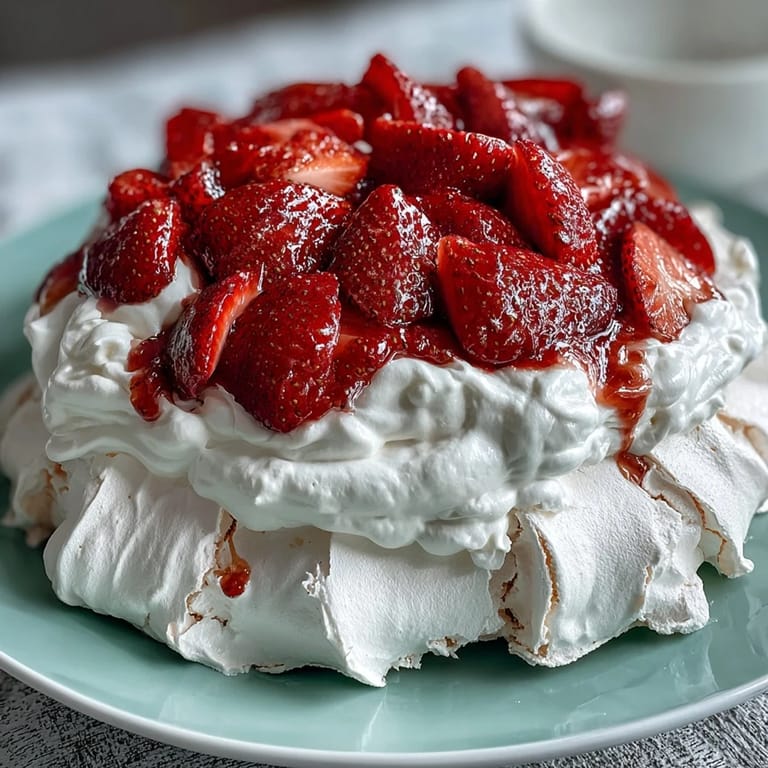 Save to Pinterest
 My neighbor knocked on my door one afternoon and asked if I'd teach her how to make pavlova because her daughter mentioned it was her favorite dessert but she'd never attempted one herself. We made it together in my kitchen, and I watched her face when she pulled the finished meringue out of the oven—that quiet pride of having done something that looked so difficult. She's made it three times since then, and she texts me photos of each one, variations with different berries, and I love that I passed along not just a recipe but a confidence.
Why This Dessert Works
Pavlova sits in that sweet spot between crispy and chewy, between simple and spectacular, which is why it's been showing up on fancy restaurant menus for decades but is actually totally doable at home. The cornstarch and vinegar are the unsung heroes here—they seem like small additions until you realize they're what make the difference between a meringue that looks pretty but shatters into dust and one that has actual texture and dignity. Every element serves a purpose, which is satisfying in a way that fussy cooking often isn't.
The Strawberry Question
Fresh strawberries are your best friend here, but they need to be good ones—the kind that actually taste like strawberries and not like red air. I learned this the hard way by making pavlovas in January with winter berries that had no flavor, and the whole thing fell flat because the tartness that balances the sweetness was missing. Now I make this dessert when berries are at their peak, usually late spring through early summer, though frozen berries that you've thawed work in a pinch.
Storage and Make-Ahead Magic
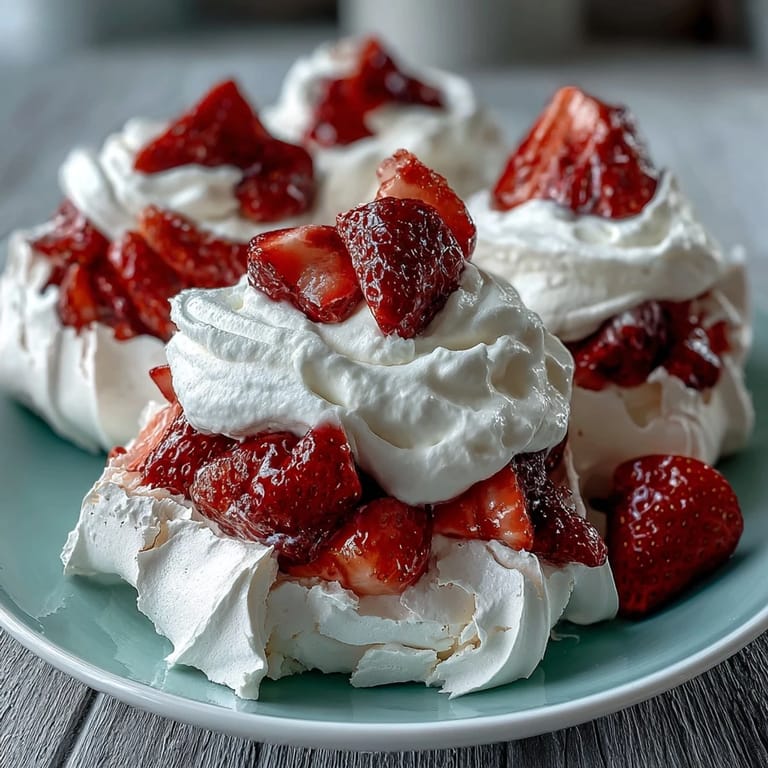
The beauty of pavlova is that you can bake the meringue a full day ahead, storing it in an airtight container away from humidity, then just whip the cream and add berries when you're ready to serve. This means you get all the impressive results without the stress of timing everything perfectly on the day you're entertaining. The only part that won't keep well is the assembled pavlova—once the cream and fruit are on top, eat it within 30 minutes or accept that it's going to soften, which is fine if you prefer a more tender texture but won't give you that textural contrast that makes this special.
- Meringues absorb moisture like tiny crispy sponges, so keep them sealed and away from humidity until the very last moment.
- If you live somewhere humid, you can even bake the meringue the morning of your gathering and assemble it right before serving.
- Leftover whipped cream can be re-whipped if it's gone a bit flat, though starting fresh is honestly easier.
 Save to Pinterest
 Making pavlova is like a small magic trick you can do for people you care about—something that looks like it required years of training but actually just requires patience and clean equipment. It's the kind of dessert that makes people feel special without you spending your whole day stressed in the kitchen, which feels like the best kind of cooking to me.
Recipe FAQs
- → How do I achieve stiff peaks when whipping egg whites?
Use a clean, fat-free bowl and beaters. Whip egg whites at medium speed until they form soft peaks, then gradually add sugar while increasing speed until stiff, glossy peaks form.
- → What temperature is best for baking pavlova?
Bake at a low temperature around 275°F (135°C) for about 1 hour 15 minutes to ensure a crisp exterior and soft interior.
- → Can I prepare the meringue base in advance?
Yes, the baked meringue can be cooled completely and stored in an airtight container. However, it softens over time, so serve within a day.
- → How to keep whipped cream stable?
Chill the cream and bowls before whipping. Add powdered sugar and vanilla while whipping to soft peaks. Use immediately for best texture.
- → Can variations of fruits be used for the topping?
Absolutely, a mix of seasonal berries or sliced fruits can complement the whipped cream and meringue base beautifully.