 Save to Pinterest
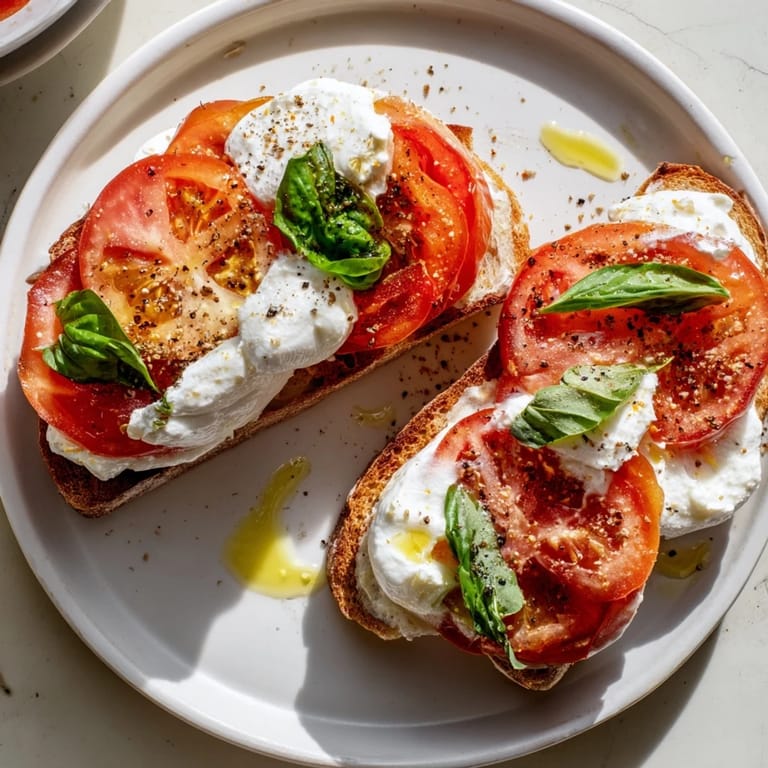
 There's something about the smell of sourdough toasting that makes a Sunday morning feel intentional. I discovered this toast while scrolling through photos of someone's Roman breakfast—nothing fancy, just golden bread, burrata melting slightly from the warmth, and tomatoes so ripe they glistened. I made it the next day on a whim, and what struck me wasn't just how it tasted, but how quickly it became the thing I crave when I want something that feels both simple and special.
I made these for a friend who was going through a rough week, and she took one bite and immediately asked for the recipe. It wasn't complicated enough to be impressive, but it was thoughtful enough to matter—the kind of meal that says I see you and I'm taking care of you without any drama. She still texts me photos when she makes it now.
Ingredients
- Sourdough bread: Use slices that are thick enough to hold up to the toppings without getting soggy, roughly half an inch or more. The tang in sourdough plays beautifully against the creamy burrata and bright tomatoes.
- Fresh burrata cheese: This is the star, so seek out the best quality you can find—look for it in the specialty cheese section or Italian market. It should feel like a cloud, not a rock.
- Ripe tomatoes: The season matters here. If tomatoes aren't at their peak, use heirloom varieties or cherry tomatoes, which tend to be more forgiving. Slice them thick enough that they don't fall apart.
- Extra virgin olive oil: Don't skimp. This is tasted directly, so grab something you actually enjoy the flavor of—peppery, buttery, or fruity, whatever calls to you.
- Garlic clove: Halving it and rubbing it on warm toast infuses flavor without overpowering. It's a technique that changes everything about this dish.
- Flaky sea salt and black pepper: These aren't afterthoughts—they're what makes the natural flavors sing. Fresh pepper especially makes a real difference.
- Fresh basil leaves: Tear them by hand instead of cutting; it bruises the leaves less and keeps the flavor cleaner and brighter.
- Balsamic glaze: Optional, but it adds a sweet-tart finish that ties the whole thing together. A small drizzle is all you need.
Tired of Takeout? 🥡
Get 10 meals you can make faster than delivery arrives. Seriously.
One email. No spam. Unsubscribe anytime.
Instructions
- Toast the bread until it's golden and crisp:
- Whether you use a toaster or a grill pan, aim for that point where the outside is crunchy and the inside still has a hint of chew. This takes maybe 3 to 5 minutes depending on your method.
- Rub warm toast with garlic:
- Do this while the bread is still hot so the garlic releases its oils and infuses into the surface. It only takes a few seconds per slice, but it's worth the small effort.
- Drizzle with olive oil:
- Use about a tablespoon per slice, distributing it evenly so every bite gets that richness. This is what keeps the toast from feeling dry under all the toppings.
- Layer tomato slices and season:
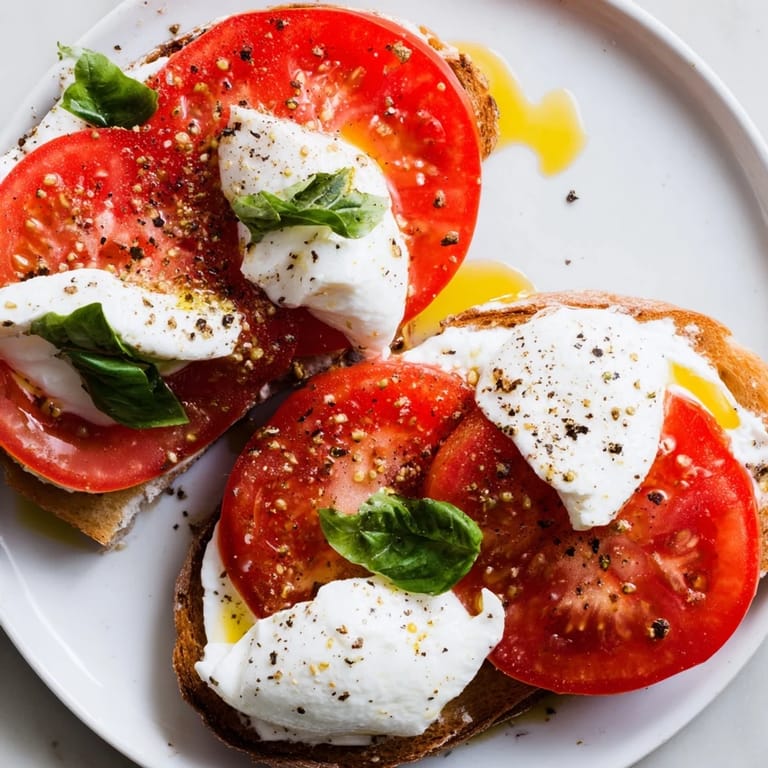
- Arrange them overlapping slightly like you're building something intentional. Sprinkle salt and pepper generously right after—the toast will be warm enough to help the seasoning stick.
- Add the burrata:
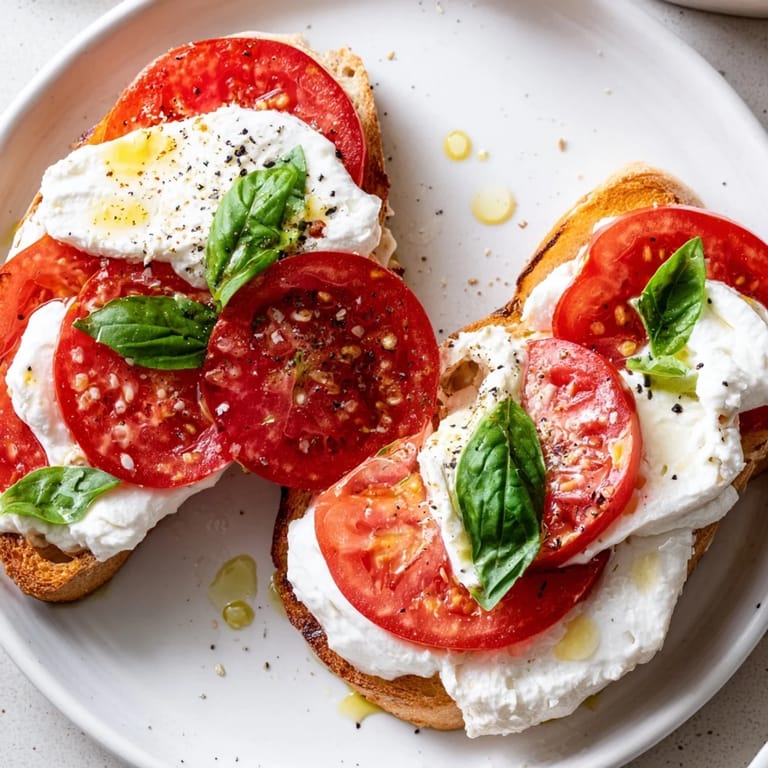
- Tear it gently by hand and spoon it over, letting some of the creamy center pool on top. Don't try to spread it like cheese—just place it and let it be.
- Finish with basil and glaze:
- Scatter torn basil leaves over the top and finish with a thin drizzle of balsamic glaze if you're using it. Serve immediately while the toast is still warm and the burrata hasn't completely solidified.
 Save to Pinterest
 One afternoon I made this for my partner without any announcement, just slid a plate across the table while he was reading. He looked up surprised, took a bite, and for a moment there was just quiet. That's when I knew this recipe was keepsake material—it's the kind of simple gesture that somehow says a lot.
Why This Recipe Became a Staple
I keep coming back to this because it's honest food. There's no hiding behind complicated techniques or obscure ingredients. Every element has to be good—the bread, the cheese, the tomatoes—because there's nothing else to distract from them. It taught me that sometimes the most satisfying meals are the ones where you just let quality ingredients speak for themselves. I make it when I'm eating alone and want to feel taken care of, and I make it for others when I want to share something that feels both generous and effortless.
The Art of Assembly
There's a rhythm to putting this together—the toast cooling just enough that you can handle it but still warm enough to matter, the timing between components so nothing gets soggy or cold. I've noticed that the moment you rub that garlic on warm bread, the aroma changes the whole kitchen. It shifts from morning toast into something more intentional. The burrata is what takes it from good to memorable though. When you tear it and see that creamy center spill slightly over the tomatoes, you know you're moments away from something you'll want again.
Flavor Combinations That Work
The beauty of this toast is how it balances temperature, texture, and flavor in one bite. The warm bread contrasts with cool tomatoes, the creamy burrata against crispy crust, salty and herbal notes dancing around that basil. I've experimented with adding crispy red pepper flakes, a touch of hot honey, or even thin slices of prosciutto, and each variation feels like a natural evolution rather than a betrayal of the original. What stays constant is the principle: let the tomato and cheese be the main event, and everything else is just supporting them.
- If tomatoes aren't at peak season, cherry tomatoes often have more natural sweetness and work beautifully here.
- A pinch of red chili flakes adds complexity without heat—it just makes people wonder what makes this taste so good.
- Try different olive oils to see how much personality they can bring to the final plate.
 Save to Pinterest
 This is the toast I come back to again and again because it reminds me that cooking doesn't have to be complicated to be meaningful. It's proof that sometimes the best meals are just really good ingredients, a few minutes of attention, and the willingness to enjoy something simple.